


🌍 And the Nobel Peace Prize goes to…
Plus: This president just got ousted

|
Today’s briefing: |
|
Good morning Intriguer. If you get a hole-in-one, it’s customary to buy everyone at the clubhouse bar a drink. I mean, I wouldn’t know—I can barely hit a green in regulation, but given my fondness for post-round ales, the odds I’ve never been in the same postcode as an ace are lower odds than making one myself.
I recently heard that in Japan, making a hole-in-one can almost bankrupt you. Custom demands you buy dinner or gifts for everyone in your life. There’s even hole-in-one insurance protecting golfers from celebratory bills reaching thousands of dollars and 40% of Japanese golfers carry it!
I shudder to think what’s customary when you win a Nobel Prize, as two Japanese scholars did in chemistry and physics this week. The Nobel Peace Prize is today’s top story, but I’m still stuck thinking how terrifying it must be teeing up on a short par 3 in Japan without appropriate coverage.

Number of the day
7.5
That’s how big the earthquake was that hit the Philippines earlier this morning (Friday). The country was already reeling from a recent earthquake and back-to-back typhoons.
Prized winner
Moments ago, the Nobel Committee awarded Venezuelan opposition figure María Corina Machado the 2025 Nobel Peace Prize for her efforts to “keep the flame of democracy burning amid a growing darkness”.
She’s currently in hiding as she continues to campaign against Venezuelan dictator Nicolás Maduro. We’ve shared some initial thoughts on her remarkable win below.
But in the meantime, what better time to take a quick look at this coveted honour?
Every year since 1901, five Norwegians (not randoms, but a committee chosen by parliament) have locked themselves in a special room in central Oslo’s Nobel Institute to make one of the toughest decisions of our time: what to watch who should win.
The hardest part of getting nominated is finding a government, ICJ judge, professor, laureate, or past committee member willing to nominate you. After that, you sit tight and hope (if you’re even aware of the nomination) you’ve done more peacemongering than this year’s 337 other nominees to win the 11 million Swedish kronor ($1.1M) cash prize.
Speaking of Sweden, Swedish academies handle the scientific Nobels, but the Peace Prize has always been a Norwegian project, and a deeply geopolitical one at that. Why?
First, it’s a mirror.
Take Andrei Sakharov, the dissident Russian nuclear scientist and human rights defender who won the 1975 prize at the height of the Cold War, prompting Moscow to complain of anti-Soviet propaganda.
Second, it’s a window.
Those Norwegians didn’t flinch, going on to dish the 1983 prize to Polish electrician Lech Wałęsa for his glimpse into how the world ought to be — it was a huge morale boost for his underground Solidarity movement that ended up ousting Communist rule in 1989.
Ditto, the committee was focused on intention when it dished the award out to Barack Obama barely nine months into his presidency, in a move later regretted by a top Nobel insider (the president himself suggested at the time that he was unworthy).
And speaking of regrets…
Third, it’s a marker.
While a winner like Nelson Mandela goes to glory for his role in dismantling Apartheid, it doesn’t always work out that way. Take Myanmar’s democracy champion Aung San Suu Kyi, whose 1991 win (from house arrest!) now sits under the shadow of her later silence on Rohingya persecution as an elected leader.
Ditto Ethiopia’s leader Abiy Ahmed, whose 2019 win suited his peace efforts with Eritrea next door, until he started facing war crime allegations in Tigray back home two years later. That whole spat continues to fester (see our map section below).
And fourth, it’s a barometer.
While it was the Soviets railing against the prize last century, you can learn a lot from who’s been objecting this century. Take the 2010 award for China’s Liu Xiaobo, the jailed dissident who later succumbed to cancer during his 11-year sentence for ✌️subversion✌️.
An angry Beijing labelled the committee “anti-China” and ended up not only freezing ties with Norway for six years, but even banning Norwegian salmon imports. Sensitive much?
And you can probably guess what happened when the Norwegians honoured imprisoned Iranian women’s rights activist Narges Mohammadi in 2023: the mullahs railed against this “interference in domestic affairs”. Unfazed, the committee still calls them a “regime”.
And these objections merely confirm what we already know: the world really does care about the Nobel Peace Prize. If you needed further proof, look no further than its various imitations, whether the Kremlin’s old Lenin Peace Prize, or Beijing’s Confucius Peace Prize.
As the old saying goes (which we absolutely just made up): if you can’t win, just invent your own prize.
Intrigue’s Take
Awarding the 2025 prize to Venezuela’s Corina Machado is, in addition to her merit, a deft political move by the Nobel committee given all the debate around President Trump’s own Nobel prospects, as she actually has a bit in common with the US leader.
First, she’s no bleeding-heart liberal, but a staunchly conservative voice. So it's hard to frame this as a partisan or ideological slight being dished out from Oslo.
And second, Corina (like Trump) absolutely rejects the Maduro regime’s illegal grip on power. So much so, she continues to live clandestinely in Venezuela while her supporters are routinely kidnapped (her campaign organiser Maria Oropeza was hauled off the streets last August). So this is a laureate Trump respects.
Her win also undermines Maduro’s claims that any opposition must be part of some gringo plot. Turns out the world’s most prestigious prize agrees with the gringos too.
Meanwhile, elsewhere…
 |
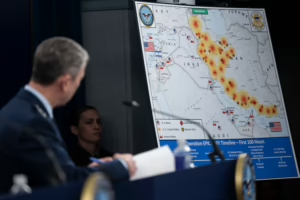
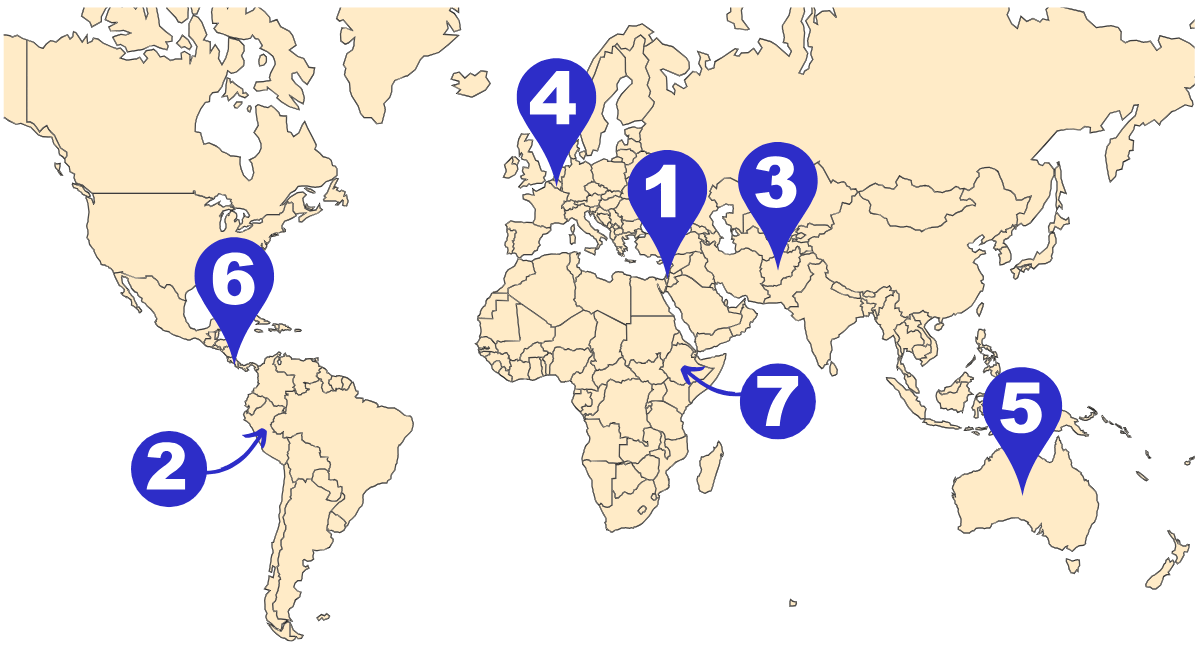
🇮🇱 ISRAEL – Done Deal. Comment: We looked at how this war has shaped our world yesterday. |
 |
🇵🇪 PERU – President out. |
 |
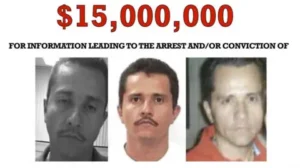
🇦🇫 AFGHANISTAN – What was that. Comment: The timing was interesting, too, coming just as the Taliban’s foreign minister landed in Pakistan’s other big rival, India, to big news that India will reopen its Kabul embassy. Meanwhile, Hollywood could make a blockbuster about Pakistan’s ties with the TTP, which went from friend to foe upon the Taliban’s return to power. |
 |
🇪🇺 EUROPEAN UNION – One of our own. Comment: The juicy bit is that it allegedly happened when Olivér Várhelyi was Hungary’s ambassador to the EU — he’s now the EU’s Health Commissioner, meaning any damning findings from this EU probe could ripple across the EU’s cabinet. |
 |
🇦🇺 AUSTRALIA – Down underwater. Comment: This mostly formalises what’s been quietly happening for a while, as more rattled capitals pair-up amid bubbling tensions across the Indo-Pacific. |
 |
🇨🇷 COSTA RICA – Hat in the ring. Comment: Grynspan is now the third formally declared candidate after Bolivia’s veep (Choquehuanca) and Chile’s former president (Bachelet). Others like Argentina’s Rafael Grossi (head of the UN’s nuclear watchdog) have also voiced plans to run. |
 |
🇪🇹 ETHIOPIA – We’re onto you. Comment: A lot of this stems from Eritrea’s independence from Ethiopia back in the 1990s, when the Eritreans ended up with all the coastline. Amid today’s look at the Nobel Peace Prize, it’s another example of how even a peace deal itself can often contain the seeds of some future war. |
Extra Intrigue
Three stories we couldn’t shoehorn in this week 🥾
-
The junior partner (Komeito) in Japan’s ruling coalition has declined to immediately endorse Sanae Takaichi as Japan’s next prime minister, sending tongues wagging that the party could end its coalition partnership after 26 years.
-
China’s Communist Party outlet has published a set of eight op-eds ahead of a big 20-23 October planning meeting that’ll shape China’s next five-year plan, describing the country’s economy as an “unsinkable economic aircraft carrier”.
-
And lastly, students in Thailand are fighting to halt the country’s traditional school ‘hair inspections’, which can result in an immediate teacher-delivered haircut if you let your bangs get too long.
From our sponsors
Want to get smarter about financial markets? Join 200,000 investors who get Opening Bell Daily in their inbox — it’s packed with Wall Street data and analysis you won’t find anywhere else. Subscribe free.
Flower of the day
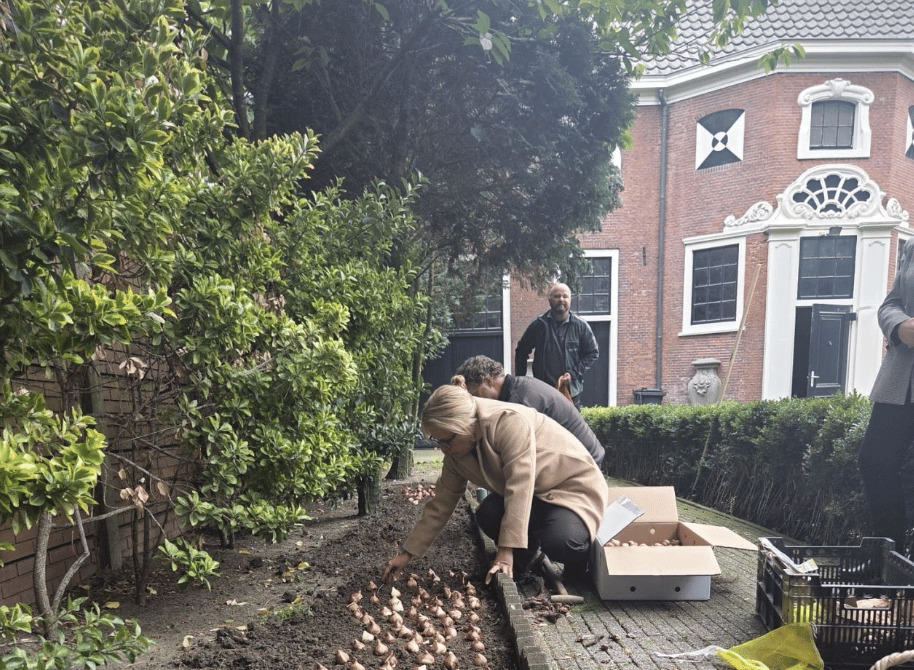
Credits: Fatma Ceren Yazgan’s LinkedIn.
That’s Turkey’s new ambassador to the Netherlands, Fatma Ceren Yazgan, planting tulips (named Gelibolu, Kızılırmak and Anadolu) in her embassy gardens in The Hague.
Named after places in Turkey (known in English respectively as Gallipoli, Red River, and Anatolia), they’re meant to flourish as a symbol of Turkish-Dutch ties — it’s a common gesture in town (the last US envoy just got his own custom-named tulip in January).
But Turkey has an extra claim on the tradition, as the Ottomans were cultivating tulips centuries ago until foreign diplomats like Vienna’s Ogier Ghislain de Busbecq started sending them to friends back in Europe from the 16th century.