



🌍 Why Gen Z is protesting everywhere
Plus: An ambassador found dead in Paris

|
Today’s briefing: |
|
Good morning Intriguer. As a hardcore Millennial, I oscillate between pitying and glorifying Gen Z. It’s a bit extreme, I’ll admit.
On the one hand, I feel bad that they’ve grown up chronically online, with social media and handheld devices a core part of their formative years. This, as well as the isolation years of the Covid pandemic, has meant many of them are more socially anxious IRL than their predecessors.
On the other hand, they’re probably the most savvy, compassionate and self-aware generation to date, in large part thanks to the power of their tech literacy. As we’ll see in our top story today, nowhere is this more evident than the recent spate of civilian-led protests against governments around the world, pushed by Gen Z (in their baggy low rise jeans).

Number of the day
800,000
That’s roughly how many non-essential federal US workers are now on unpaid leave after the US government entered its 15th shutdown since 1980 overnight. The last (and longest-ever) shutdown lasted 35 days, from December 2018 into 2019.
Online contagion

Some protesters have adopted this anime pirate flag.
What — and we cannot stress this enough — is going on with Gen Z lately?
We’re not talking about the layered streetwear, tiny sunglasses, or quirky bucket hats (though these are valid concerns we might explore in a future special edition).
Rather, we’re talking about all the toppling of governments (or attempts therein).
Gen-Zers in Madagascar just became the latest crochet-clad crew to oust their rulers, with President Rajoelina dissolving his administration on Monday after days of deadly unrest.
And they’re not alone — authorities in Morocco are bracing for a fourth day of protests, echoing recent vibes out of Peru, the Philippines, Indonesia, East Timor, and Nepal.
And while of course each protest has specific domestic drivers, there are also some real cross-border similarities worth exploring. So let’s look at three:
-
Economic mismanagement
Madagascar’s protests bubbled over amid persistent water and power cuts, while folks in Morocco have seized on all the glitzy new 2030 FIFA World Cup infrastructure, chanting “stadiums are here, but where are the hospitals?” (it pops more in Arabic).
Those young Peruvians took to the streets when lawmakers forced them to contribute to a private pension fund despite most folks there still working in the informal economy. And up in Nepal? Kids are staggering across their college degree finish line like some 1980s marathon runner, only to then enter an economy barely paying workers $200 per month.
The common thread is a pervasive sense of despair. And it’s exacerbated by…
-
Corruption
Indonesia’s protests blew up when struggling folks found out about cushy new housing perks for parliamentarians. Locals in Timor-Leste only cooled it once Dili ditched its plans to give lawmakers lifetime pensions and pimping SUVs. And in the Philippines, there is no emoji to capture the anger of finding out that officials skimmed billions off flood relief.
All in all, we crunched the numbers and it turns out these Gen-Z uprisings have all hit countries ranked 99th or worse (out of 180) on Transparency’s Corruption Index.
So earning novelty wages is one thing. But to spend your unpaid lunch break scrolling through a feed of mis-managers absolutely living it large? Nuh uh. Which takes us to…
-
Social media
These days, digital platforms play a role at every step of the way.
-
At home: #NepoBaby videos of rich kids first went viral on Indonesian TikTok and Instagram in August, helping swell Jakarta’s streets.
-
Abroad: Netizens in Nepal then not only used those same hashtags to flame their own elites, but also copied the movement’s same anime pirate flag as an anti-government emblem that’s since spread to the Philippines and beyond.
-
Escalation: It was then Nepal’s attempted social media ban that fanned the outrage in Nepal, while videos of police brutality poured fuel on Indonesia’s fire.
-
Organisation: Youths in Nepal then coordinated their tactics via Discord, while…
-
Execution: Folks in the Philippines even used Reddit to dox corrupt elites!
-
Pacification: But TikTok really stands out not just as the platform most able to send an idea viral, but also the most likely to then shut it down (as it did in Indonesia) to help authorities regain control.
Oh, and Morocco’s ongoing demonstrations also capture the way these movements can develop a cross-platform and decentralised kind of leadership: they’re now going by ‘GenZ212’, combining those Gen Z demographics with the country’s dialling code (212).
But of course, that same online anonymity protecting any movement also protects the domestic security services rushing to penetrate it, not to mention the online grifters and data harvesters soon riding its attention wave (both already evident around GenZ212).
Anyway, things have changed since protests meant popping down to Kinko’s to print out that banner you mocked up on Microsoft Paint (it’s now Canva).
Intrigue’s Take
So… are things worse, or is awareness up, or is patience down? It’s arguably all three.
Either way, governments that don’t adapt are now just walking into a buzz saw. Ideally that adaptation means taking a good look at those first two drivers we explored above: fix your economy, and tackle that corruption.
But realistically, many will focus more on driver three instead: social media. Foreign platforms pose a big threat to unpopular regimes because they can’t control what’s said. That’s why China and Russia already ban them, and why more will follow.
Meanwhile, elsewhere…
 |
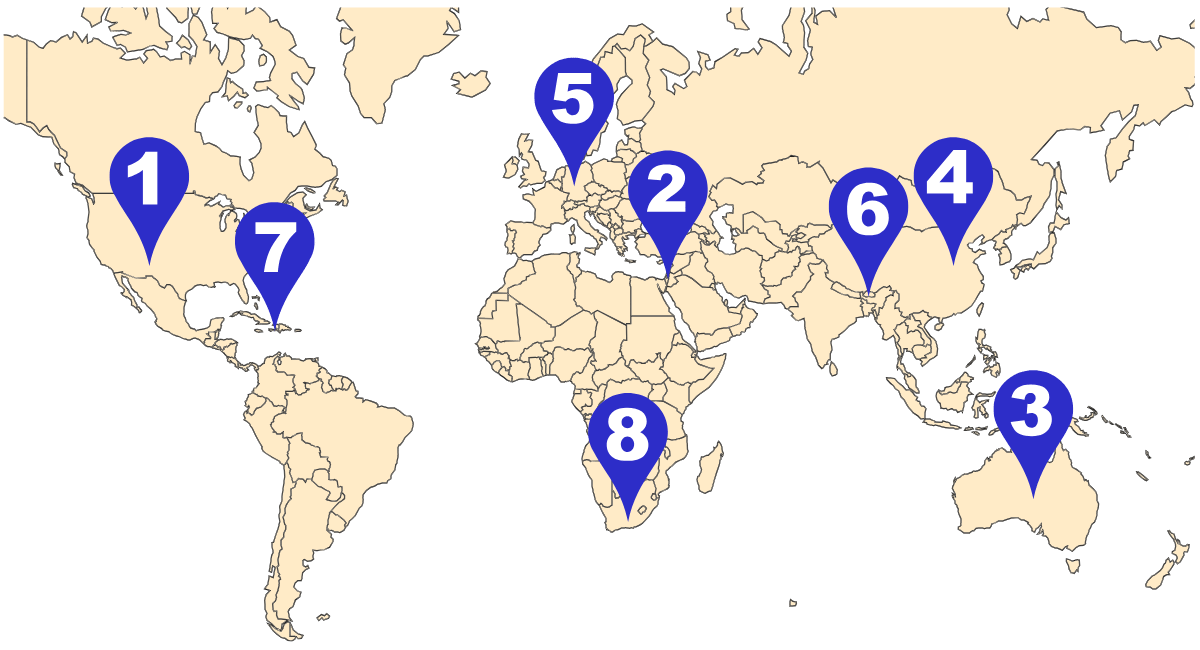
🇺🇸 UNITED STATES – At attention. |
 |
🇮🇱 ISRAEL – Waiting game. Comment: A week after Netanyahu found himself isolated at the UN General Assembly, it’s now an isolated Hamas facing pressure to accept this deal and end the war. |
 |
🇦🇺 AUSTRALIA – That’ll do. Comment: There are conflicting reports on whether a ban is actually in place, plus doubts around how long China could actually go without BHP’s supply chain. But the speed of the prime minister’s intervention is a reminder of what’s at stake for Australia: its single largest export line anywhere is… iron ore to China. |
 |
🇨🇳 CHINA – New guy who dis? Comment: Liu’s political pedigree is more relevant than any European expertise here: he’s got ties to President Xi, and is a fellow princeling (his dad was a party big shot). |
 |
🇩🇪 GERMANY – Agent for fire. Comment: Krah, who denies knowledge of his aide’s activities, is also under investigation over China-linked money laundering allegations. |
 |
🇧🇹 BHUTAN – Hooking up. Comment: Of course, it’s not just about rail. It’s about the ongoing battle for influence between landlocked Bhutan’s two giant neighbours, China and India. India is the dominant player in Bhutan, which doesn’t even have formal ties with China. But China has been trying to normalise ties and finalise its Bhutan border negotiations. |
 |
🇭🇹 HAITI – Security upgrade. Comment: This outcome required China and Russia to drop their opposition to efforts that might stabilise a crisis on rival USA’s doorstep. They both ended up abstaining, which helps them avoid isolation while still critiquing this US (and Panama)-led move. |
 |
🇿🇦 SOUTH AFRICA – Ambassador found dead. Comment: He was facing fresh allegations he tried using his former police minister role to block a criminal investigation. |
Extra Intrigue
The Intrigue jobs board 💼
-
Special Assistant to the President and CEO @ Atlantic Council in DC
-
Lead Analyst, Policy & International @ Reserve Bank of Australia in Sydney
-
Head of Programme, Sudan @ Geneva Call in Port Sudan
-
Pan-European Strategy Internship @ Toyota Motor Europe in Brussels
Meal of the day
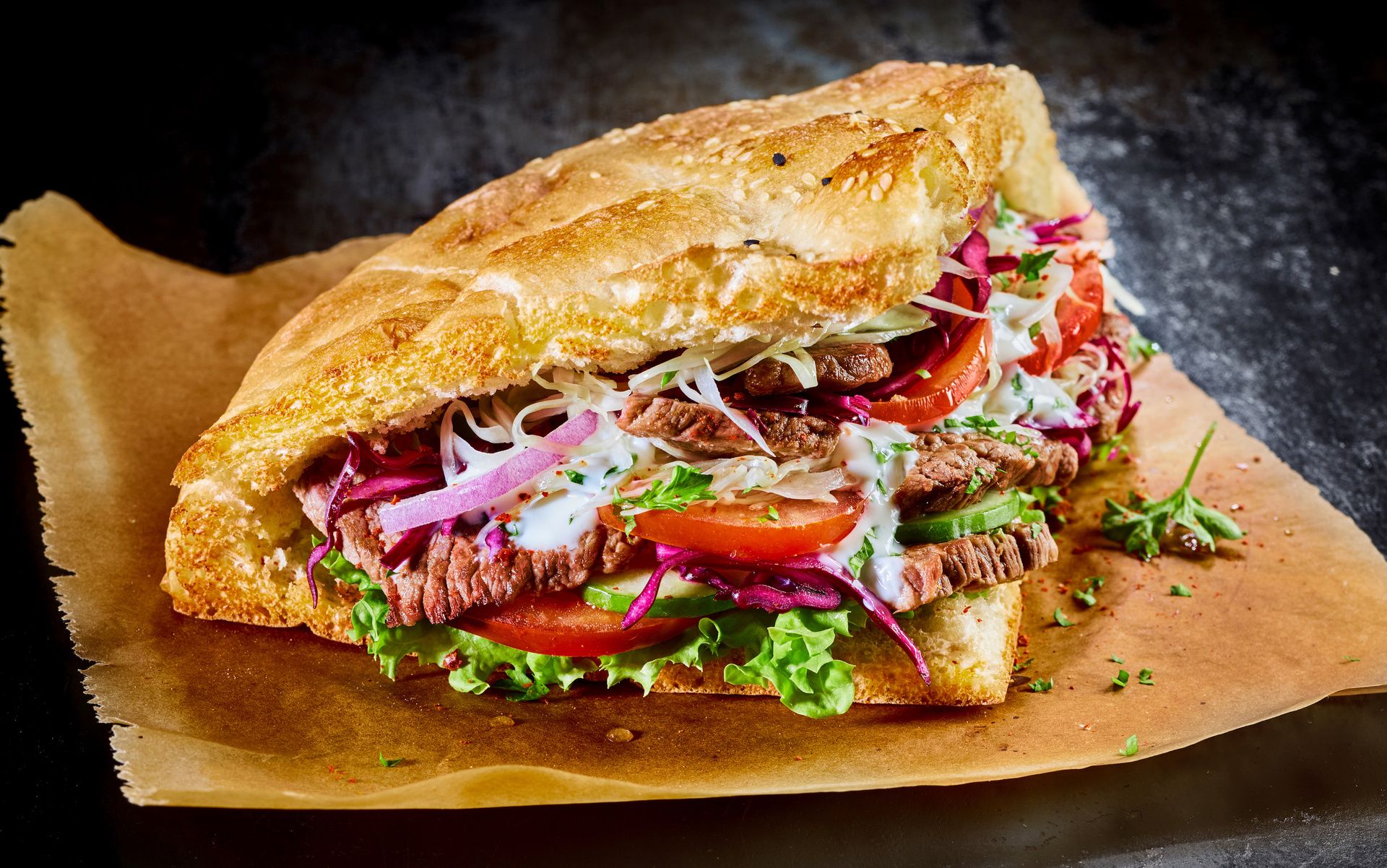
Close your eyes and imagine you’re in the thick of Berlin, it’s midnight, and you’re starving after a night crushing Wegbiers between Spätis. Thank goodness for döner you think, as you pause on the corner while deciding if you’ll go garlic, spicy, or both.
That on-the-go meal is basically woven into the modern capital’s life, after first arriving with Turkish workers in the 1960s. And it’s evolved, of course: that magnificent Berlin beast above is a little more elaborate than your classic döner in Turkey.
But this evolution is exactly why Turkey’s International Doner Federation (Udofed) recently tried registering döner for the EU’s ‘Traditional Speciality Guaranteed’ status, which would’ve imposed strict spice and meat rules on any EU eatery wanting to sell the stuff.
This might’ve boosted Turkey’s cultural brand value, but of course it faced massive backlash, particularly among Germany’s $8.2B kebab industry. So… Udofed quietly withdrew its application last month!
Feel free to haphazardly explain this to your friend during your next midnight döner.
Today’s poll
Do you think social media has helped make politics more democratic? |
Yesterday’s poll: Which do you think is likely to emerge first?
🤝 A Gaza ceasefire (4%)
💼 Trump's Board for Peace (3%)
🏡 Another Netanyahu White House visit (13%)
❌ Hamas demanding ceasefire changes (79%)
✍️ Other (write us!) (1%)
Your two cents:
-
❌ D.S: “Hamas has zero incentive for peace and every incentive for chaos.”
-
🤝 L.E: “I need to see a glimmer of hope.”
-
❌ R.N: “Hamas has not seen the current peace agreement and there are some issues they completely rejected last time. This has a long way to go.”
-
🏡 M: “Mostly because I think they just love increasing DC traffic”