






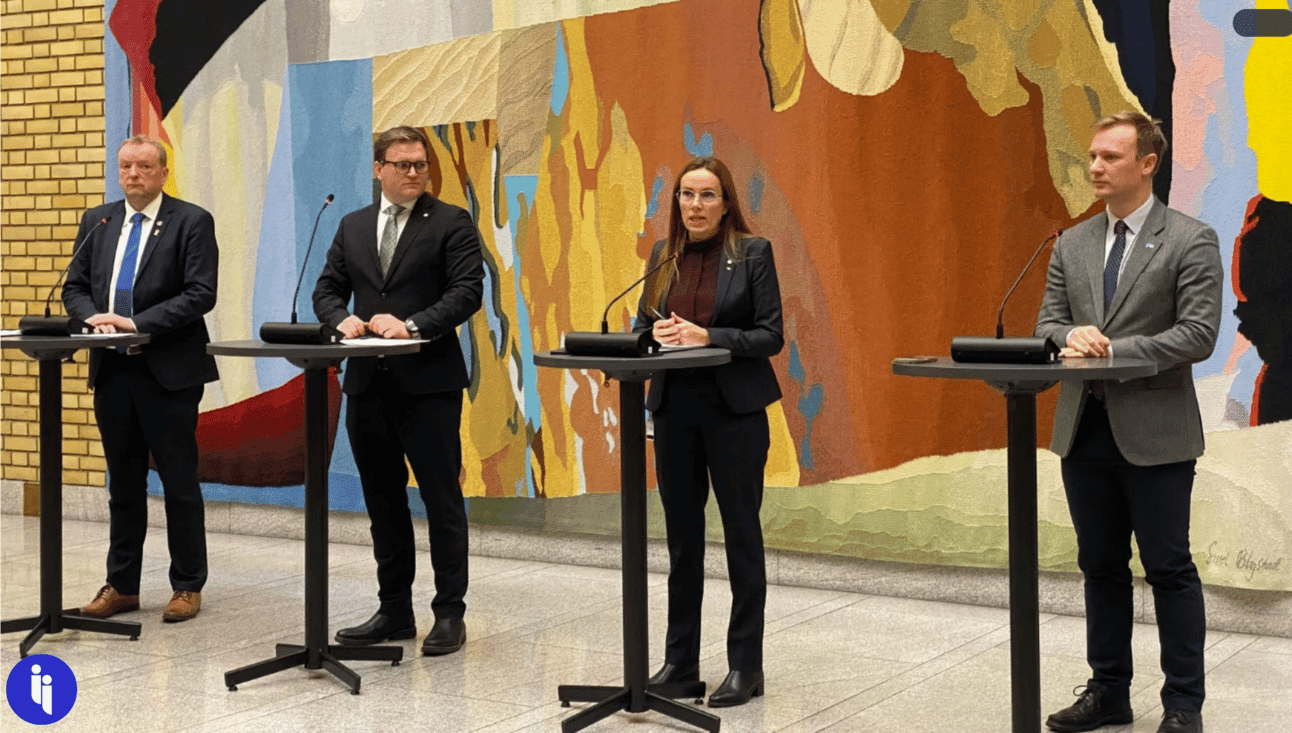
The Norwegian government says (🇳🇴) it’s secured a parliamentary majority to greenlight its deep-sea mining plans, bringing it a step closer to becoming the world’s first country to extract metals from the sea floor on a commercial scale.
Supporters say deep-sea mining:
- Is key to supplying the metals for our energy transition
- Can help diversify Norway’s economy away from oil and gas, and
- Can help reduce the world’s over-reliance on China’s metals sector.
But Norway’s opponents include not only environmental and fishing groups, but possibly also neighbours like Russia, the UK, and the EU. Why?
Stay on top of your world from inside your inbox.
Subscribe for free today and receive way much more insights.
Trusted by 160,000+ subscribers
No spam. No noise. Unsubscribe any time.
Norway has cordoned off an Ecuador-sized area for mining exploration near its islands in the Arctic. But these islands are subject to an unusual treaty between ~46 countries; and some (like Russia) say it limits Norway’s rights in the area.
But to be honest, it’s hard to find areas where deep-sea mining isn’t contested:
- In international waters, mining is regulated by a Jamaica-based body that’s still debating the issue
- So that leaves countries like Norway to push ahead within their own waters and extended continental shelves
- This has also meant (for example) China sending deep-sea survey vessels into waters claimed by others like the Philippines, and
- It’s also become a divisive issue in regions like the Pacific Islands, where some (like Nauru) see mining as a way to generate jobs, while others (like Tuvalu) see it as too damaging for the ocean.
So in that context, there are calls to just hit pause.
Multinationals like Google, BMW and Samsung vowed earlier this year not to use deep-sea metals. And just in October, the UK became the latest to join over 20 others calling for a moratorium until the environmental impacts are clearer.
But the news out of Norway this week suggests it’s confident it can replicate the success of its vast offshore oil and gas sector, and balance the interests at play.
INTRIGUE’S TAKE
Of course, while this is all playing out in Norway, the world is gathered in Dubai for the year’s COP climate talks.
And different folks there will see Norway’s move in very different lights:
- Some will say the sheer scale of the energy transition ahead means we need to mine more key metals, wherever possible, and as quickly as possible.
- Others will say that averting ecological disaster means preserving the carbon cycle, and that means leaving oceans alone (they store 60 times more carbon than the atmosphere).
As for Norway, it’s basically saying its technological and regulatory prowess means it can achieve #1 above, without compromising #2.
Also worth noting:
- Deep-sea mining tech is still being tested, but essentially involves hoovering potato-sized nodules of metal from the seabed up to a ship on the surface.
- In June, the UN approved a legally binding treaty to preserve marine biodiversity in the high seas beyond national borders.