




When you’ve got a human headline in the White House, it’s hard to know where to look: take Friday, when the entire press corps almost stroked out over President Trump’s claims that the Saudi crown prince is kissing his cheeks (not the facial ones), while we quietly double-clicked on this bit: “Cuba’s next, by the way, but pretend I didn’t say that please”.
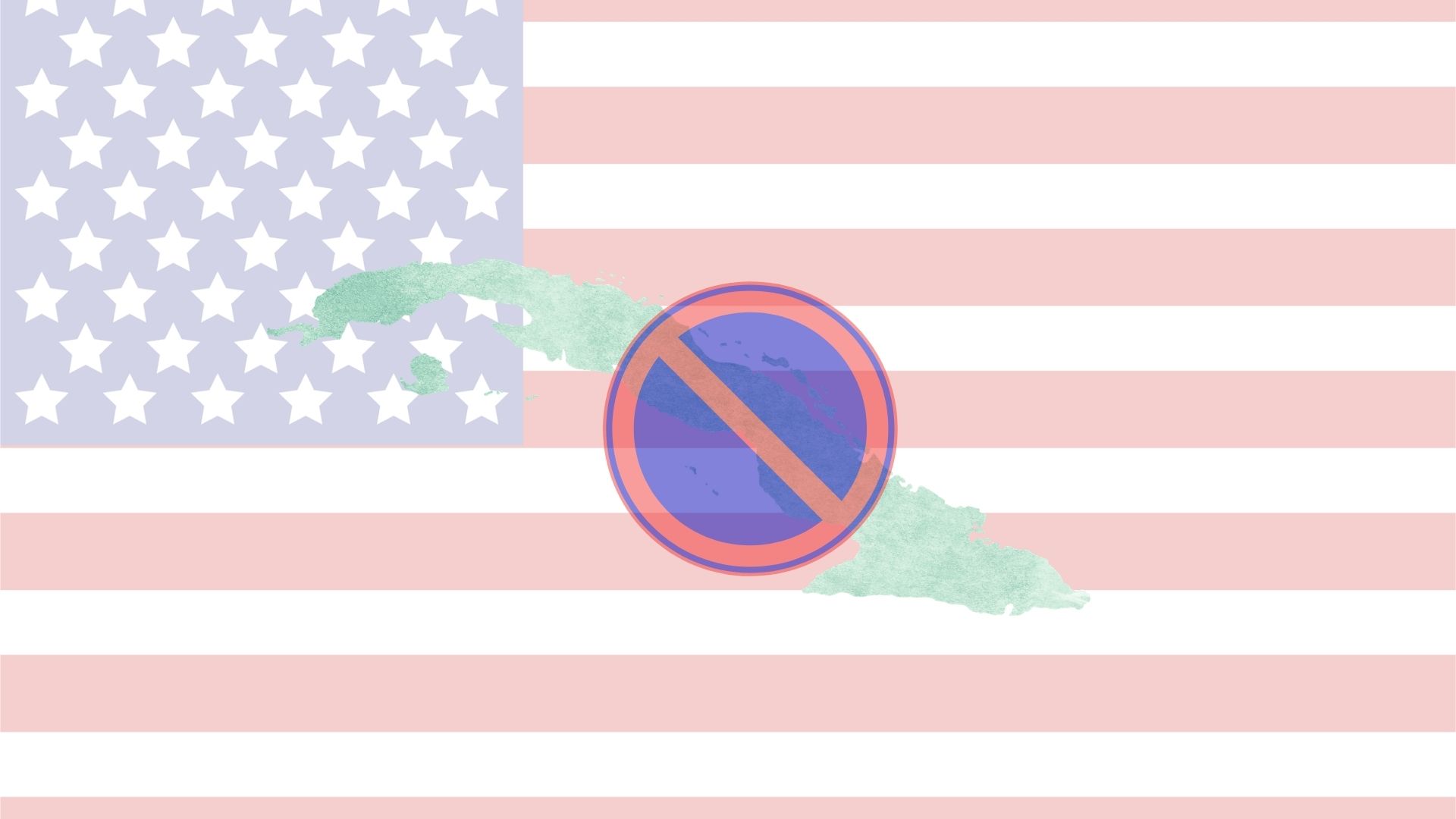
The Saudi stuff is domestic bravado (and the Gulf wields flattery as a tool), but that Cuba line? Just as Trump allows a sanctioned Russian tanker to break his own oil blockade on Cuba? Even though his blockade justification cites Cuba’s “alignment” with… Russia?
What — and we cannot stress this enough — is going on.
Stay on top of your world from inside your inbox.
Subscribe for free today and receive way much more insights.
Trusted by 160,000+ subscribers
No spam. No noise. Unsubscribe any time.
Here are the four main theories.
First, Trump himself has framed it all as a lifeline for Cuba. And yes, the conditions in communist-ruled, US-embargoed Cuba are now dire amid blackouts that’ve shuttered schools, halted trash collection, and gutted tourism. Though… that was also the point: cause pain until the regime relents. And then if you’re going to let someone play saviour, why anoint the exact despot the embargo is meant to counter in the first place?
Second, Trump has also argued it’s no big deal, and… he has a point here. Those 730,000 barrels would ordinarily sustain activity on the island for perhaps another 10 days or so.
Third, maybe Trump just TACOd? [glossary: TACO = Trump Always Chickens Out] This theory posits that, with things getting messy in Iran, and a sanctioned Russian tanker steaming towards Cuba, maybe Trump just blinked: easier to let a tanker through rather than add another escalation to your in-tray. Though if (like Trump) you’ve already seized a half-dozen Russian tankers without Putin doing a thing, why not board a seventh?
Then… fourth, could this be linked to US-Cuba talks? Cuba’s Miguel Díaz-Canel started publicly acknowledging these talks after the year’s first mass blackout, so maybe Trump is greenlighting this Russian tanker to ease a little pressure as talks advance? The timing also aligns with Cuba’s release of 51 political prisoners due this week, not to mention word that America’s own embassy in Havana is struggling without oil. It all smells a bit like what diplomats might call ‘confidence-building measures’.
All four theories look plausible, though US-Cuba talks are the neatest all-of-the-above: loosen that noose just enough to avert a full collapse and ugly optics, while maintaining negotiating momentum just as Cuba holds up its end of an initial deal (prisoners). The main loose thread is why — of all the tankers across all the seven seas — Trump is using this tanker, under US sanctions, and flying the flag of the guy he’s supposedly thwarting.
And the bigger question is still… what does the US ultimately want?
Secretary of State Rubio’s latest remarks pushed back on word DC might settle for an economic easing on the island, like a Venezuela 2.0: “Who’s going to invest billions of dollars in a communist country run by incompetent communists? … Giving people economic and political freedom is important, but they come hand in hand. They come together.”
But if DC still wants regime change, the dominant Castro family is still there, whether it’s Fidel’s 41-year-old great-nephew reportedly leading the talks (Raul Rodríguez), or his other 55-year-old great nephew (Oscar Pérez-Oliva) who just got wheeled out to offer the latest olive branch: allowing Cuban emigres to invest in the island.
Meanwhile, last month’s weird incident that left four Florida-based Cubans dead suggests the regime doesn’t plan to surrender control without a fight.
So… maybe we’re just seeing hardball in public while talks proceed in private? Or maybe Trump’s “Cuba is next” suggests he’s really running out of patience, like he did with Venezuela? Or maybe — like a Saudi prince puckering up — it means nothing at all.
Intrigue’s Take
If you’ve ever visited Cuba, you’ll have stepped foot in the big Plaza de la Revolución, one of the world’s largest open squares, and the political and symbolic heart of today’s regime.
It’s dominated in the middle by a massive 109-metre (358ft), pre-Castro tower featuring Cuba’s independence martyr, José Martí — his 1895 battlefield death while trying to oust Spain’s colonialists has long reminded Cubans that freedom ain’t free.
Right behind him stands the plaza’s least ostentatious but most powerful building, the communist party HQ — a quiet reminder that in Cuba, real power moves in the shadows.
Opposite, you’ll see the famous 15-ton steel mural of Che Guevara, the photogenic face for the regime’s vast intelligence apparatus hiding in the interior ministry behind him — the spooks who’ll throw you in prison if you voice any dissent.
But maybe the plaza’s most revealing feature is also its least-known to outsiders: adorning the communications ministry, the same artist delivered another steel mural of Fidel’s young lieutenant, Camilo Cienfuegos. When delivering five-hour speeches (an authoritarian trademark), Fidel would famously seek encouragement from Camilo, who’d dutifully reply, “vas bien, Fidel” (you’re doing well!). It became such a slogan of blind loyalty to the supreme leader, the regime even added the words to the mural in 2009.
All that to say… whether this all ends in a controlled transition, another decade of managed decline, or some sudden bout of US impatience, the Castros are still entrenched in an authoritarian architecture that remains intact — and this prisoner release plus investment olive branch suggests they’re still negotiating survival on their own terms.