






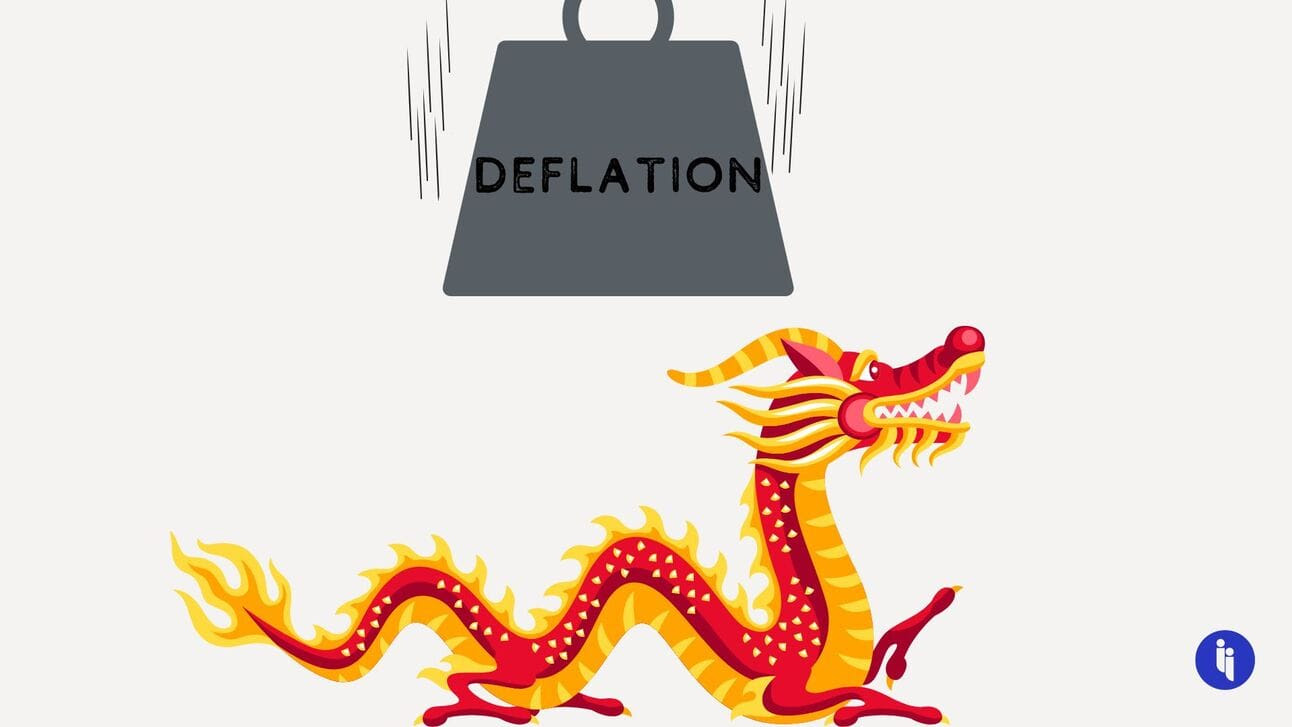
China’s Consumer Price Index (CPI) fell by 0.8% year-on-year in January, the biggest single drop in 15 years and the fourth straight month of these declines, according to new figures. The country’s producer price index, which tracks the prices of products right off the assembly line, also showed declines.
The D-word. The worst words start with a ‘d’: deficit, debt, deflation, Denny’s. The opposite of inflation, deflation occurs when prices decrease.
A drop in prices might sound okay, but it’s terrifying for governments:
Stay on top of your world from inside your inbox.
Subscribe for free today and receive way much more insights.
Trusted by 161,000+ subscribers
No spam. No noise. Unsubscribe any time.
- It increases the real value of debt, making it harder to repay loans
- It increases the real value of interest rates, discouraging households and businesses from taking out new loans
- It can decrease the value of assets, as spooked investors move their holdings into cash (which increases in real value), and
- It depresses demand as consumers hold off on key purchases, on the expectation that things will cost less if they wait (or simply because they’re startled by their own declining home values)
All this can spiral into a deflationary cycle of lower wages, confidence, and growth, potentially leading to a recession (though there’s still debate on that).
In fact, a lot about deflation is still up for debate – where it comes from, where it leads, and how to respond. This is partly because deflation isn’t common, meaning our data is limited. But it’s fair to say these price declines are generally associated with drops in demand and/or increases in supply.
And in the context of China – as is so often the case – it’s ‘all of the above’.
China’s unique economic model has built up an oversupply of just about everything: property, debt, savings, labour, production. At the same time, it’s facing slowing demand for its exports abroad. And these two forces combined are driving prices down.
What does this all mean for China? It’s arguable the numbers aren’t as bad as they seem:
- On a month-by-month basis, CPI still rose by 0.3%, and
- Part of the annual 0.8% drop can be explained by Lunar New Year spending, which landed in January last year but falls in February this year
Still, the consensus among economists is that these pressures will persist for at least the next six months. Interestingly, economists said the same thing about Japan in the 1990s, and its deflation ended up lasting more than two decades.
INTRIGUE’S TAKE
So what’s the solution here? Well, that’s also up for debate. We’ve written previously about market expectations for President Xi to respond with mass stimulus, but he’ll be mindful of what that means for debt, financial stability, and his efforts to shift China onto a more diversified model.
Others have long suggested strengthening China’s social safety net, so folks can spend more money rather than having to save so much for a rainy day. But Xi has long been a critic of these programs, saying they can breed idleness.
So while we watch and wait, we saw respected China-watcher Richard McGregor make an important point last week: China has real problems, but we shouldn’t rush to the conclusion that it’s therefore peaked.
Also worth noting:
- Earlier this week China replaced the head of its securities regulator as investor anger grows over a stock market rout.