




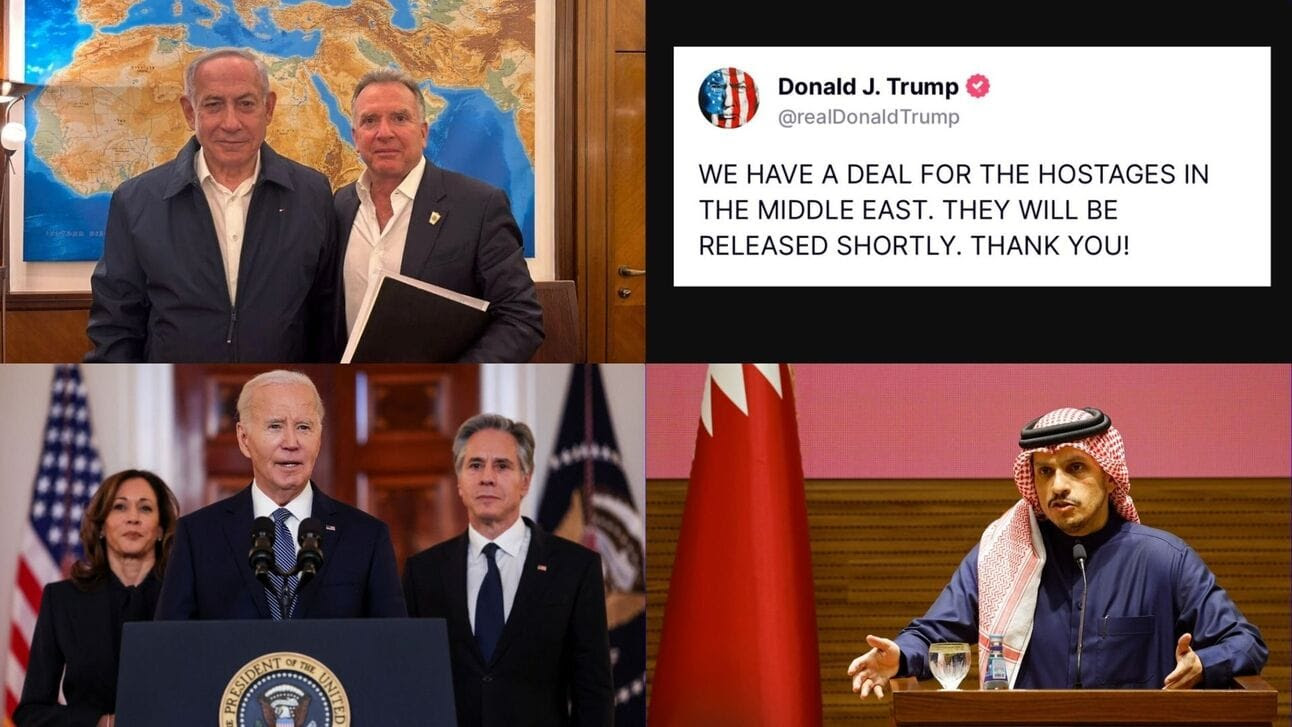
466 days into the Israel-Hamas war, the two sides have now reached a second (and potentially final) ceasefire and hostage release deal, set to go into effect this Sunday, 19 January — the day before Trump 2.0 kicks off.
Announced in Doha by Qatar’s Prime Minister Al-Thani, with help from American, Israeli, Egyptian and Qatari negotiators, the deal involves:
- An initial 42-day truce, during which…
- Hamas gradually returns 33 (not all alive) of the remaining ~100 hostages
- Israel releases ~1,200 Palestinians from Israeli prisons
- Partners surge humanitarian aid into Gaza
- Israeli forces begin withdrawing from the strip, and
- Palestinians can return to northern Gaza
Beyond that initial six week mark, the idea is to shift to a less detailed second and third phase to bring a permanent end to the war, release all the hostages, finalise Israel’s withdrawal, and move to some kind of post-Hamas Gaza reconstruction.
Stay on top of your world from inside your inbox.
Subscribe for free today and receive way much more insights.
Trusted by 160,000+ subscribers
No spam. No noise. Unsubscribe any time.
Hamas was always reluctant to do a deal because returning the hostages would evaporate whatever leverage it had left.
And Netanyahu was always reluctant because any deal leaving Hamas in Gaza ran the risk of another October 7 attack, plus opposition from his own hard-line coalition partners.
So… why have they agreed to this deal now?
First, the answer depends a bit on who you want to give credit:
- The outgoing Biden administration has emphasised that this deal is the one he first outlined last year, and it’s now done and dusted before he leaves office
- The incoming Trump administration has emphasised his pledge to get it done before taking office, issuing threats against anyone still holding hostages, and
- The Qataris have been ramping up pressure on Hamas, using their leverage as Hamas politburo hosts and Gaza donors (plus the group’s relative demise).
All three camps have also variously emphasised the close cooperation between them.
But second, the answer also depends on who you want to believe:
Israel’s Netanyahu now appears to have agreed to the very same Hamas demands he rejected last year, including a) the eventual full withdrawal of Israeli troops, and b) the return of a million Palestinians to Gaza’s north (with limited security screening).
So really, the question comes down to why Netanyahu has seemingly changed his mind.
Various Netanyahu-friendly outlets in Israel are citing pressure from Trump and his envoy, Steve Witkoff. There are few details of this pressure beyond references to Witkoff’s “salty” language, plus rumours of ‘sweeteners’: settlements in the West Bank, pressure on the Saudis to normalise ties, and/or some kind of move against Iran’s nuclear program.
Anyway, against that backdrop, there are now various theories around why Bibi agreed:
- Because Trump pressured and/or enticed him more than Biden
- Because Bibi wanted the timing to favour the more pro-Israel Trump
- Because blaming Trump helps shield Bibi from his own hard-liners
- Because Bibi’s expanded governing coalition now protects him from #3 above, offering a popular exit ramp out of this war ahead of Israel’s next elections, and
- Because the post-election Biden and Trump teams have been working together to pressure Bibi, leaving him no partisan wedge to exploit.
So which one is it?
This answer might annoy some of you, and we’re unlikely to know the full truth until various inside reports are declassified, but our gut is it’s probably all of the above.
So how’s everyone responding? World leaders are hailing peace, negotiators are claiming credit, and Hamas, Israel, Biden, and Trump are all variously claiming victory.
In our own experience, when everyone’s claiming credit and victory, it’s a sign the deal might just hold — though Israel is now claiming Hamas is backtracking out of the final accord by making last-minute demands, an accusation Hamas denies.
INTRIGUE’S TAKE
The thing is, dear Intriguer, when all parties (including even foes like Israel and Hamas) claim victory, it’s also a sign that this deal might contain the seeds of its own demise.
At face value, we’re now looking at:
- A future Gaza with Hamas still present, and
- A future Israel with Netanyahu further backed by the US.
Those two futures don’t strike us as mutually compatible.
Also worth noting:
- The mastermind of the October 7th attacks (Sinwar) was himself released from an Israeli prison under the terms of a 2011 deal with Hamas.
- With a deal in place, Netanyahu could now face renewed pressure over the security lapses that enabled the October 7th attack, not to mention his ongoing corruption case.