





🌍 Bibi vs the ayatollah
Plus: How to get free flights

|
Today’s briefing: |
Sponsored by:  |
Good morning Intriguer. Sure, history will process the war-torn weekend we’ve just had, how we got here, and where it takes us next (today’s lead).
But I can’t help but wonder if decades from now, our kids will also guffaw at this weekend’s footage of that guy up on a rooftop party in Lebanon absolutely ripping a sax solo while Iranian missiles hurtle towards Israel overhead.
These are wild times, and we're grateful to have you riding them out with us. Onwards.

Bibi vs the ayatollah
Things have only escalated since Friday's war briefing, with…
-
Israel hitting Tehran, Iran's nuclear sites, a foreign ministry building, air bases, oil facilities, and a growing list of top regime figures in their cars and homes, while
-
Iran's missiles have hit downtown Tel Aviv, the port of Haifa, a top science institute in Rehovot, the city of Rishon LeZion, and elsewhere.
So as these two old foes continue to trade blows and casualties, we've reflected on the six different lessons the world might now be learning:
-
First, use your spooks
The ayatollah has spent decades dropping brash military diss tracks, only to get pantsed by Israel in a single night via simultaneous hits on air defences, decision-makers, logistical nodes, missile capabilities, and comms/energy networks. That’s the product of painstaking intelligence work to identify targets, track their locations, and pre-position arms to hit them, including from inside Iran. But…
-
Second, spooks aren’t everything
If Israel was hoping to pre-emptively fry Iran's counter-attack, that hasn't exactly played out: while the initial Iranian response suggests the ayatollah was indeed stunned and now has fewer ballistic missiles (plus fewer generals to fire them), he's still landing hits on Israel, indicating he probably had some tricks up his sleeve. Speaking of which…
-
Third, shoot to win
The world has long assumed Iran's nuclear crown jewels — deep under a mountain at Fordow — were beyond the reach of everyone other than America’s purpose-built bunker busters. That means Israel must either a) figure its own way to destroy that site, or b) convince the US to do it, otherwise c) Israel might’ve just legitimised and accelerated Iran’s progress instead (potentially days from delivering weapons-grade uranium).
-
Fourth, bearhug vs cold shoulder
This time around, President Trump initially appears to have hoped that, by giving Bibi the cold shoulder, it might’ve pressured the Israeli leader to pull his head in and let Trump land the kind of nuclear deal he campaigned on. And that's kinda the opposite of the 'bearhug' strategy that Biden long employed, hoping that by holding Bibi close within ironclad US security guarantees, the White House could shape his decisions.
The result? Bibi instead now seems to have just taken matters into his own hands, but there are also reports he’s bowed to Trump’s pressure not to target the ayatollah specifically. It’s a little like Trump’s Ukraine moves: by stepping back, has he now actually unleashed Ukraine’s security services? Anyway, speaking of all that…
-
Fifth, milk every crisis
Russia’s Putin has been on the front-foot, calling the US president over the weekend and offering himself as an Israel-Iran mediator. Why?
-
a) It helps focus the world on the Israel-Iran war, not his own war on Ukraine
-
b) It presents him to the White House as a peacemaker rather than a warmonger
-
c) A truce might save Iran’s drones for his own attacks on Ukraine’s cities, and
-
d) The longer this Israel-Iran war runs, the more the world might clock how ineffective Iran's Russian-made air defences are against Israel’s US-made arms.
Oh, and speaking of that…
-
Sixth… run, don't walk
Rogue states everywhere will reflect on the fact that, after decades of Iran flirting with nukes as a source of leverage, that strategy might now lay in flames, while those that just rushed straight to nukes instead (like North Korea’s Kim family) hold on.
But it's not just rogue states reaching this conclusion… there are now open debates across the West on whether US dependability is in doubt enough for allies to now pursue their own nuclear latency (having all the nuke ingredients ready) if not full nuclear weapons.
So maybe one of the many other lessons emerging here is that it’s ultimately active (if prudent) US engagement — not withdrawal — that keeps the US safe.
Intrigue’s Take
We've now got two rivals in open conflict, and it's hard to see either backing down:
-
Bibi senses a once-in-a-generation moment to seize Iran's weakness, reshape a region in his own favour, and etch his name into Israel's long history, whereas
-
The ayatollah has now been humiliated in front of the world and his own people, and knows his time could be up whether via palace intrigue or an Israeli trigger.
Which takes us to another lesson our world has learned elsewhere: sometimes the only thing worse than a despot is the anarchy that fills his void. In Iran’s case, that might be:
-
Securocrats seeking to protect their own power
-
Proto-fascists seeking to protect their own theocracy
-
Religious and ethnic minorities seeking to carve out their own space, and
-
A large and exhausted urban class just wanting it all to end.
Today’s newsletter is sponsored by Boxabl

Is the Stick-Built House Officially Outdated?
What if building a house could be as simple as building a car? Where a car rolls off the assembly line every few minutes.
BOXABL is inspired by Ford and Tesla’s manufacturing process. BOXABL’s patented technology allows them to create modular, prefabricated homes that are designed to fold up for transport which significantly decreases the cost of shipping & the complexity of installation.
BOXABL recently achieved a significant milestone: raising over 50% of their Reg A+ funding limit! BOXABL is now only accepting investment on their website until the Reg A+ is full.
If you want to join over 40,000 existing investors and be a part of the story, click below to explore investing in BOXABL.
Meanwhile, elsewhere…
 |
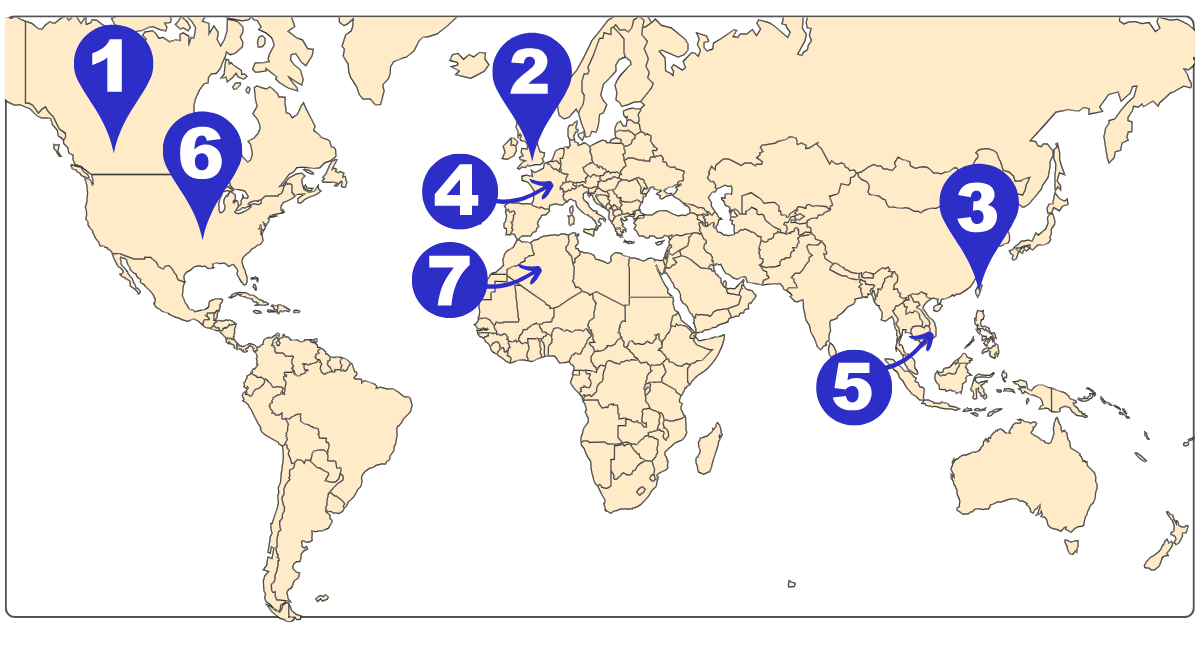
🇨🇦 CANADA – G7 kicks off. Comment: That’s almost the full G20 in attendance, minus (for example) China, Russia, and Indonesia (the latter two are meeting in Moscow this week). It’s an example of how, as these big forums struggle to address the world’s problems, hosts will mix and match different guest lists in an attempt to break any impasse. |
 |
🇬🇧 UNITED KINGDOM – New boss for Bond. |
 |
🇹🇼 TAIWAN – Taipei hits Huawei with export controls. Comment: History will reveal whether this move taps the brakes on China’s tech advancement, or just hits the gas on China’s tech independence. |
 |
🇫🇷 FRANCE – Give that back. Comment: Interestingly, current leader Emmanuel Macron actually spoke against yoinking Sarkozy’s medal. It’s partly a reflection of Macron’s yearning for statesman status (above the political fray), but it also reflects Sarkozy’s continued influence within French conservativism just as Macron tries to hold a shaky coalition together. |
 |
🇻🇳 VIETNAM – Booze tax to 90%. Comment: It’ll generate a bit of much-needed revenue and might curb some of the broader challenges around excessive boozing (described as helping “social welfare”), but at 90%, we can’t help but wonder how long until the bootlegging really takes off. |
 |
🇺🇸 UNITED STATES – Cops capture Minnesota assassin. |
 |
🇩🇿 ALGERIA – Stop the spread. |
Extra Intrigue
Your weekly roundup of the world’s lighter news…
-
Fast food pizza chain Domino's has uncovered Down Under what is thought to be the 11th plague: a meat pie crust pizza.
-
Someone just bought UK budget chain Poundland for… a pound.
-
A court has convicted a Florida man of posing as a flight attendant to score over 100 free flights
-
A Syrian contractor has discovered the remains of an underground Byzantine tomb complex while cleaning out the rubble from a destroyed house.
-
And the world’s oldest tavern is now facing a challenge from another Madrid tavern claiming it’s even older.
Embassy of the day
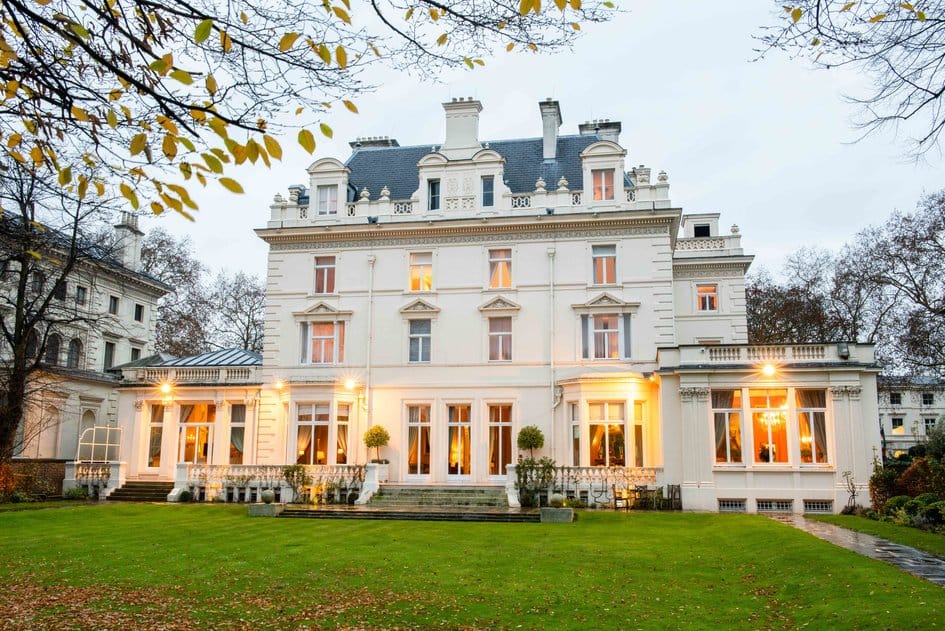
Wait, who put a French chateau in the middle of the British capital? Why the French, of course.
Known throughout history for their chill approach to national pride, the French obviously had to design their shiny ambassador’s residence to stand out amid all those drab Victorian bay windows and exposed red brick mansions. But maybe the Brits got the last laugh, because the mid-1800s manor was actually designed by a famous British architect going by the unbeatable name of Sydney Smirk.
Today’s poll
How do you think this Israel-Iran conflict will end? |
Thursday’s poll: Why do you think European bonds are so hot right now?
🚥 Because there are few other options (34%)
🥋 Because EU members have tightened their belts (22%)
👪️ Because investors sense EU unity (40%)
✍️ Other (write us!) (4%)
Your two cents:
-
🥋 C.D.J: “Investors like stability and fiscal responsibility is attractive.”
-
✍️ A.W: “Potential US investors are skittish and looking for diversification.”
-
✍️ A.S: “To quote the famous political chanteuse, Kelis, ‘My big bonds bring all the boys to the yard’.” [Editor’s note: lol]