




🌍 Heists that changed the world
Plus: Give that pope a horse

|
Today’s briefing: |
|
Good morning Intriguer. If The Simpsons taught us anything, it’s that stealing is okay so long as you say ‘yoink’. We may never know if the weekend’s Louvre thieves uttered the magic word before escaping down their vast ladder Sunday morning, but it really got us wondering about the geopolitics of heists, so that’s today’s top story.

PS — Just what your Monday needed, but 500 or so companies and government agencies have reported global outages in the last couple of hours, with initial diagnostics suggesting an Amazon Web Services issue.
Answer of the day
‘Who cares’
That’s how the White House deputy press secretary responded to media questions about Saturday’s mass, nationwide ‘No Kings’ rallies against Trump 2.0.
Yoink
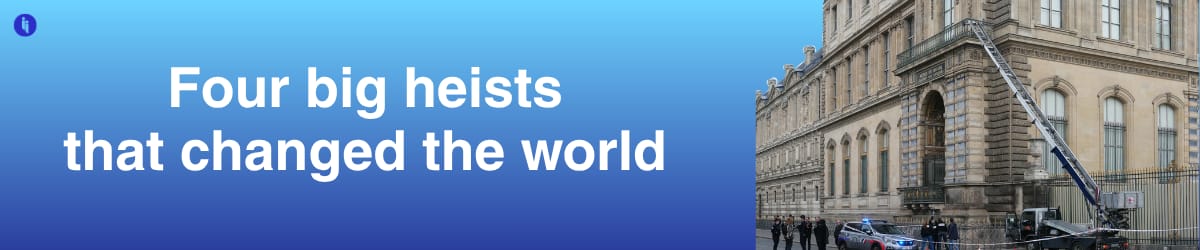
The thieves used this truck & crane-ladder to get inside.
Thieves somehow just went full Ocean's 11 with a brazen, broad-daylight heist at the world's most-visited museum: the Louvre.
These mysterious Clooneys seemingly pulled up in a truck, used its crane-ladder to reach a balcony, then pinched priceless Napoleonic crown jewels in just seven minutes.
And that’s after last month's $700k heist across the Seine at the Museum of Natural History, plus the $7.5M museum theft down in Limoges.
It's not just an affront to law and order, but also French history and culture, amid a febrile atmosphere of political-economic instability, all while a populist opposition circles. Ufff.
Anyway, like Carrie Bradshaw, we got to thinking… about the geopolitics of heists.
-
Brazil's central bank burglary, 2005
A gang spent three months tunnelling 78m (256ft) under two city blocks from a rented fake landscaping business, right into the vault of Brazil's central bank! By the time bank officials realised, the thieves had already disappeared with $70M (or 3.5 tonnes) of cash.
The geopolitics? It came right as Brazil's ambitious and newish president (today's Lula) was pushing a more assertive role at the helm of a more integrated Latin America. So this heist not only reportedly bankrolled a Brazilian cartel's expansion into more conflict with US counternarcotic efforts, but it also complicated Lula's Mercosur talks with neighbours like Argentina and Uruguay — you want us to trust Brazilian governance and institutions even after a gang just emptied your vault?
Anyway, it’s not just criminal outsiders that’ve robbed central banks. For example…
-
The looting of Iraq's central bank, 2003
Two days before the US-led invasion of Iraq, Saddam Hussein's son Qusay loaded $1B in cash onto three trucks, under handwritten orders from his father. US soldiers later ended up finding $650M hidden in the walls of one of the family’s riverside palaces.
The geopolitics? That recovered cash contained forensic breadcrumbs (serial-numbered bills) that helped investigators figure out how Saddam evaded sanctions, with lessons the world then applied to North Korea and Iran. Still, the missing cash likely ended up fuelling the post-invasion insurgency, not to mention straining Iraq's ongoing reconstruction.
Anyway, it’s not just emerging markets or conflict zones prone to these tales. Consider…
-
The Salomon Brothers treasury bond scandal, 1991
Paul Mozer (head of Salomon's government bond trading desk) famously got caught rigging the very same US Treasury auctions that help finance US government spending.
The geopolitics? Mozer’s timing (like his ethics) proved terrible: the story broke just as the Soviet Union was crumbling, so it undermined US credibility right as DC was pitching itself as the responsible steward for a new world order. This all helped Japan, which was at the time pushing a more multipolar economic order (until its own bubble burst).
And speaking of bubbles bursting…
-
The Antwerp diamond heist, 2003
This one involved an Italian crew posing as traders to map out the ultra-secure Antwerp Diamond Centre, before busting its 10 layered defences (infrared, seismic, magnetic, etc).
The geopolitics? The $100M heist was a massive deal in the way it:
-
a) undermined the new Kimberley process that was trying to stop conflict diamonds, and so…
-
b) strained Belgium's ties with former colonies in Africa, where untraced diamonds went on to further fuel some conflicts, while
-
c) Israel argued untraced gem flows even enriched Hezbollah, and this all…
-
d) diluted Antwerp's diamond dominance in favour of rivals Mumbai and Dubai, plus…
-
e) further emboldened America's post-9/11 push for more scrutiny of financial flows, including among these kinds of off-book, trust-based, handshake sectors.
So it doesn’t take long to realise these thieves are often doing more than just stealing treasures: sometimes they also plunder trust, destabilise nations, and redraw regions.
Intrigue’s Take
What big picture insights might we glean from all this intrigue?
First, when thieves can consistently out-smart the state like this, it hints at broader cracks in governance and legitimacy that probably need attention.
Second, we’re curious how these kinds of crimes might evolve in a de-globalising world: they rest on the relative ease of spiriting an artefact across seamless borders to some mysterious buyer, but might a world pulling up its drawbridges complicate that model?
And third, these high-profile heists often trigger a regulatory response, leaving us to wonder if the weekend's Louvre incident might get the ball rolling on better cross-border artefact tracking — the French not only have arguably the most at stake, but also among the most effective diplomatic services to drive a response.
Meanwhile, elsewhere…
 |
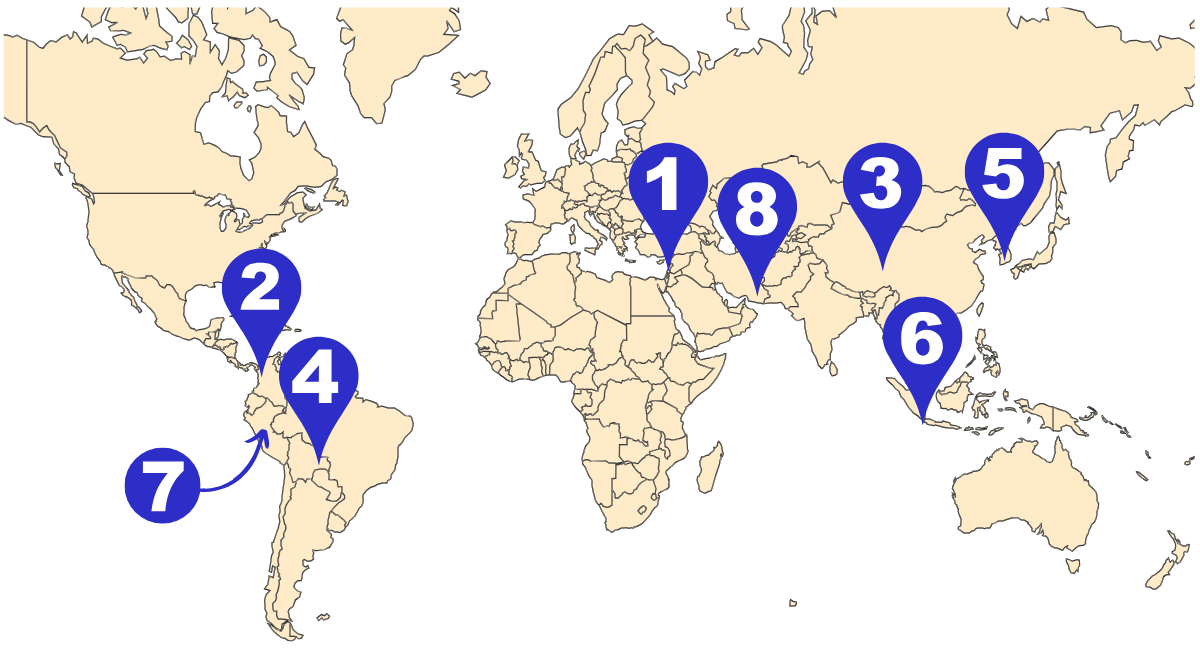
🇮🇱 ISRAEL – Ceasefire wobbles. |
 |
🇨🇴 COLOMBIA – The US strikes again. |
 |
🇨🇳 CHINA – Growth stunt. Comment: It’s interesting timing for China’s leaders, who just kicked off the Communist Party’s latest ‘plenum’ (a key planning meeting due to wrap Thursday), while also resuming US trade talks on a possible de-escalation. |
 |
🇧🇴 BOLIVIA – Change in leadership. Comment: There are lazy headlines about a lurch to the right, but Paz himself pushes back on that, instead pledging “capitalism for all” amid Bolivia’s worst economic crisis in decades. Paz takes office on November 8. |
 |
🇰🇷 SOUTH KOREA – Travel bans. Comment: We wrote here about how these scam centres are affecting the region. Cambodian authorities have turned a blind eye to (and profited from) this kind of organised crime, but Korea’s announcement is an example of how it’s starting to hit Cambodia’s tourism ambitions in parallel. |
 |
🇮🇩 INDONESIA – Nice jets you have there. Comment: Jakarta is billing this as a normal part of its military modernisation, and this particular jet has been in high demand since Pakistan used it to down some of India’s French-made fighters in May. But as with any major military purchase, Indonesia’s neighbours will be watching for signs it reflects a closer pivot to China. |
 |
🇵🇪 PERU – New president, old problems. Comment: Jerí is hardly the ideal interim leader before July’s elections: protestors are angry at corruption, and he’s surrounded by allegations of corruption. Meanwhile, Peru’s rolling political crisis, crime, and community opposition continue to rattle the country’s copper sector, though output still seems to be holding steady. |
 |
🇮🇷 IRAN – No bounds. Comment: The JCPOA’s lapse is pretty meaningless given trust and talks already collapsed, and the ‘snap-back’ sanctions already resumed in August. But highlighting its formal expiry (while reiterating a commitment to diplomacy) is probably Iran’s attempt to build a bit of leverage before any talks resume. |
Extra Intrigue
🤣 Your weekly roundup of the world’s lighter news
-
A Kiwi company has started selling non-alcoholic wine for pets, including Pawt, Purrno Noir, and Sauvignon Bark.
-
A budget Canadian airline is planning to charge passengers who want to recline their seats.
-
A US brand has recalled its fire lighters due to a fire risk.
-
A university in Australia has used AI to wrongly accuse students of using AI.
-
And churches in Kenya have had to switch their altar wine after it became a hit in local bars.
Gift of the day
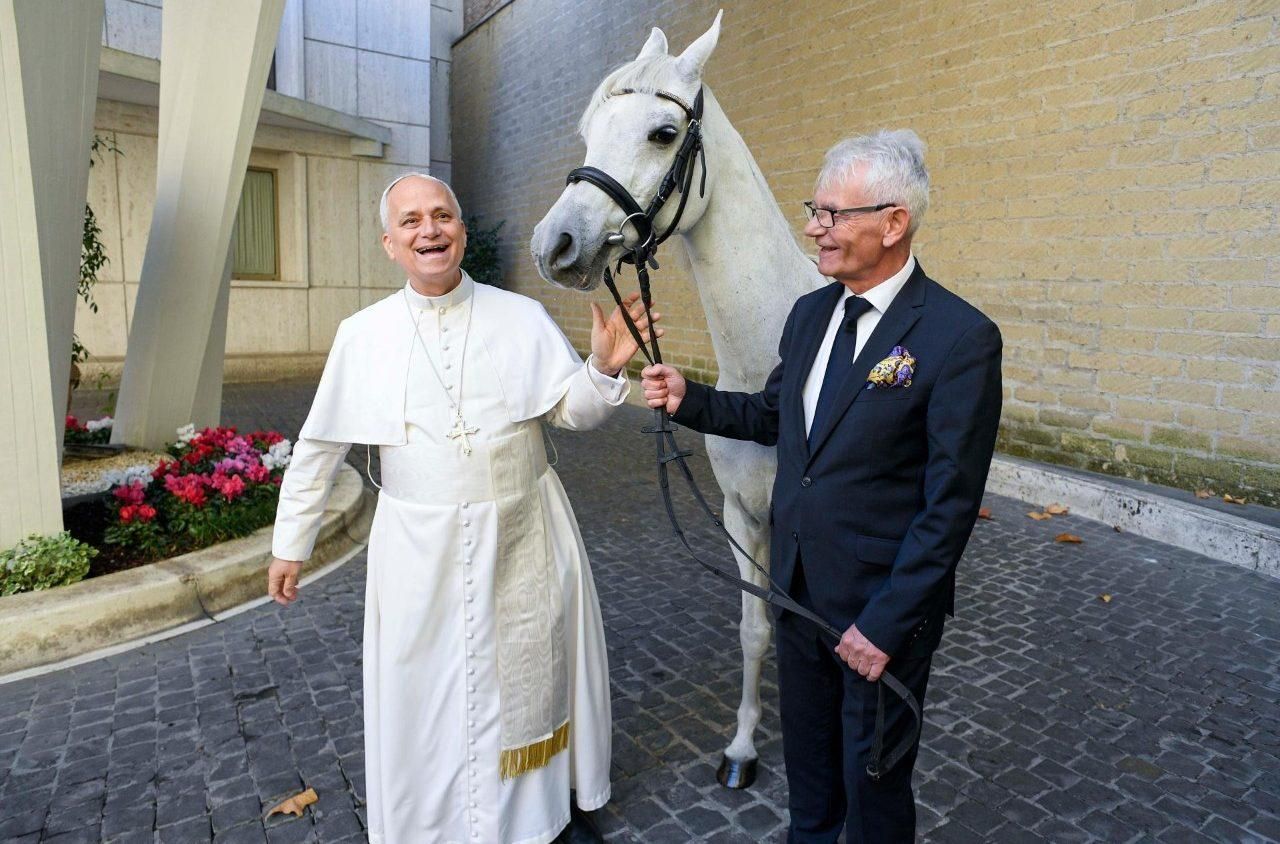
Credits: Vatican Media.
Is the pope ditching his popemobile for a sweet new four-legged ride?
Nope, it’s a gift from a Polish breeder who said he was inspired to donate the Arabian steed after seeing a pic of the pope on horseback during his Peru missionary days.
The idea is to auction off the purebred (named Proton) for charity, and he’ll attract a pretty penny given his intriguing pedigree: his father was raised by Princess Alia Al Hussein of Jordan, while his mother emerged out of a top Qatari breeding program in the US.
Today’s poll
Do you think the French will get their jewels back? |
Last Thursday’s poll: Do you think the UK should approve China's mega embassy in London?
🏛️ Yes, the UK needs better ties with China (11%)
👎 No, the risks outweigh any benefits (87%)
✍️ Other (write us!) (2%)
Your two cents:
-
👎 Z.S: “How is China going to staff an embassy 10x bigger than its current digs? What UK government would accredit hundreds of new positions?”
-
🏛️ C.B: “Sure – but just bug the walls like the KGB tried to do to the new US Moscow embassy. Or better yet, a tunnel, like the FBI tried on the Soviets in Washington.”
-
✍️ K.M: “As in everything with politics, it’s about finding a win for both sides.”