


🌍 How will other despots see Maduro’s capture?
Plus: Moscow’s weird train rebrand

|
Today’s briefing: |
|
Good morning Intriguer. There’s a remarkable old story doing the rounds again about retired Venezuelan general, Ángel Vivas. A vocal critic of the regime, Maduro himself ordered Ángel’s arrest on live TV, triggering a military-intelligence siege of the general’s Caracas home that lasted more than a thousand days!
Eventually, Maduro’s SEBIN spooks captured him by staging a fake car accident at Ángel’s doorstep — they got him when he rushed out to help.
Ángel then disappeared into Maduro’s notorious Helicoide prison for 420 days, only emerging after international pressure forced Maduro into a big prisoner release. I’ll spare you the details of what he endured inside, but as he limped outside on live TV, Ángel was still yelling anti-tyranny slogans. And 2,777 days later, he’s still seemingly under Chavista watch at his home in Caracas, tweeting defiantly against “that murderer”, Maduro.
While I ponder if there’s any better way to describe Ángel than the “absolute chad” moniker he’s now earned online, let’s take a look at whether Maduro’s capture will now embolden or deter other authoritarians, shall we?

Mystery of the day
What’s really onboard the Bella?
Russia is sending a sub to escort the sanctioned Bella tanker that slipped the US blockade of Venezuela and is now somewhere off Iceland. There’s speculation the US could be planning an at-sea interdiction. Our best guess? Putin tried (too late) to send Maduro some kind of deterrent weapon, and now wants it back.
Venezuelan soap(box)

Now that we’ve briefed you on the initial aftermath of Trump’s brazen move to capture Maduro, it’s time we swan-dive chin-first into the shallow end of a bigger debate still playing out: will Trump’s Venezuela gambit now embolden other autocrats, or deter them?
Let’s break down the two main camps, shall we? So come join us by the fire over at…
-
Camp one: This will embolden autocrats!
Here are three of the main rows in this camp, starting with…
a) “If the US can do that, then so can we!”
By waltzing in and snatching a world leader in his PJs, Trump has gutted international law and normalised this behaviour. The standard question doing the rounds is this: how can DC object when Putin does this to Zelensky, or Xi does it to Lai? Anyway, between trying or planning that already, Maduro’s capture is now fuel for their propaganda machines.
Still, China (which frames Taiwan as an internal rather than international issue) put it to the UN like this: “No country can act as the world’s police.”
b) “If the US can do that, we must resist!”
Any general worth his medals will long be studying this operation and urging rapid countermeasures: not just more (and better) air defences, or more secrecy and unpredictability around a leader’s patterns, but big picture moves like cosying up to more (and more effective) anti-US powers, and even getting more strategic deterrents (nukes).
Likewise, there’s the risk US allies could take a quiet step back as US moral authority recedes. France put it to the UN like this: these repeated violations ”will have heavy consequences for world security, sparing no one.”
c) “If Maduro got betrayed, then so might we!”
It seems clear someone close to Maduro (potentially even his own veep) was helping the CIA keep tabs on him. Even surrounding himself with Cuban loyalist bodyguards wasn’t enough, and the paranoid regime is now widening its crackdown in response.
So the argument is this all risks triggering pre-emptive regime oppression everywhere else, and potentially even further entrenching and validating despots behind authentic local and regional blowback against US overreach, volatility, bullying, and/or imperialism.
So that’s camp one. Now grab yourself some s’mores and follow us over to…
-
Camp two: This will deter autocrats!
Three of the main rows in this particular camp are…
a) “The US is no longer bluffing!”
This argument suggests the US will no longer just send sternly-worded tweets or sanctions from Foggy Bottom, but will turn your team, train at an exact replica of your villa, then pants your China-built ‘anti-stealth’ defences, kill 32 of your crack Cuban bodyguards, and haul you before a New York judge without even suffering a grazed knee.
That surely restores US credibility against other foes, weakens any despot’s perceived security behind sovereignty, raises the costs of defiance, and encourages the next Maduro to just hold elections instead of dancing on TV.
At least, that’s how Taiwanese security officials have been briefing out to journalists — Trump’s flex will deter Xi from making any big moves on the democratic island.
b) “Maybe this regime can’t protect me!”
These regimes rely on elite loyalty, with every general and crony deeply invested in the caudillo’s continued survival. But spectacularly hauling him off in the middle of the night now erodes the elite loyalty that glues these regimes together: and if this guy can’t protect (or pay) those around him, defections become more likely, and so does collapse.
c) “Impunity is over!”
There’ve been several Venezuelans describing the horrors of Maduro’s infamous spiral-shaped Helicoide prison and asking why international law not only never stopped Maduro from torturing them there, but arguably just protected him while he kept at it.
These voices frame the international law and legitimacy debate less around violating state rights, and more around defending human rights — maybe Maduro’s capture is the catalyst for stronger deterrence against these kinds of regimes everywhere (Trump has already threatened Iran if it keeps shooting protestors).
Anyway, this is an endless gyre of arguments and counter-arguments, some of which we explore further below (and we look forward to seeing yours via today’s poll!).
Intrigue’s Take
For thousands of years, humans have struggled to reconcile two opposing ideas: how a good god can allow evil. That particular struggle for answers is known as theodicy.
We mention this because, given states have only been around for a few hundred years, we humans have had much less time to pursue a similar kind of theodicy for geopolitics: how is a world built on sovereignty meant to handle atrocities behind inviolable borders?
Our world’s answers still veer wildly across the spectrum: some would argue there is no international law, or that if it ever existed, it’s now dead, or being unmasked Scooby-doo style as some kind of artifice for hard US power. Has it been warm and fuzzy norms and laws stopping China from invading Taiwan all these years, or just the US seventh fleet?
Others acknowledge the system’s imperfections but assess or hope our world’s basic rules of the road (like state sovereignty) are still our best chance: if Iraq and Libya taught us anything, it’s that sometimes the only thing worse than a dictator is anarchy or outright war. Most of the world’s countries are too tiny to thrive in a ‘might is right’ world.
The closest we’ve ever come to a kind of theodicy — resolving these opposing ideas — was something called The Responsibility to Protect (R2P). Pushed by a dozen or so mainly Western countries in the early 2000s, it reframed sovereignty more as a responsibility rather than an absolute right, obliging the international community to step in when a regime breaches its core duties. R2P never really caught on, both because many countries rejected the theory as a figleaf for more Western interventions, but also because in practice it still relied on the UN: what are the chances China and Russia would send Maduro arms one day, then back some kind of R2P response at the UN the next? A relevant R2P centre just put out a statement mostly condemning Trump’s move.
So for now, our world will remain stuck in that wild middle, with powers still seeing value in international law to protect and validate their interests, but also as a whataboutism cudgel to selectively whack and besmirch their rivals, if not just something to ignore when inconvenient. But where does it all lead?
We see more chaos ahead in a more multipolar and unilateral world over the medium term, but longer term? As tireless optimists, we’re reminded of that classic Gordon Brown line: "In establishing the rule of law, the first five centuries are always the hardest."
Sound even smarter:
-
We flagged yesterday the role of Venezuela’s powerful interior minister (Cabello) as head of the paramilitary colectivos now cracking down on regime rivals. The US has reportedly now warned him to tone it down or face a Maduro fate.
-
The International Criminal Court (ICC) has been at various stages of investigation into Venezuela since 2018.
Meanwhile, elsewhere…
 |
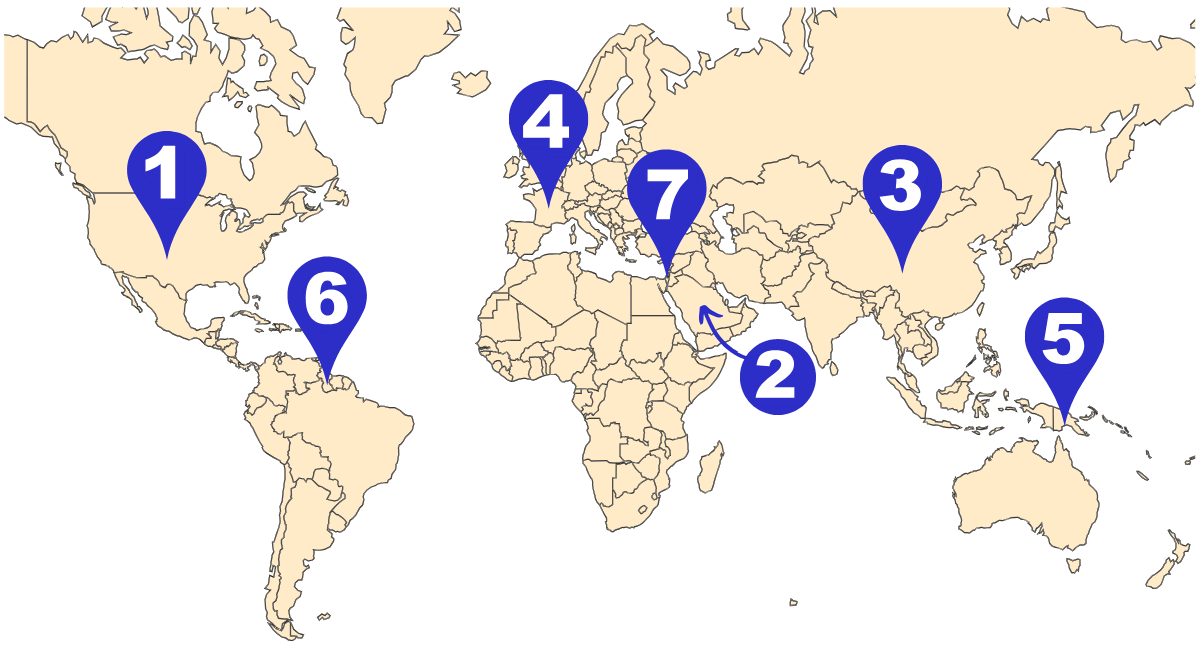
🇺🇸 UNITED STATES — Gimme Greenland. Comment: It’s hard to find the words to convey just how wild it is for a US president to threaten territorial seizure from a fellow NATO ally, and one where the US already enjoys a massive and unfettered military footprint. Just this century, the Danes have lost seven soldiers fighting with the US in Iraq, and another 43 in Afghanistan. |
 |
🇸🇦 SAUDI ARABIA — He just disappeared! Comment: We wrote about the Emirati-Saudi power struggle in Yemen, and the possibility it might split the country back in two, here. |
 |
🇨🇳 CHINA — Chips again. Comment: The world is still catching its breath post-Venezuela, but just weeks ago Trump’s H200 green-light was the biggest story in town — we explored it here. |
 |
🇫🇷 FRANCE — We got you. Comment: Call us cynical, but the ‘after a ceasefire’ bit further erodes any hope Putin will acquiesce to a ceasefire until he’s forced. On that front, word from the Paris summit is US negotiators now seemed more hardened to Putin’s games. |
 |
🇵🇬 PAPUA NEW GUINEA — Doom scroll. |
 |
🇬🇾 GUYANA — Share of the pie. |
 |
🇮🇱 ISRAEL — Watch out. Comment: Maybe the heads-up is a trust-building gesture among fraught neighbours. Or maybe it’s an attempt to pile more pressure on Iran’s wobbly regime. Meanwhile, the same possible insider who won $154K on Polymarket predicting the exact date of an Israeli hit is now betting on another big hit on Iran before January 31. |
Extra Intrigue
The Intrigue jobs board 💼
-
Policy Advisor @ The New Zealand embassy in Bogotá
-
Chief Librarian @ Organization of American States in DC
-
Coordinator, Regional Cooperation and Integration @ Caribbean Development Bank in Barbados
-
Researcher, International sanctions @ Dansk Institut for Internationale Studier in Copenhagen
Train of the day
Credits: Smartik
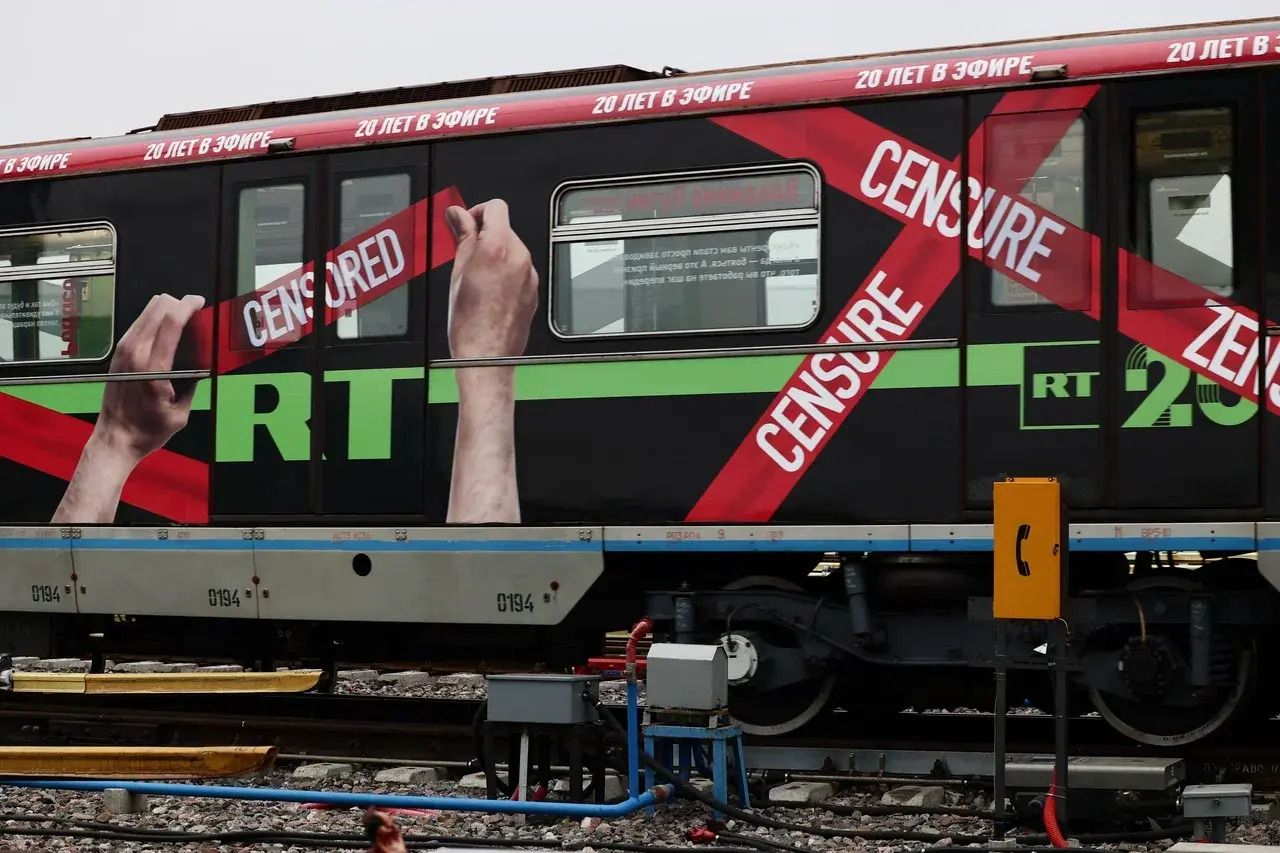
We’ve seen trains rebranded to publicise the release of Cars 7 or whatever, but Russian state outlet ‘RT’ has now gone a step further, launching a fully brand-wrapped “Propaganda Train” in the Moscow Metro to mark the mouthpiece’s 20th anniversary.
The railcar is operating on the Arbatsko-Pokrovskaya line until June 2026, with local bloggers sharing pics of interiors that have grab-rails shaped like megaphones and RT microphones, while wall graphics highlight some of Putin’s quotes about the network.
The Moscow Metro has a long propaganda history (Soviet-era stations were often adorned with ideological art), but this modern iteration is interesting for the way RT purports to embrace the propaganda label often wielded against it.
Today’s poll
Do you think Maduro's capture will embolden or deter other autocrats? |
Yesterday’s poll: What do you think of prediction markets like Polymarket?
👀 They can be useful to suss out the wider mood (37%)
❌ They're easily manipulated and often wrong (61%)
✍️ Other (write in!) (2%)
Your two cents:
-
👀 E.K.H: “It's one thing to play armchair theorist when there's nothing at stake (like these polls, no offense). But putting real money on the line shifts the dynamics – I'm willing to bet more on predictions I have more knowledge and confidence in.”
-
❌ C.M: “The lack of adequate controls to prevent the use of insider information makes Polymarket an excellent tool for supporting many forms of corruption and further enriching the already rich.”
-
✍️ C.D: “Frankly, I ignore them. They remind me too much of a drunk uncle that loves to say ‘I told you so’ when they get a thing or two right.”