




🌍 The big new EU-India deal
Plus: Turkey's new mafia

|
Today’s briefing: |
|
Good morning Intriguer. Why do nearly all international trade deals have such mid names that are either impossible to remember or are just a jumble of letters? Looking at you, ‘Comprehensive and Progressive Agreement for Trans-Pacific Partnership’ (aka the CPTPP).
That’s why trade negotiators often refer to the deals they’re responsible for landing using much handier, tighter nicknames. For example, the Switzerland-China trade deal was famously the “cheese and chocolate deal”, and the New Zealand-China deal was the “dairy and seafood deal”.
The trade deal that features in our top story today is between India and the EU, and is already dubbed the “mother of all deals”. It’s estimated to impact almost 2 billion people and a quarter of global GDP when implemented. That’s a bloody big deal. Let’s dive into it.

Number of the day
2014
That’s the last time US consumer confidence sank this low, according to surprisingly gloomy figures released Tuesday.
Trade ya

The EU’s Ursula von der Leyen had three things on her India to-do list this week:
-
Slay a silk brocade outfit at India’s 77th national day parade (which featured everything from motorcycle balancing acts to woolly camels)
-
Sign a free trade agreement with the world’s most populous country, and
-
Don’t chew gum (hi everyone, this is a joke about how India still hasn’t forgiven Obama for chewing gum during their 2015 national day parade).
Having successfully completed her list, VDL returned to Brussels, leaving the rest of us to ponder the significance of this new “mother of all trade deals”.
And sure, there’s significance in the raw numbers, given it’s a free trade area that…
-
a) Covers 2 billion people
-
b) Represents nearly 25% of global GDP
-
c) Cuts Indian tariffs across ~97% of European goods, and
-
d) Cuts European tariffs across 99% of India’s goods.
So in practical terms that means if you’re (say) a European auto executive, your Polo GT could eventually face tariffs as low as 10% (down from 110%!). And if you’re an Indian pharma executive, your generic paracetamol could face tariffs as low as 0% (down from 10%).
But as big as these numbers are (doubling exports by 2032?), this story goes even bigger.
First, why now? Both deals have been in the works for decades, though adjusting for BBT (Brussels Bureaucratic Time), you could argue this is the Commission at warp-speed.
But the reality is two things have changed to push these talks from impossible to done.
One is the White House which, under Trump (and continued via Biden), has upended the world’s economic assumptions: in a low-trust world, Ricardo’s comparative advantage is now out, replaced by (say) America First, industrial policy, supply-chain sovereignty, strategic disentanglement, friend-shoring, rank mercantilism, etc.
The other related change has been in Geneva, where the World Trade Organization (WTO) has been paralysed since Trump 1.0 halted judge nominations to the WTO’s top court, after years of broader US frustration over what we’ll casually summarise as the WTO enabling China’s mercantilist rise while thwarting US responses.
Anyway, describe these two changes how you like, but with the world’s largest economy narrowing its front gate, and the world trading system’s roof caving in, spooked capitals are now taking talks into their own hands and rushing for new markets to buy their stuff.
That’s a big reason why India has suddenly gone from trade hermit to apostle, while the EU is now doing deals everyone long insisted would be impossible, which brings us to…
The second story here: why this trade deal?
One reason an EU-India trade deal always seemed impossible was both capitals struggle with the same powerful constituency: whether occupying the streets of Delhi, or dumping dung in the streets of Brussels, it’s the farmers who don’t like the thought of suddenly being poor because trendy Brazilian picanha is now on special down at Lidl.
So how did the EU and India resolve that tension? They didn’t! Instead, they basically agreed to keep their farmers happy and exclude sensitive agricultural goods from the deal, while the Mercosur pact comes with endless sweeteners to calm farmer fears.
So with trade now facing narrower gates and caving roofs, everyone seems to be saying that a skinny deal now is better than some chunker that dies a committee death in 2049.
Intrigue’s Take
Interestingly, the EU uses similar language when describing both its India and Mercosur deals, framing them as proof “that rules-based cooperation still delivers great outcomes”.
That repeat is partly because Brussels bureaucrats love smashing those ctrl-c and ctrl-v buttons as much as the next functionary. But it’s also because Brussels is openly sending a message (to the US) that it’s still better to build a world on deals rather than barriers.
Yet it’s also directed at everyone, and we just saw an example why: there’s long been a quiet fear of Trump-tariff contagion, and we maybe just saw it in Ecuador’s sudden 30% tariffs on Colombia over an unrelated dispute — though Ecuador might learn that it’s tougher to nail that tactic without the leverage of the world’s largest economy.
But while the EU likes to frame this as a deal vs no-deal binary, you might also frame trade deals around who does and does not pay. Much of the Western world, for example, is grappling with the way maybe globalisation was paid for by rust belt workers.
As for who pays in our world’s emerging new trade regime? Whether it’s the pricier steak to protect our local farmer, or the pricier EV to protect our local automaker, or the pricier tech to protect our supply chain, this new trade regime is paid for by us, the consumer.
We’ve gone from trade’s beneficiary to its sponsor.
Sound even smarter:
-
Some of the big winners for Europe will likely include machinery, chemicals, pharmaceuticals, wine and olive oil. India’s winners will likely include textiles, pharmaceuticals, jewellery, leather, and marine products. India’s high-skill expats also seem to benefit from greater EU access.
Today’s briefing is presented by…
Someone just spent $236,000,000 on a painting. Here’s why it matters for your wallet.
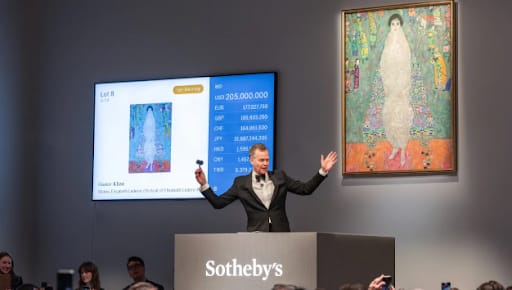
The WSJ just reported the highest price ever paid for modern art at auction.
While equities, gold, bitcoin hover near highs, the art market is showing signs of early recovery after one of the longest downturns since the 1990s.
Here’s where it gets interesting→
Each investing environment is unique, but after the dot com crash, contemporary and post-war art grew ~24% a year for a decade, and after 2008, it grew ~11% annually for 12 years.*
Overall, the segment has outpaced the S&P by 15 percent with near-zero correlation from 1995 to 2025.
Now, Masterworks lets you invest in shares of artworks featuring legends like Banksy, Basquiat, and Picasso. Since 2019, investors have deployed $1.25 billion across 500+ artworks.
Masterworks has sold 25 works with net annualized returns like 14.6%, 17.6%, and 17.8%.
Shares can sell quickly, but my subscribers skip the waitlist:
*Per Masterworks data. Investing involves risk. Past performance not indicative of future returns. Important Reg A disclosures: masterworks.com/cd
Meanwhile, elsewhere…

 |
🇸🇦 SAUDI ARABIA — Not on my skies. Comment: That’s probably not as comforting for Iran as it sounds: the US has no shortage of bases in the region (Qatar, Kuwait, UAE) and didn’t need Saudi airspace when it hit Iran’s nuclear sites last year. |
 |
🇬🇧 UNITED KINGDOM — Trip to China. Comment: Like Canada’s Carney and France’s Macron before him, he’s joined by a big delegation of business and cultural leaders hoping to revive ties with the world’s second-biggest economy amid tensions with the biggest (the US), before Trump himself travels to China this April. |
 |
🇷🇺 RUSSIA — No comment. |
 |
🇳🇴 NORWAY — Bang, bang. Comment: Russia’s invasion of Ukraine has been a reminder how much artillery still matters in modern warfare. As for Norway’s decision to go with a Korean supplier, it’s easy to see this as a rebuke of the US, but it’s more likely a rebuke of US manufacturing timelines and potentially even range. |
 |
🇹🇱 TIMOR LESTE — Out of town guests. Comment: It’s a tough balance for Albanese: in seeking to push back on China, he’ll want to emphasise Australia’s role in East Timorese independence, and not Australia’s earlier recognition of Indonesia’s occupation, but all without antagonising Indonesia. He’s also navigating a long-running gas dispute — and we wouldn’t be surprised if the Australian oil & gas operator (Woodside) ends up getting some kind of sweetheart deal to help process gas in Timor (per local wishes, and per recent Aussie practice to curb China’s appeal elsewhere in the Pacific). |
 |
🇺🇸 UNITED STATES — Not what it looks like. Comment: Even if a misunderstanding, it’s an example how much ICE’s reputation has soured abroad. Meanwhile, Ecuador has filed a complaint after ICE agents reportedly tried to enter Ecuador’s consulate in Minneapolis. |
 |
🇷🇼 RWANDA — Pay up. |
Extra Intrigue
The Intrigue jobs board 💼
-
Trace Officer @ Conflict Armament Research in the UK
-
Geopolitical Affairs, Assistant VP @ Deutsche Bank in NYC
-
Senior Associate @ International Organization for Migration in Brasilia
-
Director, Policy Strategy & Intelligence @ General Motors in DC
Mafia of the day

Credits: Street Food Tours, YouTube
We’ve already got mafias focused on drugs, guns, and scams. Then there's Turkey.
Turkey’s police have rolled up their sleeves to crack down on what officials are calling a flatbread mafia. That’s right, dear Intriguer. A gang, sensing an opportunity in what might be Turkey’s most aggressively defended staple, now stands accused of strong-arming bakeries into ceding control of the prized pide market in the country’s south.
The interior ministry says it’s rounded up 38 suspects, 23 vehicles, and 85 bank accounts that’ve racked up a cool $200M in five years!
Today’s poll
How do you feel about a weaker USD?(the US dollar recently dropped to its lowest since 2022)
|
Yesterday’s poll: What do you think is the best hedge in today's world?
🏆 Gold (51%)
🏡 Real estate (34%)
🏛️ Government bonds (5%)
₿ Crypto (5%)
💸 Forex (2%)
✍️ Other (write in!) (3%)
Your two cents:
-
🏡 A.G: “Depends what you’re hedging. Gold looks great on a balance sheet or in a vault, but real estate serves a purpose.”
-
🏆 P.W: “There's a finite amount of gold which helps control prices.”
-
✍️ H.C: “Talent. Invest in yourself, and you can move with the changes.”