

🌍 Venezuela’s four big questions
Plus: How (not) to go viral in Mexico

|
Today’s briefing: |
|
Good morning Intriguer. It’s almost 20 years to the day that I was atop Ávila mountain outside Caracas, munching on an arepa while someone cranked Oscar D’León through tinny speakers (salsa without bass is like a Ferrari without an engine).
Beyond the burnt out skeleton of Venezuela's tallest skyscraper (hit by a massive 2004 fire), you could see the vast Tiuna military complex, not far from where Chavez surrendered after his first failed coup in 1992, famously (if ominously) urging his men to lay down their arms because their objectives hadn't been achieved "por ahora" (for now).
I never imagined Chavez would soon be dead, and his bus-driver protégé (Maduro) would then steer Venezuela's economy off a cliff and destabilise a region, let alone US special forces one day dropping from the skies to haul Maduro off that very same Tiuna base.
Anyway, before we dive into today’s briefing on what that all means, it’s worth noting that a full third of you did indeed foresee Maduro’s forceful ouster in our last poll, and Intrigue’s annual geopolitical bingo card also called his demise (though that was back in 2024 and via a Venezuelan ballot rather than a US chopper). Anyway, onwards.

Number of the day
2.6 million
That’s how many daily cyberattacks Taiwan says China launched against key Taiwanese infrastructure in 2024, more than doubling from 2023.
Attacks Americana
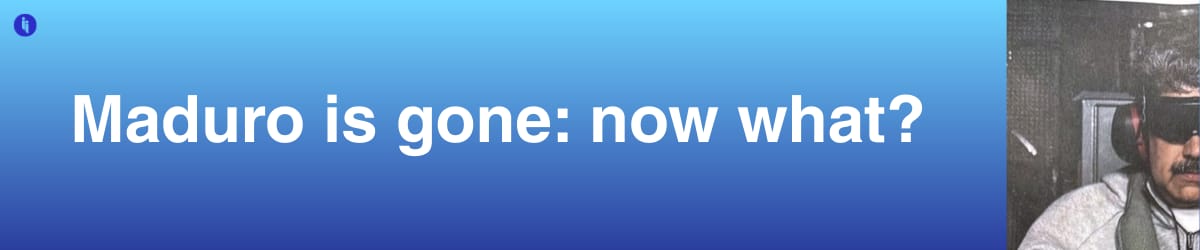
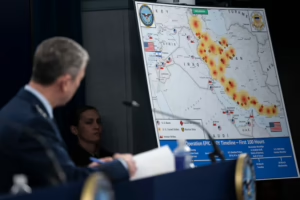
While you were already soft-pedalling your 2026 resolutions, it turns out Donald Trump was approving Operation Absolute Resolve, before watching live from Mar-a-Lago as US cyber ops plunged Caracas into darkness, 150 US military aircraft circled above, and Delta Force troops nabbed Maduro and his wife as they fled to a saferoom in Tiuna base.
While the world still processes the wild reality of that single sentence, here are the four biggest questions you now need to consider, starting with…
-
Why'd Trump do this?
It's worth a quick reflection on the theories, starting (from least to most plausible) with…
-
a) Drugs? That's a legal figleaf more than a reason: the drugs ravaging US communities mostly don't come from — nor even via — Venezuela, and the world leader more responsible (Juan Orlando of Honduras) just scored a US pardon.
-
b) Democracy? That might be why folks have celebrated in Caracas, Miami, and beyond, but it's been a side-plot under Trump 2.0. The Maduro regime still limps on, just with VP Rodriguez at the helm (she might’ve betrayed Maduro to the US).
-
c) Oil? Venezuela sits on a fifth of the world's proven reserves, and yoinked US assets nearly two decades ago. But the world is now flush with supply, energy mixes are in a longer-term transition, and this isn't a spigot DC can just turn back on — that'll take at least a decade and $100B or more in capital investments.
-
d) Donroe Doctrine? Secretary of State Rubio just spelled this out: in a reversion to the region's long status quo ante, he told NBC the US will no longer tolerate rivals (whether Iran, Russia, China, or Cuba) using the Americas as a hub.
Anyway, while these each play a role, Trump's Maduro beef realistically predates them all. So ultimately, our sense is Maduro was just the region's most high-profile — and easily-ousted — example of open defiance against a US leader prone to dominance. That gels with reports Trump’s final straw might’ve been Maduro dancing defiantly on state TV.
-
Was this legal?
US officials technically detained Maduro under the drug trafficking indictment that’ll now work its way through US courts (he’s due in a Manhattan court today, Monday).
As for international law? The legal eagles in Intrigue's WhatsApp group have tackled this one (it’s free to join the chat by referring friends to Intrigue using your unique link below), but the reality is even with a dictator unlawfully clinging to power and dragging millions through misery, there's no international carve-out for the US to roll in and arrest him.
-
What does this mean for Venezuela?
There's an old Family Guy joke about American naiveté in hoping democracy suddenly 'kicks in' abroad, but after decades of Chavismo, those generals weren’t about to start taking orders from Nobel laureate Machado — ditto the ageing ex-diplomat Gonzalez who ended up winning the 2024 election on Machado’s behalf (Maduro banned her).
So Venezuela's top court has now confirmed Maduro's veep as president, and she's issued a meek statement inviting the US to work together, all while sitting under portraits of Chavez and Maduro (a bit of red meat to keep her Chavista base on side). Meanwhile, Rubio has downplayed Trump's initial suggestion the US would now run Venezuela. The wild truth is, locals now don’t seem to know who’s really in charge.
So it's still early days, but history could end up remembering less the surgical precision of this hit, and more the creeping possibility there was no clear plan for day two. Best-case scenario might be a Noriega 2.0, when Panama’s genuine democratic transition soon superseded initial condemnation of Bush's intervention. Worst-case scenario could be a Gaddafi 2.0, though Venezuela doesn’t face anywhere near the same ethno-political fractures and separatism that Gaddafi’s regime papered over in Libya.
-
And… what does this mean for the world?
Beyond Maduro, the biggest losers here are now his own purported backers abroad:
China's LatAm envoy (Qiu) had just met Maduro hours earlier, and Beijing had just reiterated its own big Latin America plan, so it's hard to think of a starker US repudiation than physically now putting Maduro in the slammer. Meanwhile, Venezuelan oil is barely ~4% of China's imports, so any supply bumps might hurt a few teapot refinery profits, but the bigger question is what happens to the billions Caracas still reportedly owes Beijing.
Putin has likewise sent arms over the years, and just hosted Maduro to sign a strategic cooperation treaty in May! But with Putin's pals in Syria and Venezuela now gone and his Iranian partner on the ropes, it all points to the continued retrenchment of Russian power.
And while on Iran, the mullahs only just hosted Maduro in 2022 and sent a sympathetic call (plus drones) last year, but have themselves otherwise been too weak to lift a finger.
Still, the most worried leader might now be Cuba's Díaz-Canel, with Rubio barely stopping short of confirming the Communist-run island is next. Cuba’s leader was already grappling with blackouts and a corruption scandal, and that was before Trump cut the cheap Venezuelan oil that’s helped keep the regime afloat (~30% of imports). And as if that weren’t enough, Cuba has now admitted the US operation against Maduro left 32 Cuban nationals dead! (a paranoid Maduro relied increasingly on Cuban bodyguards)
Anyway, whether it’s China, Russia, Iran or Cuba, this whole episode has now illustrated the limits of their own power — they didn't lift a finger because they couldn't. Contrast that to a United States that's now shocked the world with another reminder it might still be the only player capable (and willing) to hit anyone, anywhere, any time.
Intrigue’s Take
So… how will our world react to this kind of United States?
Some capitals might now reassess the accepted wisdom that the US is in some form of decline: whether yoinking Maduro in Caracas or hitting bunkers in Iran or even posting a shock 4.3% growth number in Q3, there’s evidence still pointing in the other direction.
But even if you reassess that conclusion, where does that get you? For a start, allies might twig that what they thought was an international order in decline was just shifting atop US power all along. So maybe we’re now seeing less a US power pulling back, and more a pivot away from upholding a system it feels has long gone from asset to liability.
But then… which way is US power now pivoting instead? There’s speculation around a new ‘spheres of influence’ approach, but Trump’s doubling down on the Western hemisphere doesn’t mean ceding Asia to China nor Europe to Russia (though Putin reportedly pushed for some kind of Venezuela-Ukraine swap during Trump 1.0). To the contrary, Trump’s natsec strategy (and subsequent arms sale to Taiwan) points elsewhere.
The truth might be that, rather than any single grand strategy, we’re seeing a transactional US president make opportunistic moves as he sees fit: we send a historic armada and this guy dances on TV?! And if that’s the case, it’s hard to know how much this saga emboldens or intimidates foes — it’s certainly hard to see it comforting allies, though LatAm neighbours have largely split along familiar ideological lines for now.
Anyway, for decades the US approach to Venezuela relied on what the NYT’s William Neuman memorably likened to “reverse rapture theology”: slap on some sanctions, then hope the bad guys disappear. In Venezuela’s case, at least, that old theology is now gone, perhaps replaced by the prospect of seven million Venezuelans finally returning home.
Sound even smarter:
-
US oil and gas stocks are up on the news, with Chevron alone spiking ~11%.
Meanwhile, elsewhere…
 |
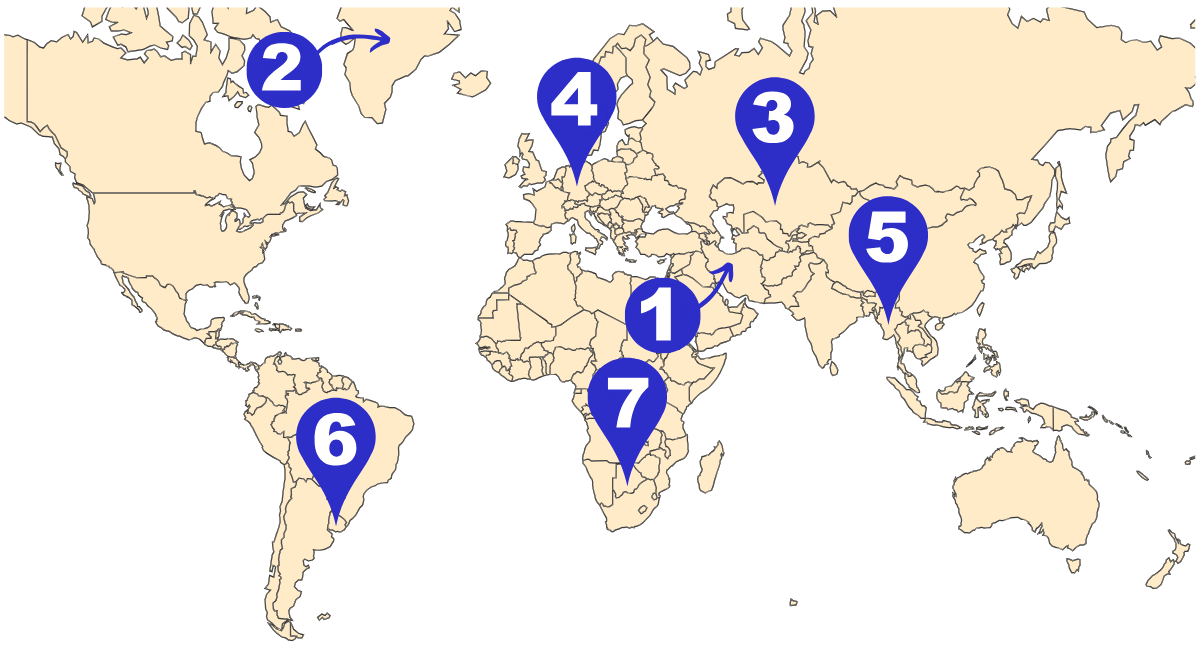
🇮🇷 IRAN — Deadly protests. Comment: Again, this is either history in the making, or the prelude to another brutal crackdown. |
 |
🇩🇰 DENMARK — Quit playing. Comment: What did we say above about allies being spooked by the Maduro operation? Denmark is visibly now taking Trump’s rhetoric more seriously. |
 |
🇰🇿 KAZAKHSTAN — Market share. Comment: US rivals China and Russia both already have agreements to build large-scale reactors in Kazakhstan — this US move is about further hustling in a region seen as more up for grabs while Russian power burns itself out in Ukraine. |
 |
🇩🇪 GERMANY — Brrr. Comment: Watch for whether authorities unearth any foreign backing for this group. |
 |
🇲🇲 MYANMAR — Free at last. Comment: These announcements are an annual affair, but the generals are probably hoping to pull a Belarus — ie, trading public gestures for sanctions relief. |
 |
🇺🇾 URUGUAY — Water emergency. |
 |
🇧🇼 BOTSWANA — Quid pro quo. Comment: Russia is the world’s other major source for diamonds, a gem in decline partly because synthetic versions have now gutted the market. Botswana might also be flirting with Russia to build leverage in hopes of the US easing its tariffs. |
Extra Intrigue
🤣 Your weekly roundup of the world’s lighter news
-
Local government workers in China have been busted using print-outs of each other’s faces to fake their office attendance records.
-
A US lawyer is suing the IRS, arguing her pet dog is a lawful tax dependant.
-
A British baker has apologised after her critique of Mexican bread went viral.
-
A Delaware man has called the police to retrieve belongings he left in the car he stole (yes, cops then arrested him).
-
And a Virginia airport has gone viral after using social media to try reuniting a lost teddy with its owner.
Currency of the day
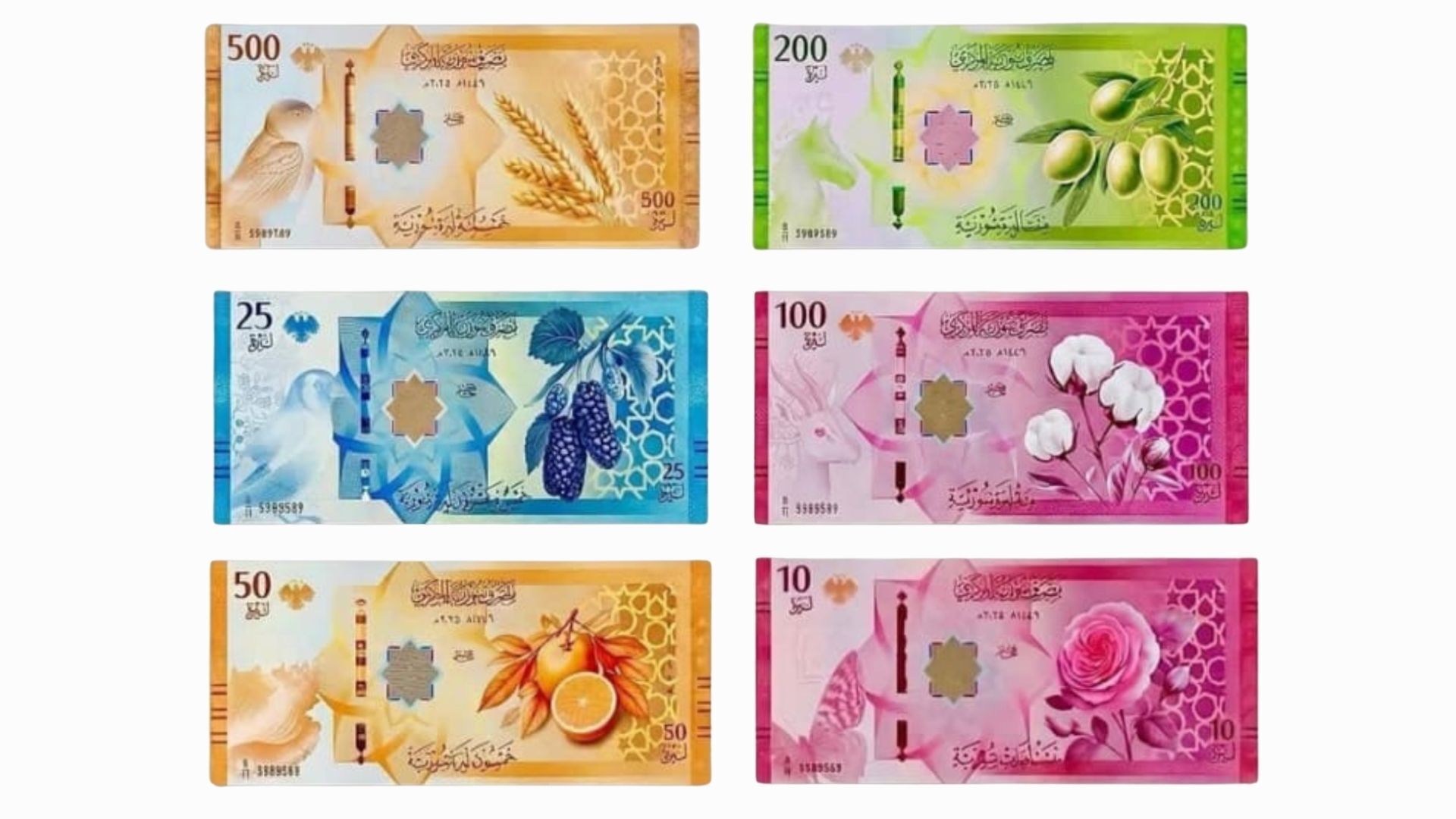
And on the topic of nations losing leaders, Free Syria has unveiled its new currency above. You’ll see the mood is firmly out with the Assads (who used to adorn notes), and in with olives, oranges, and wheat. Bank authorities also lopped off two zeros for good measure.
To be clear, any redenomination won’t magically fix an economy that’s been through civil war, sanctions, oligarchs, warlords, and a brief phase where you needed a duffel bag to buy bread. But it will make paying for groceries slightly less workout-adjacent, and is another meaningful step towards building a post-Assad future.
Today’s poll
What do you think about the US capture of Maduro? |