



🌍 What’s the US up to off Venezuela?
Plus: This country just made AI a minister

|
Today’s briefing: |
Sponsored by:  |
Good morning Intriguer. There’s a stand-up comedian from Venezuela (Ivan Aristeguieta) who does a good bit about how in his home country, seeing a rare red-head (‘fosforito’ or ‘little matchstick’) is good luck — if you spot one, you make a wish.
He then recounts with amusing awe what it’s like travelling abroad for the first time and seeing ‘fosforitos’ every day — what is this truly magical place, he wonders? It’s a joke about how things that seem normal in one country can seem entirely wacky in the next.
Anyway, let’s take a look at what the US is doing with such a massive naval build-up off Venezuela, shall we?

PS — ¿Hablas español? ¡Check out our weekly edition in Spanish!
Date of the day
17 September
That’s when America’s latest divest-or-ban deadline for TikTok is set to expire, though the White House is widely expected to grant the social media platform a fourth extension.
A mysterious build-up
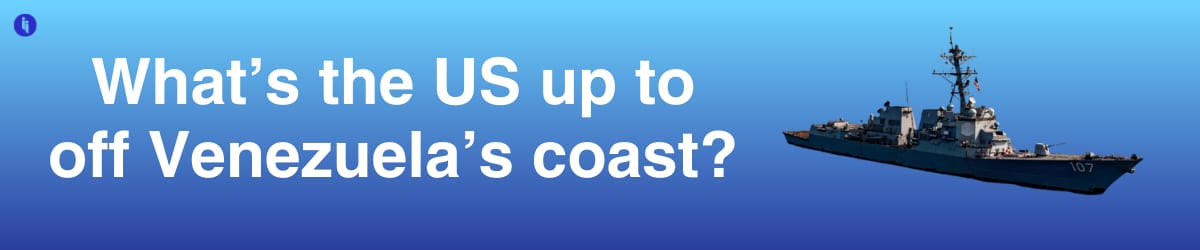
The US now has some serious firepower in the Caribbean, including at least one attack sub, eight warships, 10 F-35 jets, surveillance aircraft, and ~4,500 marines and sailors.
So it's worth asking… what's really going on? Here are the three main theories.
-
Counter-narcotics
There's no single release (and the president’s directive on force against cartels remains secret), but you can triangulate the basics of a counter-narcotics operation via various US statements. There’s also now been the deadly 2 September US strikes on a Venezuelan boat, plus this weekend’s reports that US forces boarded another (no word from DC).
Why this focus on Venezuela? While global cocaine production keeps hitting new highs, Venezuela itself is more of a transhipment hub, helping offshore maybe 10%-20% of Colombia’s production. Way more gets trafficked up to the US through Pacific routes.
Still, the Venezuelan numbers seem to be rising, and Maduro's forces no longer just tolerate it, but actively profit from it. That's how the 'Cartel de los Soles' got its nickname (it’s a reference to the sun insignia on Venezuelan uniforms, rather than any normal cartel).
But either way, that's a huge amount of US firepower for a 2nd-tier drug route, leading to speculation this naval build-up is more about…
-
Political pressure
Maduro (the local dictator) claims we're now seeing an escalated repeat of Trump 1.0’s ‘maximum pressure’ campaign, blending a naval build-up with drug indictments and a bounty now doubled to $50M. That's why Maduro is calling it all "the biggest threat to our continent in 100 years".
What might be Trump's strategy here? While he’s downplaying regime change, the US indictment and bounty both delegitimise Maduro, while the build-up could destabilise him. There’ve also been reports the Pentagon could be planning strikes on cartel targets inside Venezuela.
The exact endgame here is unclear, but DC might use the pressure to push for fair elections, encourage more defections, and/or see what other concessions a paranoid regime might offer.
There's also speculation these US moves could be aimed at helping…
-
Guyana next door
Maduro has tended to respond to political pressure (like last year's elections he stole) by firing up his territorial dispute with Guyana next door. And it's not just any ol' dispute: Maduro claims two-thirds of what is Guyana-run territory, including the vast (bigger than Bangladesh) oil-rich Essequibo region where ExxonMobil made its historic 2015 discovery.
And whether or not the US build-up is about backing Guyana against Maduro's threats, Guyana's president has openly welcomed the deployment.
Anyway, for us, there's likely a degree of 'all of the above' here, with an eye on politics back home too. But the ambiguity itself also seems to be a core part of the strategy, suggesting a key target audience is Maduro’s regime in Caracas: when you’re not really sure what’s going on, it can paralyse your decision-making and deter any risky moves.
Intrigue’s Take
What makes this all really interesting is the fact it's playing out amid a fierce and nerdy debate on broader US strategy.
Some frame this US flex in the Caribbean as a modern-day revival of the old Monroe Doctrine, when the US declared the Western Hemisphere off-limits to foreign powers. Ie, after years of rivals like Russia, China, and Iran showcasing closer (if often pretty symbolic) ties with Venezuela, maybe DC is now signalling its red lines.
But the fierce and nerdy debate goes bigger, pondering whether this Caribbean flex is actually a hint of what’s in Trump 2.0's National Defense Strategy, now getting finalised by his top Pentagon official, Elbridge Colby. ‘Bridge’ is a proud 'prioritizer' when it comes to US power (ie, he argues the US can no longer do it all, so must pick what matters). And based on leaked drafts, Trump 2.0 does indeed want to elevate priorities closer to home.
But if this is all about ‘prioritising’, the obvious question is what that means for US allies (and foes) elsewhere. And yes, the leaked drafts do point to more "burden-sharing" with allies and partners (think Europe shouldering more against Russia).
As for foes, there's also been a lot of debate around whether the US might change its strategy on China, and the leaks suggest a subtle but significant change there, too: whereas past strategies emphasised China as the overriding global challenge, newer drafts narrow the focus more towards a specific strategy of 'denial' — ie, deterring China from invading Taiwan (and thereby dominating the broader region).
Anyway, that’s partly why this deployment is generating so much interest around the world: whether by design or not, and whether focused just on cartels or not, it potentially doubles as a preview into a new world ahead.
Today’s newsletter is sponsored by Pacaso
Keep This Stock on Your Watchlist
A young, private company is making waves in a $1.3 trillion real estate industry. They even reserved the ticker PCSO. No wonder investors are excited to invest in Pacaso’s current growth round.
Created by a former Zillow exec who sold his first venture for $120M, Pacaso has already generated $1B+ worth of transactions and associated service fees, earning $110M+ in gross profits to date.
People are noticing, too. In fact, 10k+ regular investors have bought shares already. The early backers of Uber and Venmo invested, too. Join them as a Pacaso shareholder before the opportunity ends Thursday.
Meanwhile, elsewhere…
 |
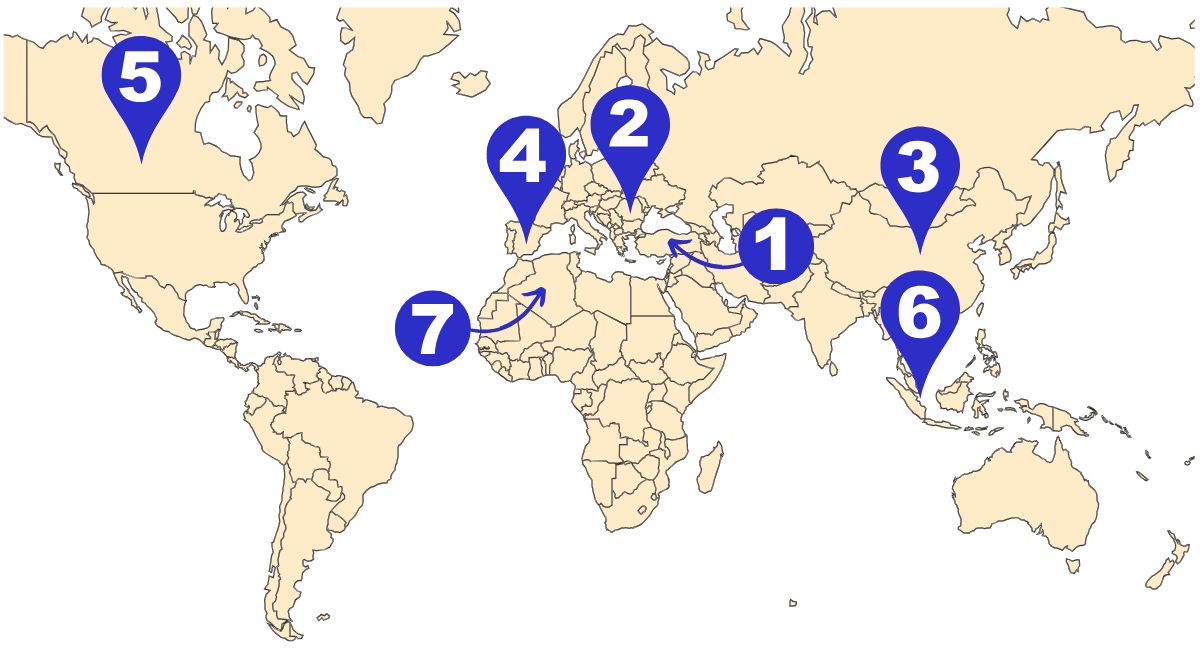
🇹🇷 TURKEY – On the edge. Comment: If the court ousts Özel, it’ll shake markets as investors brace for more turmoil amid the seeming politicisation of Turkey’s institutions. We all saw how that panned out for Turkey’s central bank (inflation is down but still in the 30s). |
 |
🇷🇴 ROMANIA – More drones, more problems. Comment: Meanwhile, President Trump has written to NATO allies urging them to hit China with 50-100% tariffs for buying Russian oil — it’s hard to see members like Turkey and Hungary pausing their own Russian oil purchases, let alone tariffing China. |
 |
🇨🇳 CHINA – No deal. Comment: For China’s JD.com, it’s part of a broader effort to diversify outside China amid slowing e-commerce there (it launched a bid for a German retailer in July, and failed to buy Britain’s Currys electronic retailer last year). |
 |
🇪🇸 SPAIN – Thou shall not pass. Comment: The chaos has played into Spain’s political polarisation, with the left-leaning government voicing pride in the protests, while the conservative opposition (which also runs Spain’s capital city) described the events as “an international embarrassment televised worldwide”. |
 |
🇨🇦 CANADA – Places to live. |
 |
🇸🇬 SINGAPORE – Loophole? Comment: The UN’s postal agency has said at least 88 postal operators were fully or partially suspending US services in response to DC’s new tax rules. This new Singapore model might be a preview into how the rest of the world adapts, with national operators helping senders calculate their US tax burden up-front. |
 |
🇩🇿 ALGERIA – Cabinet shift. Comment: It’s possibly a response to public discontent amid low growth, high inflation, and poor service delivery (there was a deadly bus crash in Algiers last month). |
Extra Intrigue
🤣 Your weekly roundup of the world’s lighter news
-
Albania has become the first country to appoint AI as a minister to oversee the country’s public procurement system.
-
Years after tying the knot, a couple has finally identified the wedding-crasher in their photos: turns out the guy just accidentally attended the wrong wedding!
-
A French court has jailed a winemaker after he got caught passing off his imported grape-bubbles as Champagne.
-
Japan’s transport minister hit the national airline with its second warning in under a year for having pilots showing up to work boozed.
-
And, a sunflower planted in Indiana as a tribute to Ukraine has broken the world record, standing at 11 meters (35 feet).
Embassy of the day
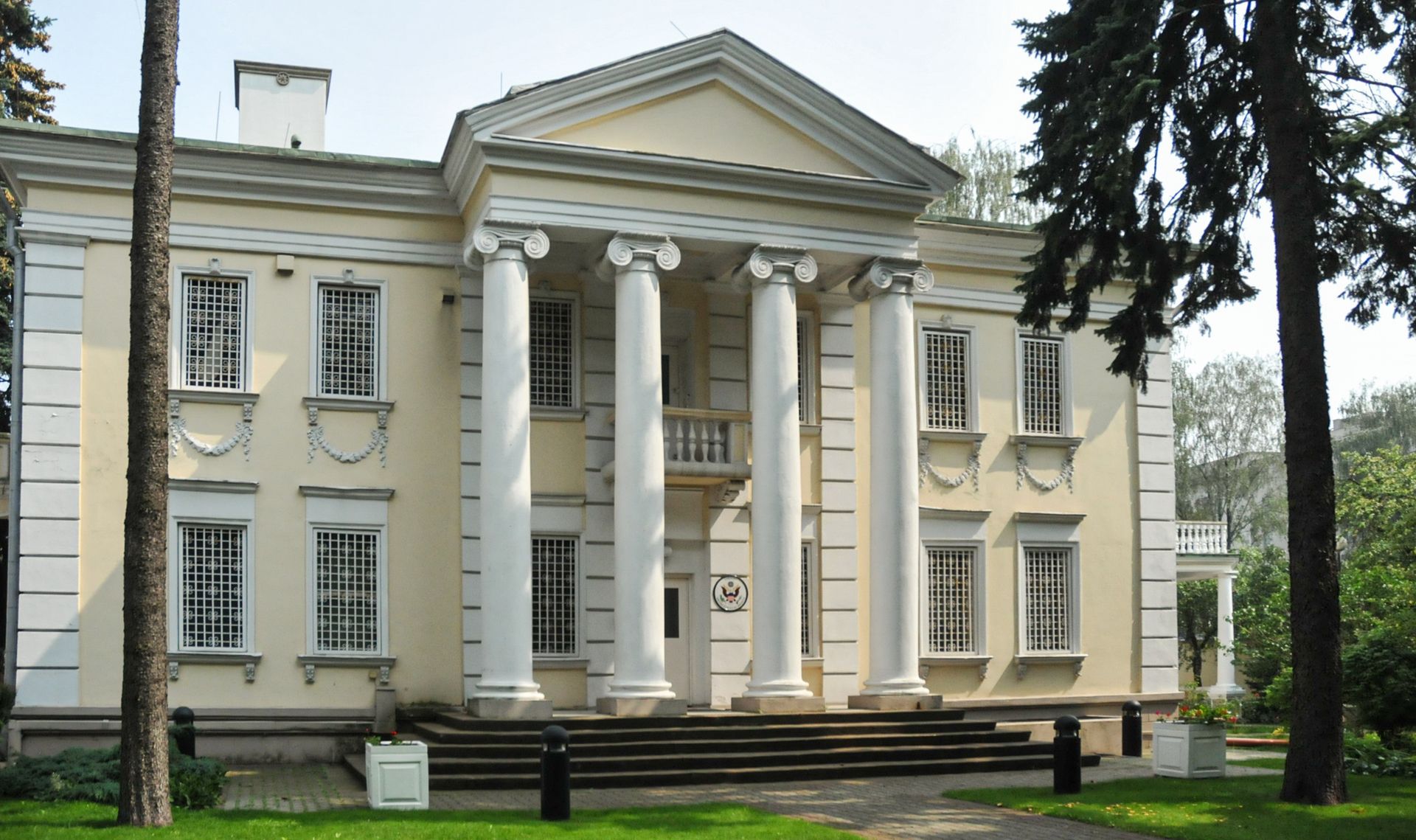
Credits: State Mag.
That’s the US embassy in Belarus, but it’s been suspended since DC halted ties with Minsk over its role in helping Putin invade Ukraine.
We looked the building up after a presidential envoy said late last week that Washington is looking to reopen its Minsk mission as part of broader efforts to normalise US-Belarus ties. And that’s when we noticed something else: it turns out the State Department quietly revealed last week it’s had a Chargé d’Affaires posted to Minsk since July.
It’s unclear what the exact US strategy is, though Belarus (a Putin ally) has for a few months been pitching itself as part of the solution to securing any Russia-Ukraine peace.
Today’s poll
What do you think this US deployment to the Caribbean is *most* about? |
Last Thursday’s poll: Do you think the recent protests across Asia are connected?
👍 Yes, the main link is social media (34%)
🤥 Yes, the main link is corruption (60%)
🤔 No (tell us why!) (4%)
✍️ Other (write us!) (2%)
Your two cents:
-
👍 J.S: “When I worked in Silicon Valley I sometimes heard social media proponents say ‘governments control countries but we control the world’ and I think there’s some truth to that.”
-
🤔 I.T: “Asia is a huge area. It is as likely as not that multiple protests occur at any point in time.”
-
🤥 S.F: “Populations have been fighting corrupt governments all through history. This is nothing different other than the ability to communicate and organize more effectively than ever before.”
-
✍️ J.O: “Corruption is inherent to every hierarchical political system, as are the protests against those systems. This isn’t just an Asia thing.”