


🌍 Soap operas that change the world
Plus: Art in an abandoned theme park

|
Today’s briefing: |
|
Good morning Intriguer. Today’s briefing on the geopolitics of TV soap operas is as good an excuse as I’ll ever have to share my two interactions with Mexico’s world of telenovelas.
First, I once accompanied Mexico’s (then) president at a G20 summit, which in turn meant meeting the first lady, who happened to be, yes… La Gaviotaaaaa (‘The Seagull’), a famous soap opera star.
And second, I once somehow scored an invite to a telenovela star’s wedding in Mexico. It was everything I hoped, and more: bodyguards outnumbering guests, attendees arriving by helicopter, and like any good wedding in the Spanish-speaking world, just incredible fun that ran all weekend.
The Red Bulls kept me going until the sun started rising on Sunday morning, but when I finally tried to retreat back to the hotel around 6am, the groom looked me in the eye and pleaded, “the DJ hasn’t even arrived yet!” I stayed.
Viva. Let’s get into it.

Number of the day
900
That’s how many schoolchildren a headmaster in Pakistan saved from flash floods after noticing unusually high water levels. This year’s monsoon season has been particularly deadly.
Stream into the void

Diplomacy and wacky TV soap operas have more similarities than you might think:
-
Impossibly high stakes ✔️
-
Incompetent yet proud bosses ✔️
-
Unsuccessful assassination attempts ✔️
-
Identical twin brothers ✔️ (looking at you, 2000s-era Polish government), and…
-
A plot twist involving a secret second marriage ✔️ (now playing out in Cuba).
But weirdly, soap operas also have a history of helping nations burnish their brands abroad. That’s why Beijing just unveiled a new content renewal plan trying to encourage (among other things) more “outstanding short-form dramas”.
So, here are three (plus one) countries already smashing the TV soft power game:
-
🇰🇷 South Korea – The chiselled lead with a secret.
No surprises that Squid Game (Netflix’s most-watched TV show ever) earns Korea a mention here, but it’s worth noting the anxiety-inducing K-drama has long since escaped the confines of the screen, inspiring (for example) Squid Game-themed holidays, too.
But it’s more than thrills. There is, for example, a ‘Flash Drives for Freedom’ initiative jamming donated USB sticks with 2.64 million hours+ of video footage for smuggling into North Korea. Why? A simple soap-opera can be enough to break the regime’s monopoly on reality, revealing the freedoms folks enjoy beyond the Kim family’s reach.
But that’s not to suggest Seoul allows total creative freedom: Crash Landing on You, for example, features a rich heiress accidentally paragliding into the North and falling in love with a soldier. The writers had to get creative to deliver a satisfying ending without breaching the South’s strict rules on portraying the North (eg, no pics of the dictator!).
2. 🇹🇷 Turkey – The underdog you didn’t notice sneaking up behind.
It’s a great time not only to be a Turkish diplomat (running the world’s third-largest diplomatic footprint), but also a Turkish actor! Demand for Turkish dramas (aka Türk dizileri) nearly doubled between 2020 and 2023, pushing the Turks into third place after the US and UK for global scripted TV exports.
Political thrillers and romance dramas are the hot items, but global audiences are also hoovering up historical series. ‘Resurrection: Ertuğrul’, for example, follows the story of Ertuğrul, the father of the founder of the Ottoman Empire (modern Turkey’s predecessor), generating enough buzz to score a Netflix international distribution deal.
It’s just a classic tale featuring stoic stares and cool swords, right? Wrong. Various neighbours formerly under Ottoman rule (like the Saudis, Egyptians and Emiratis) have actually banned the state-produced series as Turkish propaganda!
3. 🇲🇽 Mexico – The OG. Wears leather jackets and has at least two long-lost twins.
Before we ignite a regional war, we should clarify that no single country owns the telenovela genre, which has flourished in Brazil, Colombia and beyond. But Mexico has wielded it as a cultural export with some remarkable results.
When the Soviet Union collapsed, for example, Mexico’s producers saw an opportunity and offered their uber-famous ‘The rich also cry’ hit for free. Millions of ex-Soviet viewers then quickly fell in love with a new genre, language, and country, with series star Veronica Castro even getting the kind of Moscow welcome normally reserved for senior officials.
4. 🇨🇳 China – The ambitious upstart.
So let’s close the loop with the folks over at China’s radio and TV authority, shall we?
While China’s TV sector is growing thanks to an insatiable demand for historical fantasy romance dramas (think Bridgerton but in Imperial China), the country’s creatives are also spearheading an entirely new medium: micro dramas.
Americans got an earlier glimpse via the short-lived Quibi startup (remember Quibi?) — these ‘verticals’ follow familiar plots and clichés, yet are a) shot vertically, and b) released via two-minute clips, all to meet our shrinking attention spans and spiralling scrolling addictions. It’s gaining traction, too, raking in a cool $7B in China last year.
Intrigue’s Take
So dear Intriguer, what might we glean about our world from the screen?
First, soft power is cheaper than hard power. Embedding a melodrama in foreign hearts and minds leaves millions with a sense they ‘know’ your country, even if they didn’t score that coveted invite to your ambassador’s niche historical ginger-bread-making exhibit nobody attended. And that sense of ‘knowing’ a place, over time, subtly shapes all kinds of political decisions downstream: maybe we should lend those friendly folks a hand.
Second, the fact governments feel the need to ban or smuggle a TV series is a reminder how much our screens are, like our seas or supply chains, very much contested turf. But our screens arguably carry higher stakes in the way they shape our history, our identity, and our values.
And we can’t help but wonder if that’s why some of today’s sharpest content now often comes from places straddling many of the hottest geopolitical fault lines, whether Turkey, Korea, or beyond.
Meanwhile, elsewhere…
 |
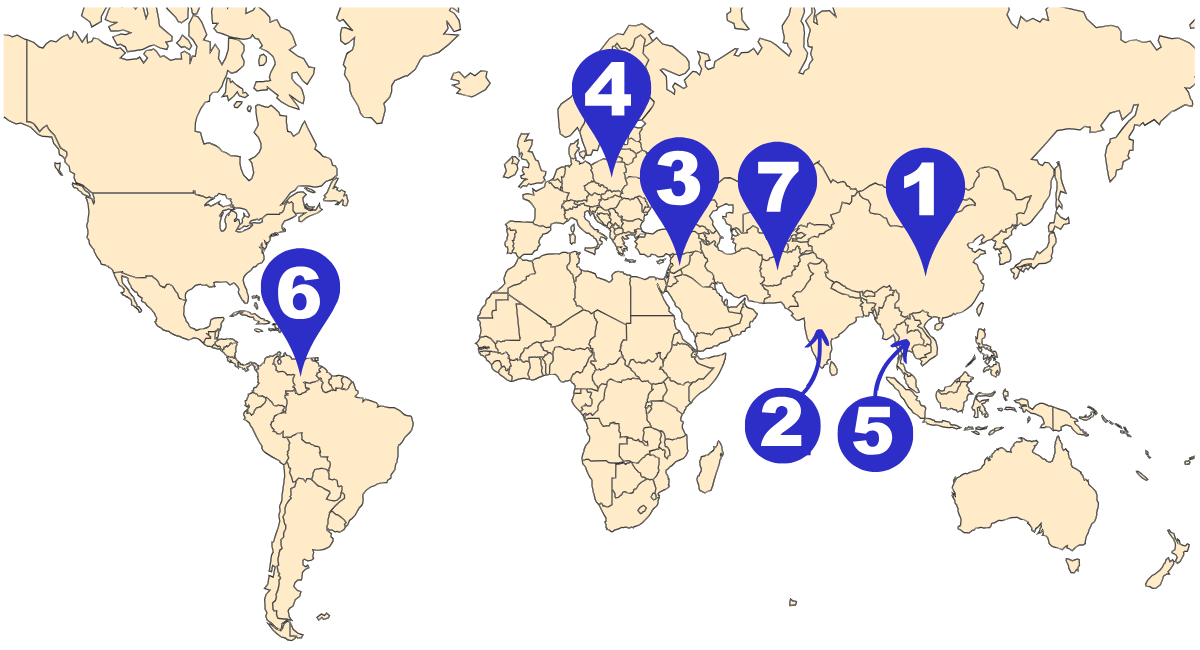
🇨🇳 CHINA – We’re not interfering. Comment: China’s very same statement rejecting claims of interference also calls on the Pacific Islands (three of whom recognise Taiwan) to “correct” a 1992 regional statement that paved the way for Taiwan’s ongoing participation. |
 |
🇮🇳 INDIA – Can’t play that. |
 |
🇸🇾 SYRIA – Rebuilding trust. Comment: The other big US-brokered dance is happening next-door in Lebanon, where the cabinet recently made a historic commitment to disarm Hezbollah. Trump’s envoy (Tom Barrack), attending the Syria talks in Paris, has just cited this Lebanese step in his calls for Israel to withdraw its final units from Lebanon’s south, though Israel wants to see the disarming in action first. |
 |
🇵🇱 POLAND – Piece of the pie. Comment: It’ll remain an irritant with NATO ally the United States, though that 3% rate might keep the issue relatively low on any DC priority list for now. |
 |
🇹🇭 THAILAND – Legal action. Comment: The Cambodians obviously won’t participate in a domestic Thai case, so this looks more like red meat for an angry home electorate. Border negotiations between the two neighbours are due to continue from 27 August. |
 |
🇻🇪 VENEZUELA – Ahoy! Comment: In Caracas, of course, it’ll be seen as a broader flex of US power, right as DC upgrades its bounty on dictator Maduro to $50M. |
 |
🇦🇫 AFGHANISTAN – Welcome back. Comment: China has yet to officially recognise the Taliban as Afghanistan’s government, though in practice they’ve exchanged ambassadors since 2023. |
Extra Intrigue
In other worlds…
-
Tech: Former Google chief executive Eric Schmidt is warning the US could fall behind in its AI race with China, where entrepreneurs are more focused on deploying existing AI tech for everyday use.
-
TV: Another political thriller is hitting our screens this week, with Hostage following a British prime minister whose husband is abducted.
-
Art: Indonesia’s annual ‘Jia Curated’ festival has just wrapped in Bali, featuring barley-built pavilions and other showcases across an abandoned theme park, all aiming to "establish Indonesia on the map of global creativity".
Currency of the day

One of 12 possible new currency designs. Credits: SNB
In classic consultative-democratic fashion, the Swiss national bank is inviting public feedback on 12 possible new designs for its Swiss Franc. Keeping things on-brand, the theme is ‘Switzerland and its altitudes’.
But don’t expect to be dropping shiny new francs on a Cailler or cowbell during your next visit. They won’t finalise the design until next year, with the new notes not entering circulation until the 2030s.
Today’s poll
Which screen medium do you think wields the most cultural clout? |
Yesterday’s poll: Which country has the best sense of humour?
🇵🇭 Philippines (5%)
🇲🇽 Mexico (12%)
🇵🇱 Poland (8%)
🇪🇬 Egypt (1%)
🇮🇪 Ireland (67%)
✍️ Other (write in!) (7%)
Your two cents:
-
🇮🇪 J.B: “Ireland! Known for the Gift of Gab for a reason. Somehow able to laugh through the Troubles.”
-
✍️ G.M: “Belgium of course, as we made everyone believe we could win the soccer world cup in 2018!”
-
🇲🇽 T.D: “Mexican memes and reels are the ultimate cure for stress. Mexico itself feels magical and beyond logic; as Salvador Dalí once said, "I can’t stand to be in a country that is more surrealist than my paintings.”