




🌍 Why Japan’s PMs keep quitting
Plus: Why you shouldn’t feed beer to an elephant

|
Today’s briefing: |
|
Good morning Intriguer. There was once a US diplomat who arrived in a global city to start his next posting. He was stationed with the local US consulate, but he actually worked for the Naval Criminal Investigative Service, popularised of course via the hit CBS TV franchise, NCIS.
Anyway, shortly after this fresh NCIS arrival pulled into his new rental home, friendly local neighbours popped over to welcome him to the area. And the American didn’t think too much about how abruptly this all ended as soon as he shared his NCIS business card.
But it made more sense when local police then knocked at his door a few minutes later, citing reports that someone was pretending to be from the fictional ✌️NCIS✌️. The guy spent his first day in-country explaining that his agency did, in fact, exist.
Anyway, let’s look at why Japan’s PM just resigned (again), and why that matters.

Number of the day
23
That’s how many intelligence agencies co-authored a recent report into China-sponsored hacking, urging targets to better defend themselves. The co-author agencies hail from the US, Australia, Canada, New Zealand, the UK, the Czech Republic, Germany, Italy, Japan, the Netherlands, Poland, and Spain.
He yens for it
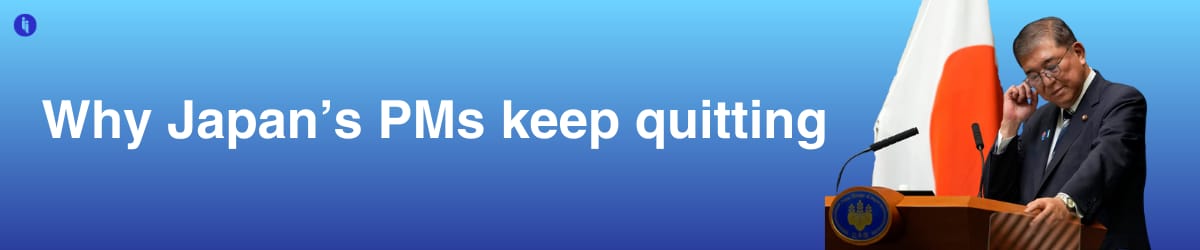
Shigeru Ishiba
Japan's 102nd prime minister (Shigeru Ishiba) announced his resignation Sunday night, joining a long and growing list of Tokyo’s short-lived leaders.
So let's take a quick look at why he quit, and why it matters.
First, why'd Ishiba quit? Three reasons.
-
His position was untenable following historic parliamentary losses, an internal party report into why, and senior party resignations. Ishiba's allies then urged him to step down to avoid a divisive party vote scheduled for today (Monday). Why?
-
Folks in Japan are unhappy for familiar reasons, ranging from economic stagnation and a doubling in rice prices, to a long-running finance scandal plaguing Ishiba's party. But why'd he resign now?
-
Amid all the internal pressure above, Ishiba's Thursday trade deal with President Trump (settling US tariffs at 15%) was a milestone of sorts, that gave the famously-stubborn Japanese leader an honourable exit: mission accomplished.
Then second… does this palace intrigue really matter? Yes, for three reasons:
-
It furthers the leadership vacuum in the world's ~fifth-largest economy, driving even more uncertainty for the rest of us, including…
-
Economically, we've seen a sell-off in Japan's yen and bonds, pushing yields to record highs as investors play wait-and-see. Why? A front-runner replacement like Takaichi, for example, has been calling for more government spending and lower rates. She (yes, possibly Japan’s first female PM) also has spicy views on…
-
Strategically, there's division around how Japan should play its cards. The outgoing Ishiba, for example, copped flak for being soft on China, whereas Takaichi is hawkish on China, North Korea, and beyond. Other contenders like Koizumi Jr (son of a popular PM) will irk China and Korea because of his war shrine visits. It all complicates any US efforts at a united front in countering China.
And while Japan figures itself out, its seat stays relatively silent at key forums like the G20, APEC, and the Quad, while its traditional stabilising role in the region goes into drift.
So what next? Ishiba technically stays as PM until his party picks a successor, most likely in early October. But even then, there are doubts they can cobble together a majority.
And either way, there's a solid chance any new leader will want to just roll the dice via another election rather than limp along in a minority government.
But then… it's hard to see Japan's tired electorate rewarding this establishment ever again.
Intrigue’s Take
One reason we're briefing you on Japan's politics is because it's arguably a preview (if not yet a microcosm) of almost everywhere else:
-
First, governments are struggling to deliver on voter expectations around economic vulnerability, regional instability, and political integrity, meaning…
-
Second, voters are punishing the establishment, making it even more difficult for its leaders to come up with workable solutions, adding even more momentum to…
-
Third, populist alternatives are appealing to frustrated voters, promising simple solutions but sometimes with radical pivots on anything from trade to alliances.
It’s all a self-reinforcing process of domestic and cross-border instability, and the fact it can even claim a political stronghold like Japan's ruling LDP — despite (if not because of) running Tokyo for most of the post-war era — suggests no political stronghold is safe.
Sound smarter:
-
Ishiba is due to mark his first year in office on October 1st.
Meanwhile, elsewhere…
 |
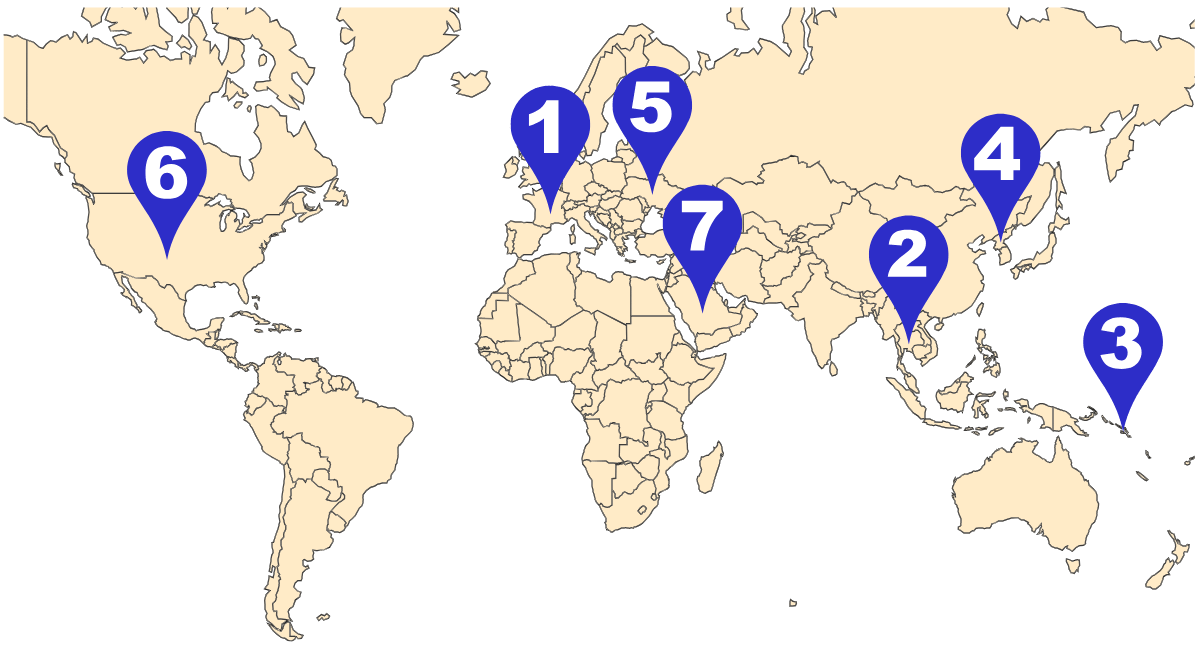
🇫🇷 FRANCE – Insert new government. Comment: President Macron’s options are probably a) call another election, or b) try to cobble together yet another coalition capable of surviving (possibly left-led this time). Meanwhile, it all complicates French efforts to stabilise national finances and counter Russian aggression. And speaking of (yes) instability… |
 |
🇹🇭 THAILAND – Insert new PM. Comment: Thailand’s government faces familiar challenges, but it’s all complicated by the royal-military establishment’s grip on key institutions. Meanwhile, Thai netizens are tracking the private jet of polarising political godfather Thaksin Shinawatra — there was speculation he might’ve skipped town ahead of an imminent court ruling, but he reportedly returned to Bangkok just moments ago. |
 |
🇸🇧 SOLOMON ISLANDS – Welcome (almost) all. Comment: It’s less marketing buzz, and more regional pushback after years of feeling like pawns amid accelerating US-China competition. Interestingly, neither the US nor China (nor Taiwan) will be there, after the Solomon hosts uninvited all external partners (Australia and New Zealand are still there as formal members). |
 |
🇰🇵 NORTH KOREA – Failed landing. Comment: We tend to hear about these missions when they succeed (Bin Laden) or fail (this one, or when four CIA operatives died trying to plant a device in the South China Sea back in 2008, for example). But the reality is this stuff happens often. |
 |
🇺🇦 UKRAINE – In the crosshairs. Comment: This is classic Putin: cross a line, wait for any reaction, then ratchet up and repeat. This latest time around, President Trump has flagged a “second phase” of US and EU sanctions that could push Putin’s economy into “full collapse”. Given the number of lapsed deadlines, it’s hard to see Putin changing course until someone makes him. |
 |
🇺🇸 UNITED STATES – Released. Comment: The US says they had the wrong visa, but the incident (including ICE releasing footage of the workers in shackles) has led to outrage in Seoul, just as the two allies struggle to finalise some kind of trade pact. |
 |
🇸🇦 SAUDI ARABIA – More oil! Comment: As we wrote last week, fears of an oil glut are bad news for Russia’s already-sagging profits, and an OPEC ramp-up just makes that worse. The Saudis and others seemingly don’t care, as they remain focused more on regaining lost market share rather than propping up prices. |
Extra Intrigue
🤣 Your weekly roundup of the world’s lighter news
-
An executive named Zoe Hamburger has left her top job with McDonald’s UK (with a name like that, she obviously got promoted to run McDonald’s Netherlands).
-
Speaking of excellent names, a lawyer sharing the name of Mark Zuckerberg has sued Facebook for repeatedly suspending his account.
-
A Polish millionaire CEO has finally apologised after viral footage showed him snatching an autographed hat from a child at the US Open.
-
Speaking of cheeky videos, Kenyan social media has condemned a Spanish man after he posted footage of himself pouring beer down an elephant’s trunk.
-
And a 102-year-old Japanese man has become the oldest person to climb Mt Fuji. Speaking of Mt Fuji…
From our sponsors
Institutional-Grade Opportunities for HNW Investors
Long Angle connects HNW entrepreneurs and executives with institutional-grade alternative investments. No membership fees. Access includes:
-
Private equity, credit, search funds, hedge funds, secondaries
-
$100M+ invested annually, leverage collective expertise and scale
-
Invest alongside pensions, endowments, and family offices
Video of the day
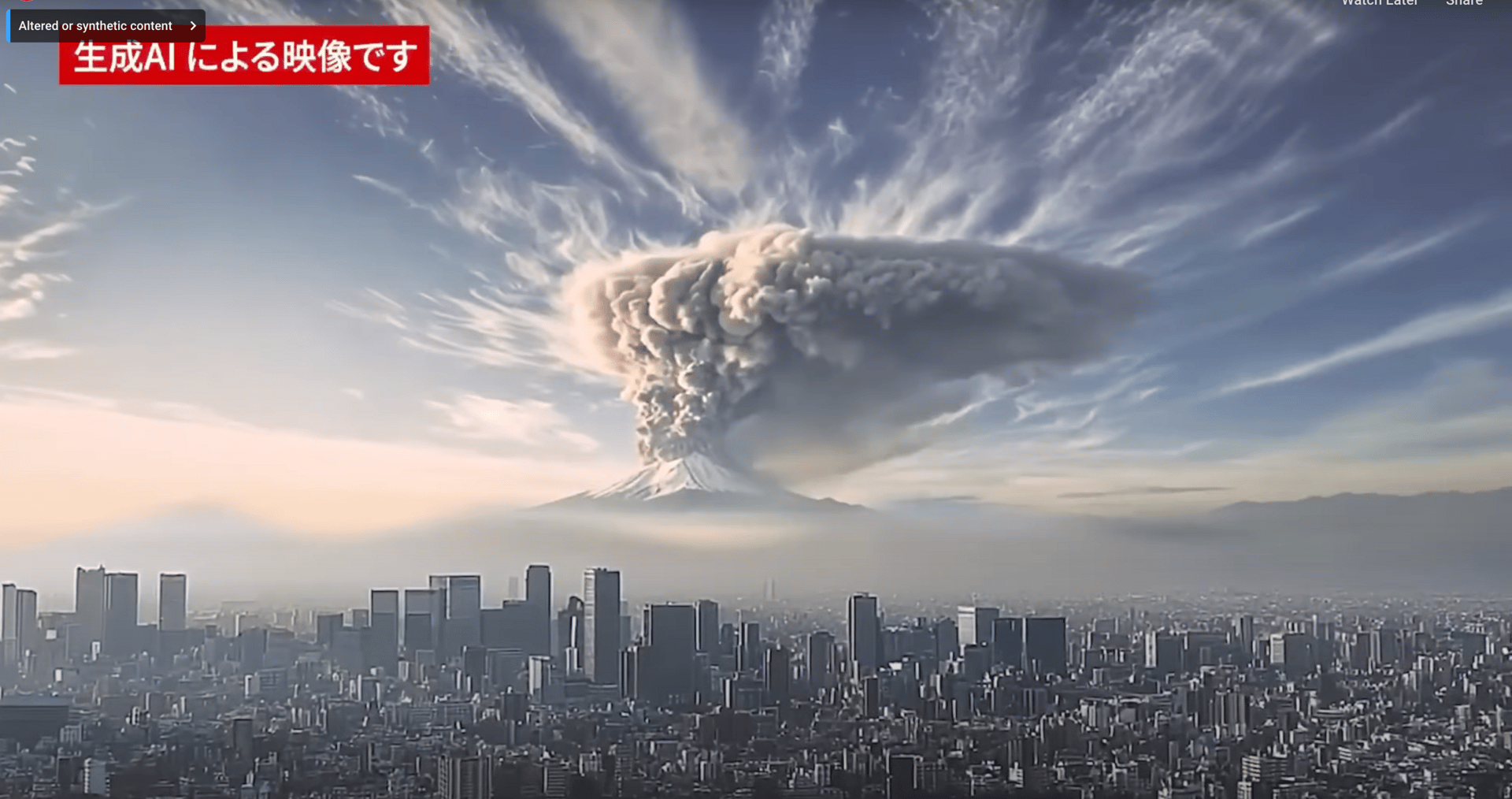
Help us, Will Smith!
Oh wait, no: turns out this is an AI-generated video that Tokyo authorities are now circulating, showing apocalyptic scenes of a blocked-out sun and dust-covered streets amid a hypothetical future eruption at Mount Fuji.
The idea is to raise awareness and preparedness, though authorities have been careful to note that the volcano, which last exploded in 1707, isn’t showing any abnormal activity.
Today’s poll
What do you think is driving the world's political instability? |
Last Thursday’s poll: How do you think China's military now compares to the US?
🎖️ It's decades away (14%)
⌛ Just a few years off (42%)
💨 Already neck-and-neck (40%)
✍️ Other (write in!) (3%)
Your two cents:
-
⌛ A.M: “US might still have the tech edge but China has a strong scale up / industrial advantage.”
-
💨 M: “Since most wars are proxy wars this century, China's ability to mass-produce drones, AI software, and weapon systems will give them dominant power on the global stage.”
-
🎖️ R.M: “Despite its shiny kit, the PLA is untested in conflict and continues to have a two track command and control structure that delays decision making.”