

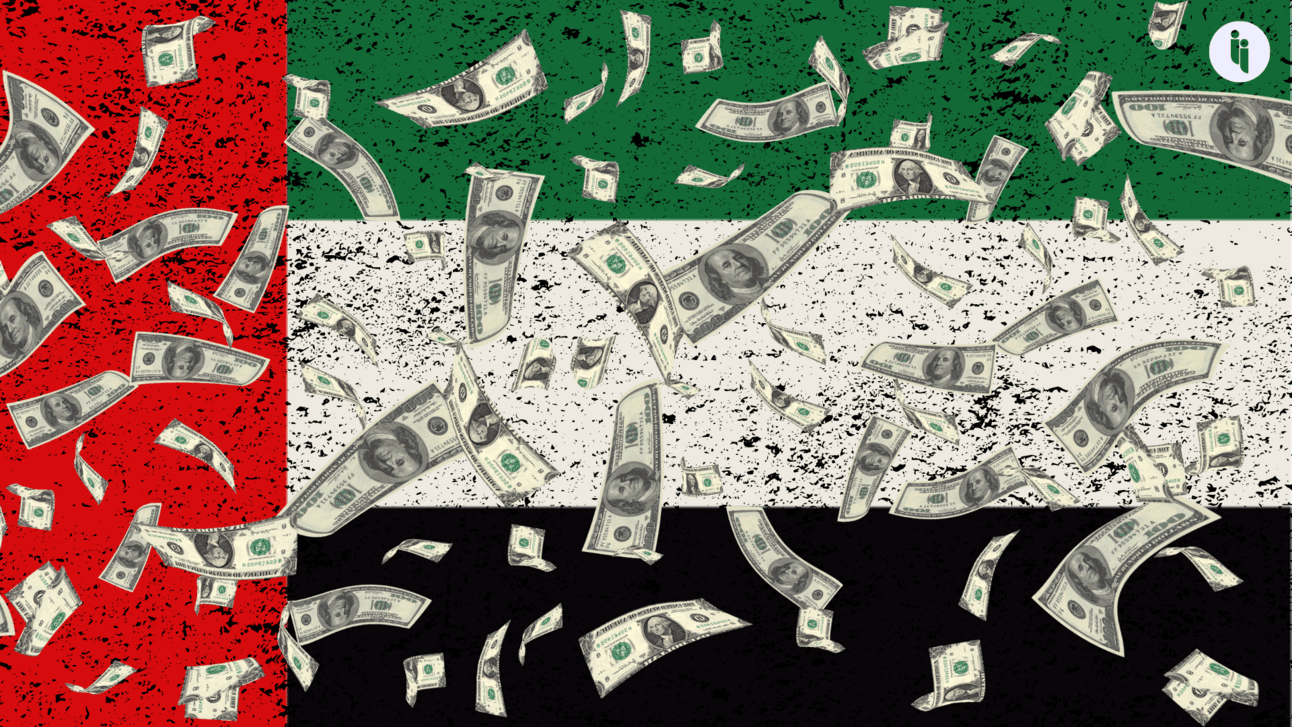
The United Arab Emirates is set to be taken off a global financial ‘grey list’ as soon as this week, according to Bloomberg.
What’s this grey list?
The G7 club of rich nations created a Financial Action Task Force (FATF) back in 1989 with a mission to curb money laundering (and later, terrorism financing).
Stay on top of your world from inside your inbox.
Subscribe for free today and receive way much more insights.
Trusted by 161,000+ subscribers
No spam. No noise. Unsubscribe any time.
The Paris-based FATF found success with one tactic in particular: to name-and-shame countries into plugging the holes in their financial systems. Over 70% of countries that’ve ever been placed on a FATF black or grey list have gone on to make the reforms necessary to get themselves pulled back off the list.
This is because listed countries not only face reputational damage that can leave investors jittery, but also tougher treatment from ratings agencies, leading to fewer willing lenders and higher borrowing costs.
One study actually suggests a grey listing leads on average to:
- A drop in capital flows equivalent to 7.6% of GDP
- A 3% drop in foreign direct investment, and
- A 10% drop in cross-border payments.
There are now 23 countries on the dreaded grey list – these are the ones with problems, but they’ve committed to working with the FATF to fix them. They include countries from Syria and Yemen through to Croatia and South Africa.
Meanwhile, only three places appear on the black list:North Korea, Iran, and Myanmar. These ones are high-risk and low-care, so their listing is really a signal that the rest of the world should just take counter-measures.
So how did the UAE end up getting grey-listed?
The UAE was already in the FATF’s crosshairs as a magnet for dirty money, but the body formally grey-listed the UAE in March 2022, just days after Russia invaded Ukraine. It came as wealthier Russians were fleeing Western sanctions (and Russian drafting) – up to half a million Russians ended up relocating there.
But given the UAE’s significance as a financial hub, the FATF’s move to grey-list it was arguably the most significant listing in the watchdog’s history.
What did the UAE do to get off the list?
The petro-state isn’t too dependent on capital flows or foreign direct investment, so its economy wasn’t particularly vulnerable to swings caused by its grey-listing.
But the UAE’s image was vulnerable – it prides itself not only as a regional hub, but also a serious global player that hosts COP climate talks and AI research. So the Gulf state moved quickly, including:
- Tripling the number of money laundering fines it issued
- Sanctioning several non-compliant financial institutions
- Cracking down on pool-side crypto scammers, and
- Making some high-profile arrests, including hedge fund trader Sanjay Shah who’s accused of defrauding Denmark of a cool $1.3B
Of course, that’s not to say it’s all gahwa and skittles in the UAE now.
There are still plenty of colourful characters lying low there (including the former king of Spain and the former president of Afghanistan), it still features in Transparency International reports, and the US has still objected to the way Russia uses UAE intermediaries to skirt sanctions and restrictions.
But all in all, both the UAE and the FATF will notch this one up as a win.
INTRIGUE’S TAKE
Lord knows we need good news stories these days, and this one fits the bill. It’s not just about making it tougher for criminals, terrorists, and scammers to launder their cash and evade the law.
It’s also about our international system still working; international rules of the road still meaning something; and national governments still engaging in good faith to tackle trans-national risks to us all.
In the jungle that is today’s world of international relations, we’ll take the win.
Also worth noting:
- The Financial Action Task Force (FATF) has 40 full members and nine regional associations acting as associate members
- In 2022, the UAE accounted for over 32% of all foreign direct investment in the Middle East and North Africa.