





We’ve saved plenty of things from the 17th century: champagne, the barometer, the telescope, the foreign ministry’s IT system, and… pirates.
Sure, they’ve swapped their swords for semi-automatics, and they’re more focused on ransoms than rum, but pirates still sail the seven seas.
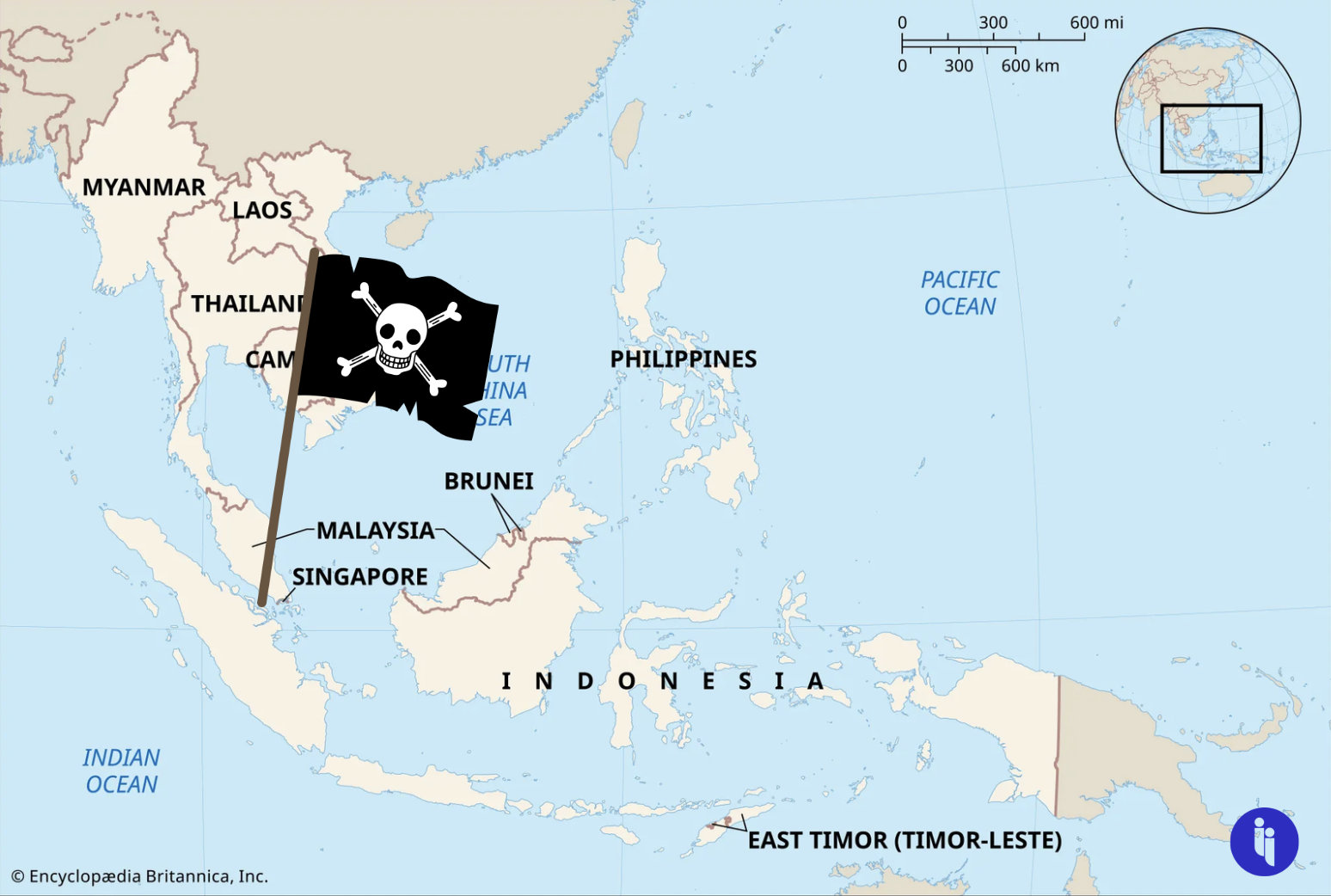
And while the world has long focused on the pirates in East Africa thanks to their sharper methods plus that stand-out Tom Hanks performance in Captain Phillips, by many measures the world’s most pirate-infested waters are now in Asia’s Straits of Malacca and Singapore (aka ‘SAMS’: the narrow stretches between Indonesia, Malaysia, and Singapore).
Stay on top of your world from inside your inbox.
Subscribe for free today and receive way much more insights.
Trusted by 151,000+ subscribers
No spam. No noise. Unsubscribe any time.
Really? Yes, piracy and armed robbery attempts in the area have quadrupled in the first half of 2025 (yoy). And that’s a big deal for waters home to (or near) the world’s key shipping routes, hosting 20-30% of all global maritime trade.
The latest International Maritime Organization stats suggest ~60% of all the world’s piracy-related incidents now take place in the Asia-Pacific. And of that, the region’s main anti-piracy initiative (ReCAAP) suggests 84% happens in the SAMS area.
Why? The drivers include…
- Geography
The vaguely cone-shaped waters measure just 65km (40 mi) at their narrowest, funnelling the world’s ships into an orderly and low-speed conveyor belt of wealth. Sometimes that conveyor belt doesn’t move at all because of…
- Geopolitics
Houthi attacks on Red Sea shipping have spurred firms to avoid the Suez Canal, instead taking the long way around Africa and exacerbating Malacca bottlenecks. That’s partly why captains are now reporting average local wait times of more than a day, leaving them sitting ducks (a fifth of all local piracy incidents hit idle ships). And speaking of idle…
- Socioeconomics
We’ve previously seen local piracy rates surge during the Asian Financial Crisis and Covid, as some of the poorer coastal communities in Indonesia and Malaysia get desperate.
So shouldn’t these governments tackle all this piracy? They do, but…
- Coordination
It can be tricky to police waters when they straddle the high seas plus multiple national borders, particularly as these neighbours still have border disputes. They’ve been working to accelerate security cooperation in parallel, but the stats suggest gaps remain.
So who cares?
For one, Japan does! Its foreign ministry just issued a warning, and if you’re wondering why Tokyo would get involved, remember that up to 90% of its oil imports arrive via that same narrow SAMS shipping lane. It’s the same for South Korea and even China.
And when you’ve got that number of people with that level of energy dependence on that tiny a waterway, you can see how everyone starts to take notice.
Intrigue’s Take
It’s worth keeping in mind that piracy rates in Southeast Asia are still below the dark days of the 1990s, and a lot of the reported incidents these days involve (say) sneakily yoinking ship parts at night rather than going full Tom Hanks and getting nominated for an Oscar.
But for us, this piracy spike is about more than just supply chain fragility. It’s also a reminder of the broader strategic implications of maritime chokepoints: in the event of a war over (say) Taiwan or the South China Sea, it’s widely assumed the US navy and/or its partners would rush to control Malacca and thereby sever China’s key energy artery.
China’s strategists have been fretting about that since at least since 2003 when the then president (Hu) flagged this broadly as China’s “Malacca Dilemma”. And you can see China’s response everywhere, whether in its energy transition, its overland pipelines, or its ‘string of pearls’ strategy (ports and bases), all helping dilute that same Malacca Dilemma.
But of course, you can see it in DC’s strategy, too, whether re-upping its grip over the Panama Canal, or (despite occasional grumbles) still maintaining a massive naval presence around the Red Sea.
So maybe the lesson here is that small boats in narrow straits can hint at very big problems for global powers ahead.