

Tell us your story in your own words. How did you get here?
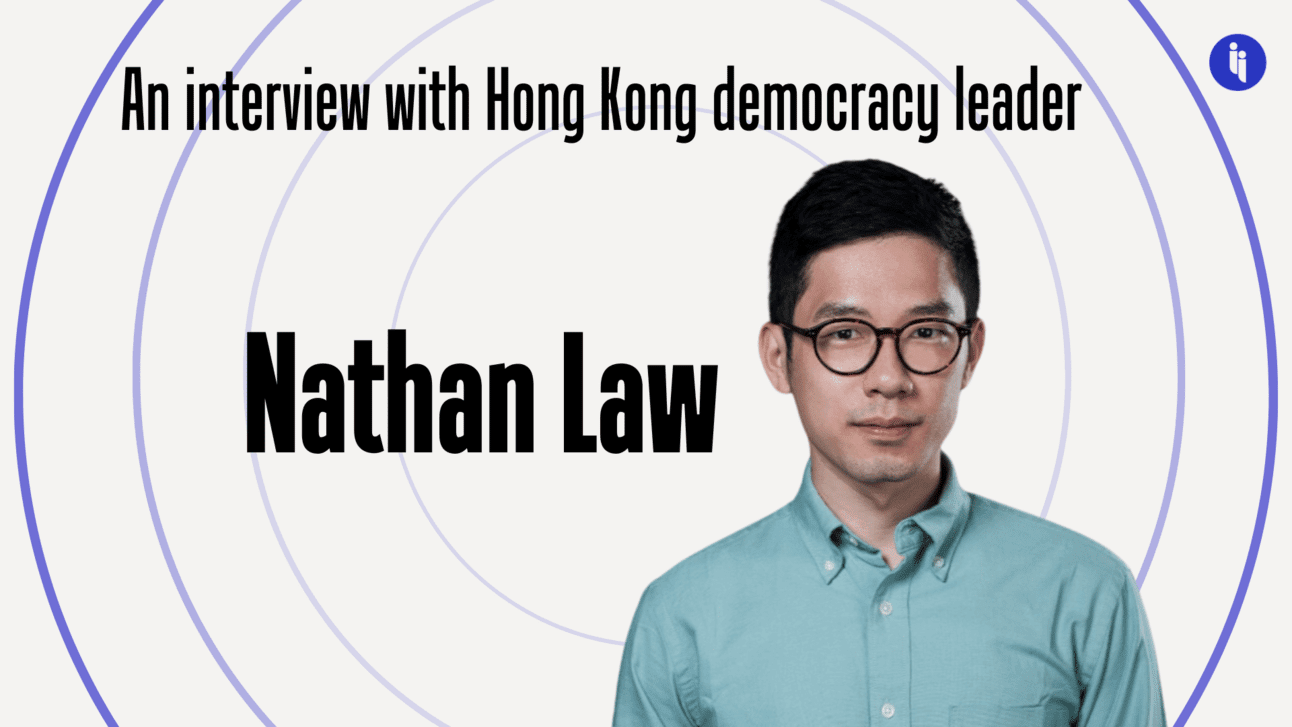
I have played different roles in the democratic movement of Hong Kong: a student leader in the 2014 Umbrella Movement, elected as the youngest legislator ever in 2016, jailed as one of the first batches of political prisoners in 2017, and then became an exiled activist and political refugee in 2020.
I did not plan to play these roles at all – life has many unexpected turns which you must confront according to your consciousness.
Stay on top of your world from inside your inbox.
Subscribe for free today and receive way much more insights.
Trusted by 160,000+ subscribers
No spam. No noise. Unsubscribe any time.
Hong Kong lawmakers recently passed a second national security law. What’s new about the recent developments?
Recent developments in Hong Kong have been dire.
Since 2020, Hong Kong has been through a steep authoritarian turn. The civil liberties and civil space for citizens have deteriorated. People waving the protest flag or chanting protest slogans can be jailed for years even without violent intent. Elections have been overhauled and dominated by appointees loyal to Beijing.
The recent local legislation of Article 23 expands the current National Security Law, resulting in stricter control of foreign nationals and organisations in Hong Kong, and makes the work of government watchdogs even more dangerous.
How do you think this amendment impacts Hong Kong’s status as a democracy, its rule of law, and its status as an autonomous self-administrative region?
Freedom, rule of law, autonomy and gradual process to democracy are the pillars of ‘One Country, Two Systems’. But these pillars have all collapsed. Beijing’s intervention has never been more salient, including directly imposing the National Security Law in 2020 without local consultation or legislation processes.
Rule of law has been severely compromised, especially in political cases. The courts would almost certainly deliver the verdicts that favour Beijing. The pro-democracy camp has no meaningful participation in Hong Kong’s legislature — most of them are jailed or exiled, and the election system is no longer open and fair.
Hong Kong is the world’s biggest off-shore hub for China’s currency (the RMB). How does this impact the CCP’s calculations, and the impacts it could have on financial markets?
As the nature of Hong Kong moved closer to China and further away from the world, its economy lost its optimistic outlook. The post-COVID stock market and housing market, which are key for Hong Kong, have been in the poorest form in decades. Foreign investments continue to exit as Hong Kong has lost its status as a safe harbour.
With your experience growing up in Hong Kong and now currently living in the UK, how do you feel about the region’s future?
The future of the region is grim. We’ve lost the vibrancy of the society and it drives out talents. We’ve lost the attraction to capital, and thus the status as an international financial centre. The capability of the government leadership has been lacking, because Beijing appoints loyalists rather than capable individuals. If the city continues its authoritarian downturn, Hong Kong will be just like an ordinary Chinese city and lose all its competitiveness.
You are now one of the most recognised democracy advocates in the world. What are your takes on the future of democracy in our fragmenting world, and how the next generation of citizens can try to strengthen democracy?
My role as an exiled activist from Hong Kong is to remind the world how fragile civil liberties are, and how dangerous these authoritarian expansionists are.
We used to have a sort of naivety about the nature of the ruling Chinese Communist Party, and my role is to point out these mistakes, reveal their dictatorial natures and urge the world to address them by concrete actions. Only by doing this, can democracies defend their own system, and the systems around the world.
If you could tell people to consume one piece of media book, podcast, or film on Hong Kong, which would you recommend?
I think my book ‘Freedom: how we lose it and how we fight back’ is a good entry point to understand the struggles of the city. It outlines what I’ve been through in the past decade of social activism, which included all important resistance movements and social changes that have taken place.
It also shows why so many people in Hong Kong who are furthest away from politics would be involved in the democratic struggles, as the city has been torn apart by Beijing and people can’t help to try and safeguard their city. It’s a really easy-to-read introduction to Hong Kong’s activism.
On Hong Kong, what’s the one thing you miss most about home?
I miss the people – a lot of friends and former colleagues are still in Hong Kong. I can’t contact them because that could put them in danger. I think interpersonal relationships are what make life special, and I am deeply saddened that my political activism has deeply affected them. I hope to one day be able to chat with friends freely, or just post that photo of us to Instagram without fear.