




🌍 How language got a CEO fired
Plus: Why Italy is mourning

|
Today’s briefing: |
|
Good morning Intriguer. We humans love to categorise the world in an attempt to understand it. Here’s an example: anthropologist Edward T. Hall once coined the idea of high-context and low-context cultures. For example:
-
A friend serving abroad once told her driver to “meet out front in five”, only to then emerge out the embassy gate five minutes later to see the driver obediently standing there to attention, no car in sight. In this low-context society, she should’ve specified that she wanted her driver to, you know, bring his car. There’s not as much reading between the lines.
-
At the other end of the spectrum, I spent time in a high-context society where a foreign official would legit smile, look me dead in the eye, shake my hand, and nod firmly all while declaring “yes”, only for a colleague to ruin my buzz out in the car lot explaining that, in this culture, that precise combo really means “no”.
All that to say… language and context matter in geopolitics. So much, in fact, that we’re devoting today’s final briefing of the week to this topic (we’ll be back Tuesday).

Intrigue Insight – Iran War day 34
-
President Trump used his 20-minute address to the nation overnight to argue that this war is “nearing completion”, but “we must honour the dead by completing the mission”. And he framed that mission as a) destroying Iran’s missile capability, b) crushing its support for terrorist proxies, and c) ensuring it never gets nukes, all requiring another “two or three weeks.” As for Hormuz? Trump suggested it might “open up naturally” after the war, but that’d be something for the more Hormuz-dependent economies to figure out (Europe, China, Japan, South Korea).
-
Comment: As with any Trump speech, you can pick a line and reach a different conclusion, but his “honour the dead by finishing the mission” bit — combined with an ongoing military build-up while the UAE seeks UN Security Council approval for measures to reopen the Strait — felt like prepping the public for one more escalation. And that jives with the market reaction (oil up, stocks/futures down), which saw it all as confirmation there’s no off-ramp for at least another month.
Hallo! Hola! Bonjour! Hej!
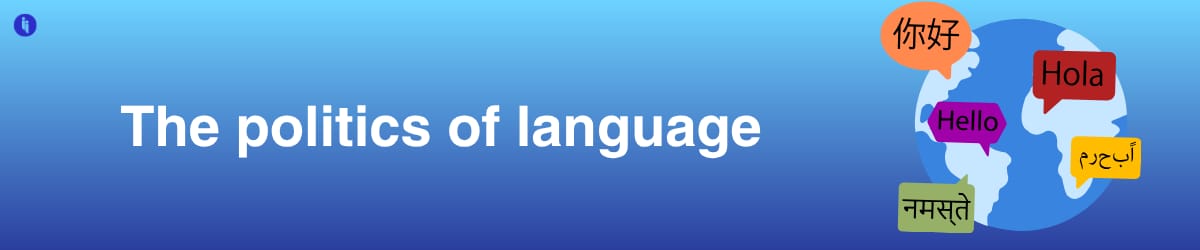
Many Intriguers will have experienced stumbling through a sentence, botching the word order, conjugating a weird ending, picking the wrong declension, then bringing it all home by accidentally switching to the informal register. And that’s just in English!
In many parts, simply giving the local lingo a try earns instant brownie points, and there’s now science to back up your pleas that you’re much better after a few beers: turns out a crisp ale can stop you over-thinking those plural tenses, resulting in more natural speech.
Anyway, it’s been a big week for language nerds, starting with…
-
The business of language
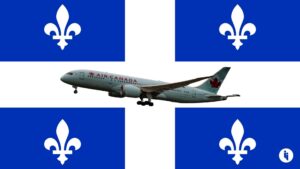
Following a fatal Air Canada collision in New York, CEO Michael Rousseau released a condolences video in English, with only “bonjour”, “merci”, and subtitles in French.
And that didn’t go down well in Canada’s francophone heartland of Quebec. Why? It’s home to a) Air Canada’s HQ, b) one of the deceased pilots, and c) a long separatist history fuelled by any sense of disrespect from Canada’s broader English-speaking majority.
Rousseau followed up with a written apology in French and English, lamenting that even with 300+ hours of lessons not to mention a killer surname like Rousseau, he still struggles with Français. But it was too little, too late.
Quebec’s legislature passed a ~unanimous motion demanding his head, and others across the country — including PM Carney himself — piled on. Often in English, btw.
The lessons? First, while this might all seem quirky to outsiders, it’s a prime example of the real corporate risks around language: much like firms celebrating ‘lunar’ (not Chinese) new year, the costs can be real even if the offense feels optional.
But second, language here is clearly just a proxy for identity: it’s not about the bonjour but the signal it sends to the 20% of Canadians who are francophone: we see you.
And yet third, that respect clearly comes with costs: faults notwithstanding, Rousseau was a solid CEO who steered Canada’s flag carrier through Covid to new records. And yet — with aviation now in a Hormuz panic — this airline will now presumably prioritise whether his replacement knows the difference between mur, mûre, mûr, and murmure. Investors are unlikely to cheer.
That leads us to…
-
Language and power
As our world gets more synthetic, digital, and globalised, there’s a natural premium on tradition, culture, and identity. And that presents politicians with threats and opportunities.
Here’s an example. Moscow’s half-century of occupying its Baltic neighbours involved forcing locals to learn Russian, plus settling ~1.7 million ethnic Russians there.
Fast-forward, and Putin has now used the pretext of defending Russian speakers to attack and occupy ex-Soviet states like Ukraine, Moldova, and Georgia. And that puts others like the Baltics in a bind. Do you…
-
a) keep spending taxpayer funds to teach kids a language Putin might use to invade you (again), or
-
b) quietly de-emphasise that language, but risk just handing Putin his exact invasion pretext in the process?
Since Putin went all-in on Ukraine, NATO members Estonia, Latvia, and (tbc) Lithuania are all now variously opting for b, quietly phasing Russian out of schools, while withdrawing from the Ottawa Convention so they can start lining their Russian border with landmines.
Maybe life just seems a lot simpler with a…
-
Lingua Franca
Not so fast. With spooked economies everywhere pulling up the drawbridge, and hedging via new trade mega-deals, the EU’s trade chief recently floated the idea of speeding up the process by circulating new deals in English only, then leaving the 23 other official translations until after ratification — each day of delay literally costs EU folks millions.
But in Brussels, the mere posing of such an idea was like farting in church: capitals quickly wafted it away, offended by any notion that the bloc should breach its own basic guardrails around tradition, identity, and respect just to earn a few more euros.
Yet even without official backing, examples of English-language dominance in Europe keep surprising us: a bombshell leaked call between the foreign ministers of Hungary and Russia featured the two dunking on the West in… English!
And even within English-dominant societies, our Kiwi friends are now debating the fact Te reo Māori and New Zealand Sign Language are both official languages, yet English is not. The US just capped a similar debate by anointing English alone at the federal level.
Elsewhere, the tension goes deeper: take China, which just used its latest Two Sessions to mandate Mandarin education, very much at the expense of China’s various minority languages with freedom-seeking histories, like Tibetan and Uyghur.
Anyway, whether it’s a CEO losing his job over ‘bonjour’, Baltic kids ditching Russian, or Beijing stamping out minority tongues, language is emerging as our next battleground.
Intrigue’s Take
Two quick spicy conclusions!
First, language is rarely neutral. Even the decision whether to label something a language versus a mere dialect is often political, whether it’s China shoehorning mutually unintelligible tongues like Hokkien as mere dialects under the dominant Mandarin, or rivals (think India/Pakistan, or Serbia/Croatia) deliberately separating what were otherwise (we’re going to get hate mail) the same language, as a way to reinforce national identity. It even happens among friends, with Norway creating a new language from scratch in its bid to develop its own political identity after four centuries of Danish rule.
Second, AI is shaping up as a double-edged sword. It could solve some of the linguistic challenges above, whether instantly reproducing a French-language version of an anglophone’s apology video (essential FIFA tech), or accelerating the Sisyphean task of translating the EU’s bureaucracy across 24 languages. But while there’s evidence it can also help preserve tiny languages and even nudge us all back towards political common ground, a new study finds models can also entrench our geopolitical bias.
Anyways, we’ll leave you with this classic line by philosopher Ludwig Wittgenstein: "The limits of my language mean the limits of my world." He wrote it in German, btw.
Today’s briefing is presented by…
Go from AI overwhelmed to AI savvy professional

AI will eliminate 300 million jobs in the next 5 years.
Yours doesn't have to be one of them.
Here's how to future-proof your career:
-
Join the Superhuman AI newsletter – read by 1M+ professionals
-
Learn AI skills in 3 mins a day
-
Become the AI expert on your team
Meanwhile, elsewhere…
 |
 |
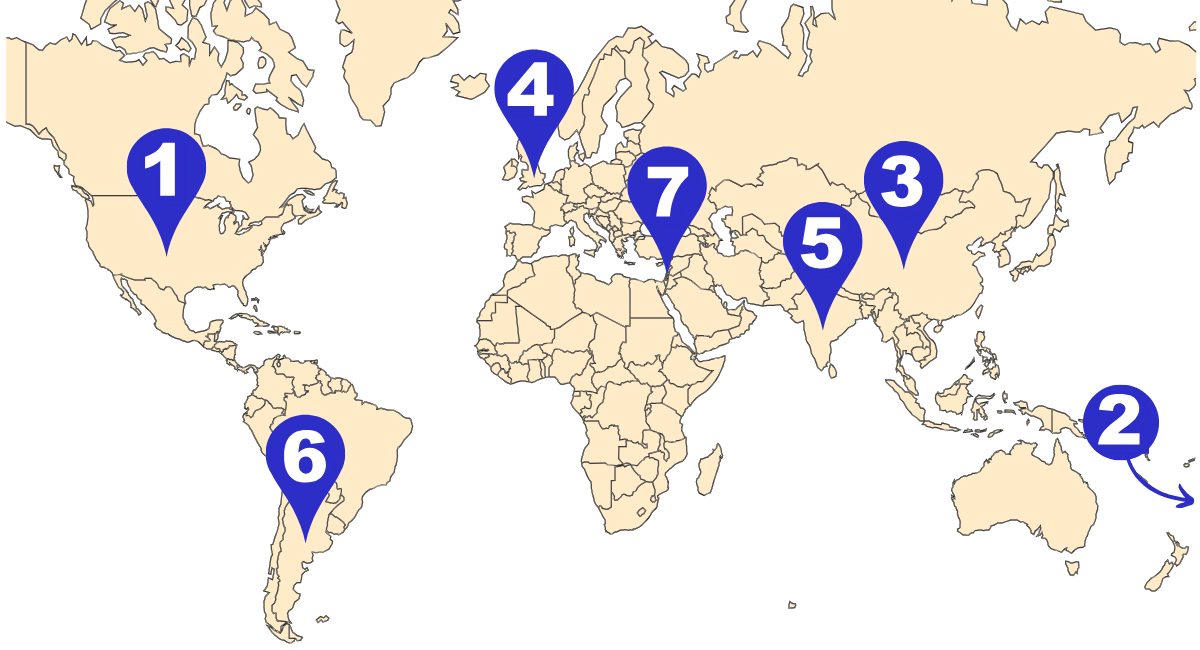
🇨🇰 COOK ISLANDS — Security pact. Comment: Ever since China surprised the West with its Solomon Islands pact in 2022, the resulting competition has put more leverage in the hands of Pacific Island nations — in this instance, the Cooks (pop. ~15,000) seem to keep their China deal and revive their NZ financial support, in return for clearer security ties and pledges. |
 |
🇨🇳 CHINA — Robotaxi fail. |
 |
🇬🇧 UNITED KINGDOM — Strait talkin’. Comment: The guestlist features last month’s signatories (mostly US allies and partners across Europe and Asia) pledging readiness to help secure safe passage through Hormuz. That suggests today’s summit might be aimed at an audience of one (Trump) after weeks of him pushing partners to get more involved. |
 |
🇮🇳 INDIA — Start counting! |
 |
🇦🇷 ARGENTINA — Poverty down. Comment: While President Milei is unorthodox, his economic ideas are not — the drama came more from his blunt pledge to apply them amid such unorthodox conditions, but he’s now got recent records in poverty, growth, and inflation as vindication. His challenge is now a) all the disruption has tanked his approval ratings, and b) the global energy crisis now risks tapping the brakes on his inflation progress. |
 |
🇮🇱 ISRAEL — Another buffer. |
Extra Intrigue
Three stories we just couldn’t shoehorn in this week:
-
The Italian men’s football team has failed to qualify for its third World Cup in a row, leaving a nation of fans heartbroken (again).
-
Countries have failed to reach consensus on whether to prolong a moratorium on digital tariffs, as the WTO sinks deeper into deadlock.
-
And Anthropic has accidentally published Claude’s internal source code on the internet, inevitably adding to security concerns.
Ruling of the day
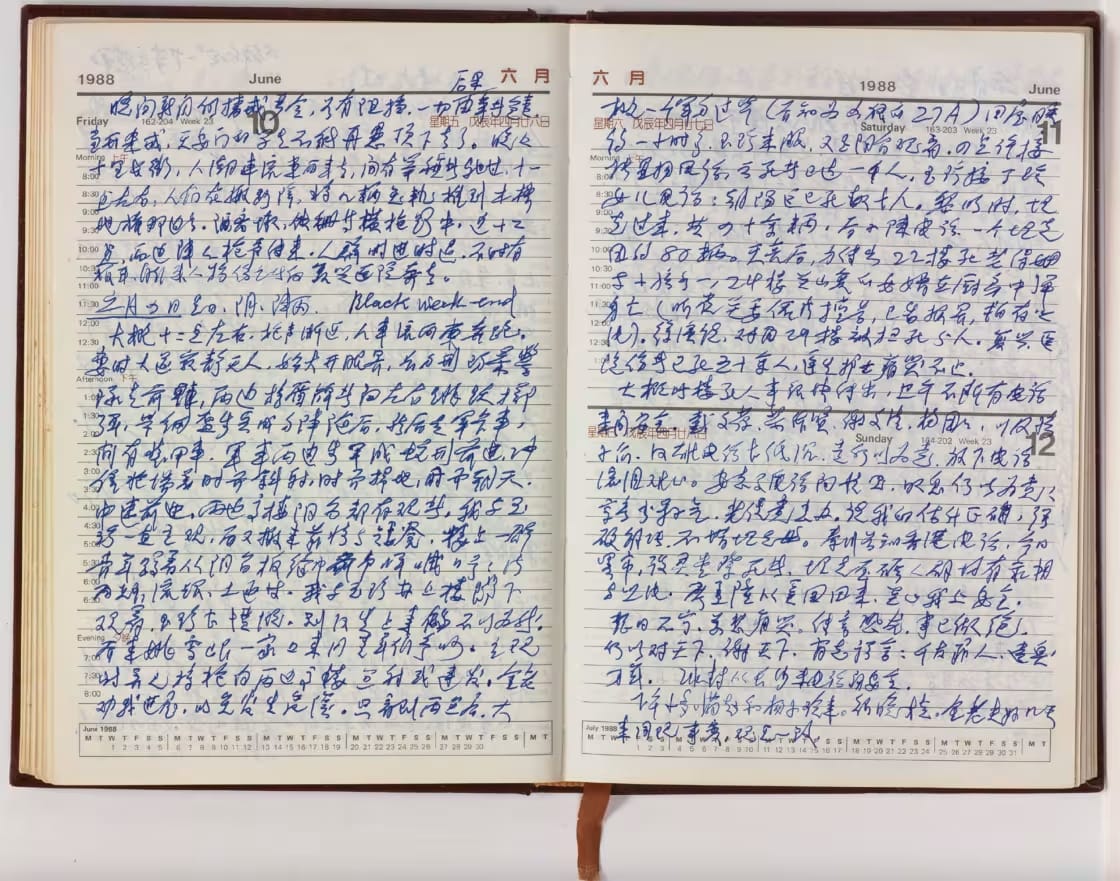
Li Rui’s diaries. Credits: Hoover Institution.
Research suggests keeping a journal is beneficial to your mental and emotional health.
And Li Rui, one of Mao Zedong’s closest aides, seems to have taken that to heart, keeping an epic personal diary for eight decades, all offering rare insight into the Party’s inner workings through the ‘Great Leap Forward’, Tiananmen Square, and beyond.
His daughter later donated the volumes to Stanford, only for Li’s second wife to then sue for their return, claiming they contained personal details and were rightfully hers. Others argued she was just doing the bidding of the Party, which wants control of Mao’s image.
Anyway, this week, a US federal judge ruled in Stanford’s favour, finding that Li Nanyang’s donation to the university was “lawful and in accordance with Li Rui’s wishes.”
Thursday quiz
Enjoy this Thursday quiz! We’ll be back Tuesday after a short break.
Xi Jinping has extended a visit invite to the opposition leader from where? |
2) Where's the new Arab League boss from? |
3) Which US figure has taken Chinese social media by storm? |