

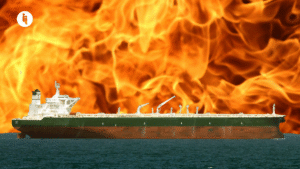




More than 20 lands have named their currency some kind of ‘dollar’: the Jamaican dollar, the Hong Kong dollar, the Disney Cruise dollar, Australia’s dollarydoo.
But it’s time to chat about the petrodollar and whether the Iran War has wobbled it.
The petrodollar isn’t an actual dollar, but rather the term for a story starting (like any good story) around the 1970s, when the US economy was getting battered by the Vietnam War, the OPEC oil embargo shock, and the end of the Bretton-Woods system.
Stay on top of your world from inside your inbox.
Subscribe for free today and receive way much more insights.
Trusted by 161,000+ subscribers
No spam. No noise. Unsubscribe any time.
In parallel, a new balance was emerging between oil-buyers nervous about paying so much for oil, and oil-sellers (principally the Saudis) realising their economies couldn’t actually absorb the firehose of cash being aimed their way.
So in 1974, Kissinger brokered an informal win-win with the Saudis: Riyadh would price its oil in US dollars alone, and reinvest those revenues (aka petrodollars) in US assets like treasuries, helping keep US borrowing costs low. In return, the US provided security for the Saudis (and thus also for America’s own energy supply).
Other petrostates got on board, creating a constant demand for dollars and recycling them back into US assets, helping cement the US dollar as our world’s reserve currency.
And yet we know you can feel that ‘but’ coming. Two buts, in fact:
But #1: shale tech enabled the US to become the world’s top oil producer from 2018, curbing its Gulf dependence and eroding the petrodollar’s security-for-recycling premise.
But #2: decades of US-Iran enmity (hostages, nukes, sanctions) have now culminated in today’s Iran war, further straining the petrodollar system. How?
First, the duelling US-Iran Hormuz blockades have curbed the ability of Gulf petrostates to actually sell their oil. No petro exports = no petrodollars.
Second, foreign central banks have started selling their US treasuries — in fact, the New York Fed’s custody holdings just hit a 15-year low, but this isn’t some coordinated ideological dollar-dump. Almost the opposite:
- For all its faults, unmatched US liquidity and stability means investors still see the US as the world’s #1 safe-haven, but also…
- Other currencies have in turn weakened, particularly for oil-buyers having to spend more US dollars to buy pricier oil — Indonesia’s rupiah is at new lows.
So… lots of these foreign central banks have intervened in currency markets to defend their currency and avoid imports like oil getting too expensive: the easiest way to buy your own currency and prop up its value is to sell… US treasuries.
Third, Gulf countries are now facing hefty air defence and reconstruction bills at home — some of that will benefit US firms (hi Lockheed 👋) but it still means less surplus petrodollars to recycle back into those sweet sweet US treasuries, or even America’s vaunted AI mega-projects like Stargate.
And fourth, there’s the petrodollar’s underlying security rationale: Iran’s mass retaliation across the region might boost allied reliance on US security in the immediate term — nobody else makes Patriot interceptors. But longer term, there are already Gulf voices cautioning against leaning too much on an America that (in their view at least) pulled the trigger on a war without a clear heads-up, finish-line, or off-ramp.
That’s why there’s been a Deutsche Bank report warning that, together with Iran now settling some of its oil sales in China’s yuan, this Iran war poses a perfect storm for the entire petrodollar system: both the ‘petro’ and ‘dollar’ bits are hurting.
The implications? A fading petrodollar would (if that’s what’s happening) mean higher US borrowing costs, a weaker US dollar, higher inflation, and weaker US leverage abroad: if trade no longer runs exclusively on US dollar rails, it’s harder to sanction the pariahs.
Intrigue’s Take
So… is the petrodollar dead? Not quite, but we’re all now seeing reminders of its mortality. We touched on one (US energy independence) above, but consider also…
- Asia (not the US) has been the Middle East’s dominant oil-buyer since 2010
- A fifth of all oil transactions were already in non-US currencies by 2023
- Lowish pre-war oil prices already evaporated many excess petrodollars
- The energy transition could also fade the petrodollar longer term, and
- The petrodollar’s anchor (Saudi Arabia) has been quietly diversifying away from full dollar dependence: consider its 2023 currency swap with China (due for renewal this November btw), or its 2024 entry to China’s mBridge (basically providing the technical infrastructure to settle trades outside US dollar rails).
Yet these mortality reminders not only pre-date the Iran war, but also reflect a natural, incremental evolution; eg, those new China-Saudi currency rails? They’re still small, and they increasingly make sense given China is easily now Saudi Arabia’s top buyer.
The other perennial guardrail is the lack of viable alternatives: Iran sells its oil in yuan because it has to, not because it really wants to be sitting on a pile of yuan right now: recall a) China’s currency isn’t fully convertible, meaning you need Beijing’s permission to move anything meaningful, but also b) a long list of traders will gladly accept your US dollars, but where else beyond China can you really spend your yuan right now?
Sound even smarter:
- The greenback’s still doing alright: 58% of the world’s foreign exchange reserves are held in USD, with an additional 20% in Euros, and 2% in yuan/renminbi.