




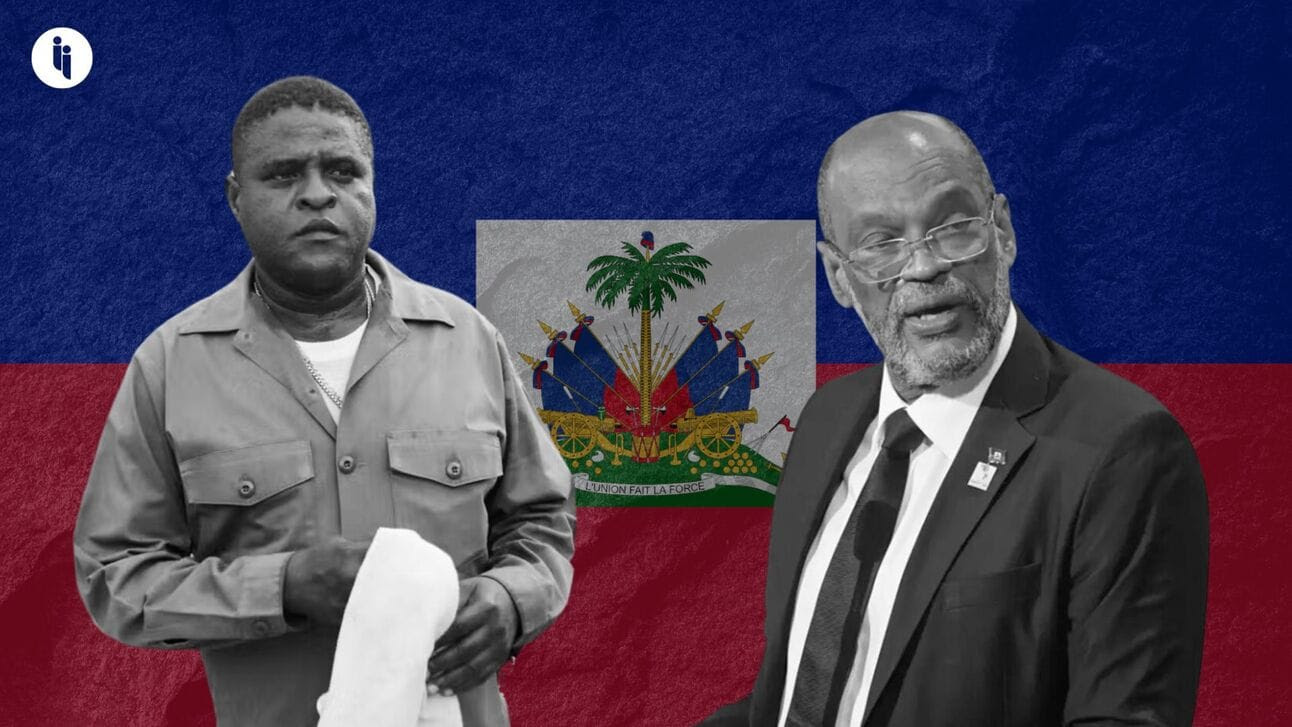
Haiti’s prime minister, Ariel Henry, is currently stranded outside his own country after armed gangs stopped him from landing at Port-au-Prince’s main airport.
The prime minister’s travel book has been full lately: he was in Guyana a week ago, promising Caribbean leaders he’ll finally hold elections in 2025. He then travelled to Nairobi to try and progress plans for Kenya to lead a UN-backed security deployment to restore order in Haiti.
But while he was away, armed gangs led by former police officer Jimmy ‘Barbecue’ Chérizier saw an opportunity, freeing thousands of inmates from Haiti’s main prison before attacking the main airport. Returning home, Henry ended up having to land in Puerto Rico instead.
Stay on top of your world from inside your inbox.
Subscribe for free today and receive way much more insights.
Trusted by 148,000+ subscribers
No spam. No noise. Unsubscribe any time.
And now the gang leader, Barbecue, isn’t mincing his words: “If Ariel Henry doesn’t resign, if the international community continues to support him, we’ll be heading straight for a civil war that will lead to genocide”.
But why would the prime minister resign? He came to power as a caretaker after the 2021 assassination of the former leader, but he’s since failed to organise elections or win broad support. Many, including Barbecue (who’s enjoying his own taste of power), argue Henry now lacks the legitimacy to continue.
While this political crisis lingers, Haiti’s chaos continues:
- Most of the capital is now under gang control
- Some 8,400 folks were killed, injured, or kidnapped by gangs last year
- And >15% of Haiti’s ~12 million people have been internally displaced
Police are leaving the beleaguered national force in droves, neighbouring Dominican Republic (which shares an island with Haiti) is rattled, and both countries’ leaders have made repeated calls for an international intervention.
So now, the world faces some tough decisions on what to do:
- Political – What to do with Ariel Henry?
Until now, the international community has supported Henry, but this week’s events seem to have tipped the balance against him. According to the Miami Herald, the US has now done a 180, using Henry’s unscheduled stopover in Puerto Rico to push for his resignation in favour of a new transitional government.
And US Ambassador to the UN Linda Thomas-Greenfield has now confirmed the US asked Henry to “move forward on a political process that will lead to the establishment of a presidential transitional council that will lead to elections”.
- Security – What to do with the UN-backed multinational force?
Responding to requests for help, the UN authorised a Kenya-led and US/Canada-financed intervention last year, but Kenya is still working through a range of legal, logistical, and political hurdles, plus there’s entrenched opposition in Haiti.
Why the opposition in Haiti? It’s because the world’s track record there is so dismal, whether it’s France’s colonial history, the subsequent US occupation, or the UN’s 15 years of peacekeeping that wrapped in 2019 after being linked to a devastating cholera outbreak and sexual abuse.
Kenya says it’s still proceeding with its mission, though timeframes are unclear. Chances are there’ll be another leader in place by the time Kenyan police touch down in Port-au-Prince. And that’s assuming local gangs let the Kenyans land.
INTRIGUE’S TAKE
One of the many reasons why there’s been so much dithering around another international intervention is that it’s hard – if not impossible – to pull it off without bolstering the power of a guy very few now see as legitimate.
So maybe – just maybe – if Ariel Henry takes this US exit ramp on offer, there’s a way forward that involves another transitional government, elections, and a path to longer-term, Haitian-led solutions.
But at this point, it’s hard to see this happening while armed gangs still run the show; it’s harder to see those gangs laying down their arms unless someone forces them to do so; and it’s harder still to see a thousand or so Kenyan police officers being enough to pull that off.
Also worth noting:
- Kenya’s leader, William Ruto, says his country’s planned role in Haiti is a “mission for humanity”, fulfilling Kenya’s obligation to Africa and Africa’s diaspora in Haiti. Kenyan media outlets say Ruto also sees this as a way to lift his profile as a regional leader and global statesman. Kenya’s police have a chequered history at home.
- The French-speaking West African nation of Benin last week offered to contribute up to 2,000 troops to the Kenya-led mission.