



A senior US official set off panic yesterday (Tuesday), telling reporters that the White House believed Iran was preparing an “imminent ballistic missile” attack on Israel.
And within three hours, Tehran had proved the White House right, just four days after Israel assassinated Iran-backed Hezbollah chief Hassan Nasrallah in Beirut, and two months after Israel took out Iran-backed Hamas chief Ismail Haniyeh in Tehran.
It felt like an eternity between the White House’s heads-up and Iran then pulling the trigger, so here’s a rough timeline (Tuesday DC time):
Stay on top of your world from inside your inbox.
Subscribe for free today and receive way much more insights.
Trusted by 129,000+ subscribers
No spam. No noise. Unsubscribe any time.
- 9.00am: White House warns of imminent ballistic missile attack
- 9.30am: US embassy directs employees to shelter in place
- 10.00am: Israeli military spokesperson says Israel is fully prepared
- 10.15am: Air sirens sound and Israelis enter bomb shelters
- 11.00am: US and Israeli defence chiefs speak via phone
- 11.30am: Israeli war cabinet meets underground in Jerusalem
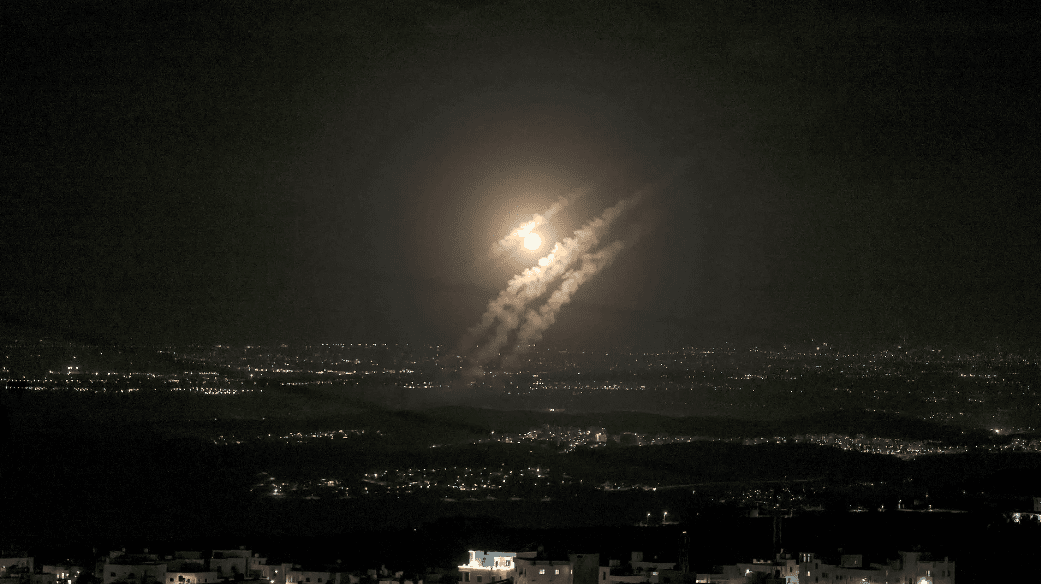
- 12 noon: Iran launches ~200 missiles (7pm Israel time)
- 12.15pm: Iranian missiles enter Israel
- 12.30pm: Iran’s Islamic Revolutionary Guard Corps (IRGC)describes the missiles as a response to the “martyrdom” of Haniyeh (Hamas), Nasrallah (Hezbollah), and Nilforushan (IRGC commander killed alongside Nasrallah on Friday)
- ~1.30-2.00pm: Sirens cease, airspace reopens, and Israelis leave shelters
And that’s when the next phase of messaging and strategising began.
Tehran messaged out (via its UN mission in New York like last time) that any Israeli reaction would be met with “a subsequent and crushing response.”
Israel messaged out that it would indeed be retaliating, with Netanyahu calling Iran’s move a “big mistake” and pledging Iran will “pay for it”.
And Washington’s afternoon then gave way to a flurry of Pentagon, White House, and State Department briefings, with the main bullet point being that the US will continue to back its Israeli allies:
- Jake Sullivan (the US national security advisor) condemned Iran’s move as “significant escalation” and said Iran will face “severe consequences”
- The Pentagon shared that two US Arleigh Burke-class destroyers in the area had fired interceptors to help defend Israel against the attack, which it assessed was twice the size of Iran’s April attack (after Israel hit Iran’s consulate in Damascus)
- And State declared (yet again) it’s still looking to reach a ceasefire in Gaza in an attempt to defuse the wider regional conflict.
Capiche?
Later in the afternoon, the IRGC claimed 90% of Iran’s missiles hit their military targets. And while footage shows multiple Iranian missiles hitting Israeli territory (including near Mossad HQ outside Tel Aviv, and towards two air bases in the Negev), Israel says “the majority of the incoming missiles were intercepted”.
INTRIGUE’S TAKE
So what next? Allow us to paint you a picture with three words.
First, escalation: Iran’s new foreign minister (Abbas Araghchi) has now declared “our action is concluded”. But Iran tried that same ‘no backsies’ line in April, and here we are. Meanwhile, Israel earlier described its strategy as “de-escalation through escalation”. Ie, it was betting that by ramping up, its enemies might back down. And yet here we are.
Second, isolation: Iran’s UN mission has tweeted that “regional states and the Zionists’ supporters are advised to part ways with the regime” [Israel], in an attempt to further isolate Israel abroad. But Netanyahu just went straight for the jugular, addressing the Iranian people directly in an attempt to further isolate the regime at home.
And third, momentum: Netanyahu used this word over the weekend, declaring that “Israel has momentum; we are winning.” Meanwhile, his approval numbers are rebounding, his majority in the Knesset is growing (with some hawkish additions), and there are now calls (for example) to “change the face of the Middle East”.
The above three words combined, days out from the October 7 anniversary, a month out from the US election, and with a staggering amount of US firepower in the region?
It’d be a bold team of ex-diplomats to forecast Netanyahu hitting pause at this point. His officials are already hinting Iran’s oil infrastructure and other “strategic sites” will be next.
Also worth noting:
- The sole casualty in this latest round appears to have been a Palestinian man hit by Iranian shrapnel in the West Bank. Around the same time, an apparent terrorist attack left at least seven people dead in the Jaffa area of Tel Aviv.
- The Jewish high holiday of Rosh Hashanah begins today (Wednesday) and many Israelis would ordinarily unplug until Yom Kippur ends on October 12.
- There are reports the IRGC didn’t give a heads-up to Iran’s new president until moments before it pulled the trigger. This could just reflect the fact that the IRGC answers directly to Iran’s supreme leader rather than the president; it could also reflect the extent of internal divisions now playing out in Tehran.