


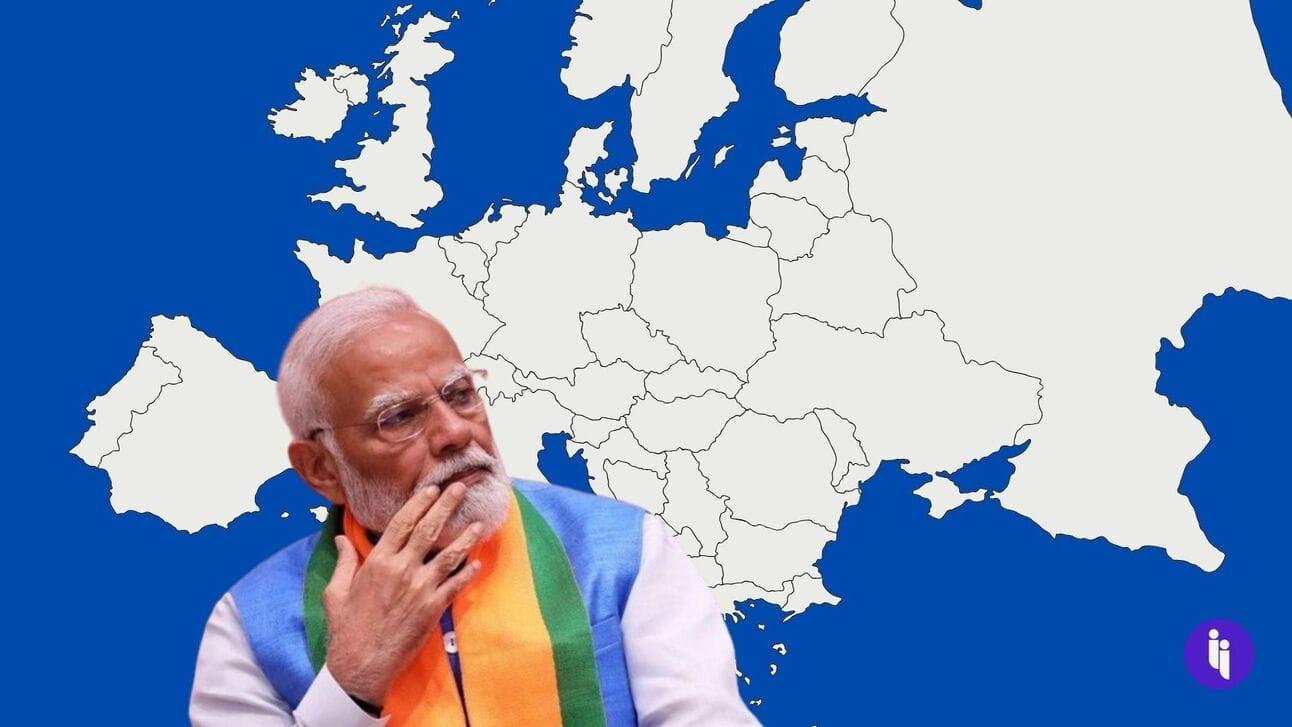
In the global game of musical chairs, Modi has chosen to hover politely between seats. Sometimes (like last month) that means a hug with Putin the same day Putin’s missiles hit a children’s hospital in Kyiv. Other days (like today, Friday), it means arriving in Kyiv after a quick visit to one of Ukraine’s top backers (Poland).
So what’s Modi up to in Ukraine and Poland?
Indian officials (and outlets) are leaning into the ‘historic’ angle, whether it’s India’s first prime ministerial visit to Poland since 1979, its first-ever to modern Ukraine, or (depending on your criteria) its first to a warzone abroad.
Stay on top of your world from inside your inbox.
Subscribe for free today and receive way much more insights.
Trusted by 161,000+ subscribers
No spam. No noise. Unsubscribe any time.
But none of this really explains why he’s there. So here are three possible factors.
First, Modi himself is staying on message, declaring “we support dialogue and diplomacy for the quick restoration of peace”.
And sure, he’s now one of the few world leaders with any meaningful status or influence in both Kyiv and Moscow. His supporters are now emphasising this exact point as further proof of his (and India’s) arrival as a global player. But will any of that access translate into a meaningful mediation here?
Neither side seems interested, and you’d have to go back to Krishna Menon’s 1950s role in Indochina to see a comparable example in India’s history. But still, Modi might see his visit as smoothing out the hits he took for hugging Putin.
Second, take a look at India’s defence industrial base.
While India is now hustling to make more weapons at home, that’ll take time. Until then, it’s still the world’s largest arms importer, getting half its kit from Russia. So with Russia’s war now diverting supply while raising questions about quality, India is pushing to diversify. And wouldn’t ya know it, but…
- Poland, a former Warsaw Pact state, knows how to repair India’s gear from the Soviet-era. And yep, Poland’s PM has confirmed he and Modi indeed talked about “intensification in terms of the defence industry.”
Oh, and you’ll never guess the other place that’s key to India’s defence industry:
- Yep, Ukraine: most of India’s frontline warships, 100 of its military transport aircraft, and most of its military choppers rely on Ukrainian manufacturers like Motor Sich, Antonov, and Zorya-Mashproekt, including for advanced gas turbine engines.
So part of Modi’s regional balancing act here is pure military necessity.
Of course, like Russia, Ukraine’s ability to serve customers abroad is now curbed by the war at home. But there are persistent rumblings of Ukraine and India aiming for joint venture facilities in India, so we’ll be looking for any word on that.
And third, Modi is arguably just responding to changes within Europe’s own balance of power. Sure – Paris, London, Berlin and Brussels are still key, which is why Modi mostly looked Westward during his first 27 visits to the EU. But he’ll also have noticed how others like Poland now throw their weight around more.
So to close, let’s be clear – none of this means India is stepping away from Russia. To the contrary, it actually confirms India’s musical chairs strategy. In fact, just as Modi was boarding his 10-hour train to Kyiv, word broke that India has now overtaken China as the world’s top importer of Russian oil, getting a record 44% of its supply from Russia. Before the war? It was less than 1%.
Oh, and guess where India’s defence secretary is right now? Yep, in the US.
So somebody smash that ‘play’ button, and let the musical chairs continue.
INTRIGUE’S TAKE
Our co-founder Helen spoke at a security summit in Doha earlier this year, and one of Singapore’s legendary diplomats was a speaker there, too: Bilahari Kausikan. He was really on-the-money when he described the way more players are now approaching our world as “omnidirectional”. Capitals will lean any and all ways, depending on their interests and capabilities at the time.
It’s an apt description for all leaders who’ve now visited both wartime Kyiv and Moscow: Hungary, Indonesia, South Africa, Turkey, Guinea-Bissau and now India, which has really gone from non-alignment to multi-alignment.
India’s foreign minister (Jaishankar) even wrote a book about it, with trademark lines like, “many friends, few foes, great goodwill, more influence.”
So okay, that’s India’s play. And sitting in Delhi, with a nuclear-armed foe to your west (Pakistan), a nuclear-armed rival to your north-east (China), and your nuclear-armed weapons supplier starting a war to the north-west, there’s a certain logic behind India’s strategy.
But will it work? Well, you could argue it’s already working. Look at the way Western leaders have responded to Modi’s Putin hug, or his Russian oil spree. Pretty muted. And not because the West doesn’t mind, but because its need for an aligned India (to balance China) outweighs its dismay at a multi-aligned India.