


🌍 5 quotes from Munich
Plus: The great Olympic Village shortage

|
Today’s briefing: |
|
Good morning Intriguer. I probably deserved to get booed on-stage at that diplomatic gala. They were running a big charity raffle in Mexico City, and the proceeds went to a terrific community project, so buying tickets was a win-win: worst-case, you help a great cause. Best-case, you win some sweet prizes along the way.
So I bought a bunch of tickets and ended up getting booed, not just after winning third prize, nor second (a week in Cancun), nor even first (business class flights to Europe). Rather, in retrospect I think the booing might’ve started after I pulled a Lleyton Hewitt-style fist-pump while grinning with the big novelty-sized Lufthansa ticket.
All that to say two things: first, we are re-launching our Intrigue perks program, so this is your last week to share Intrigue and score sweet rewards for a little while (including entry to our exclusive WhatsApp group!) — your unique referral link is down below. Win-win.
And second, keep reading to see if anyone got booed on-stage at this year’s historic Munich Security Conference. I don’t think anyone did, but keep reading just to be sure.

PS — ¿Hablas español? Check out our weekly edition in Spanish!
Holiday of the day
16-23 February (inclusive)
Those are the dates for this year’s Lunar New Year festival, with China’s major mainland markets now closed as millions head home for the annual holiday. Other markets (like Hong Kong, Singapore, South Korea, and Taiwan) will see briefer closures this week.
Munich Security Conference
Gone are the days when big thinktank events like the Munich Security Conference (MSC) were the exclusive preserve of tweed-clad IR nerds arguing about great power theory.
This is 2026, darn it: the MSC’s Wolfgang Ischinger kicked things off Friday rocking Macron’s trademark aviators, before unleashing a weekend of panels and speeches he branded “Under Destruction” amid an age of “wrecking-ball politics”.
And indeed, the weekend ended up less a debate around whether that’s a fair framing, and more a debate around who’s driving the biggest bulldozer, starting with…
-
🇺🇸 "We in America have no interest in being polite and orderly caretakers of the West’s managed decline" — Marco Rubio, Secretary of State, United States
Rubio actually delivered many of the same blunt messages Vance did at Munich last year, but he strolled off stage to a standing ovation rather than the stunned silence Vance got.
The difference? Rubio framed his critiques (whether immigration, climate, or deindustrialisation) as defending shared values that underpin a shared civilization: the West. Vance, on the other hand, framed those same critiques to question if there still are any shared values, and thus if there’s any shared civilization still worth the US defending.
For a European audience, Rubio’s speech was a relatively comforting reminder that a Reagan-style conservatism still breathes, even if it’s now delivering tougher messages.
-
🇨🇳 "Japan's ambitions to invade and colonize Taiwan remain unabated, and the specter of Japanese militarism lingers on" — Wang Yi, Foreign Minister, China
In maybe the event’s wildest line, China's urbane top envoy argued it’s Japan that wants Taiwan, in a nod to the old empire’s 50-year rule on the island until its WWII surrender.
Coming barely weeks after China itself openly rehearsed exactly such an invasion (on the fraught premise that Taiwan is a renegade province), it's part of Beijing's continued attempt to frame Japan's popular, hawkish new PM (Takaichi) as a threat to the world, rather than just a threat to Beijing's own regional designs.
Still, the words irked Tokyo, which has now lodged a protest. And speaking of Japan…
-
🇯🇵 "The war in Ukraine is not 'somewhere far away' for Japan" — Shinjiro Koizumi, Defence Minister, Japan
The 44-year-old Koizumi, popular son of an ex-PM and a future contender himself, wasn't the only one to draw direct links between Russia's war in Europe and rising jitters in Asia. In fluent English, he cited (say) North Korea sending troops for Putin, and flagged China’s own historic military build-up, arguing the security of the two regions is “indivisible."
Rubio made a similar point, noting last century's two great wars serve as history's great reminder that "ultimately, our destiny is, and will always be, intertwined with yours".
But what about Ukraine itself…?
-
🇺🇦 "I'm younger than Putin. Believe me, this is important… Putin does not have much time" — Volodymyr Zelensky, President, Ukraine
This is not some botoxed Selling Sunset dunk, but an interesting note on Putin's drivers: ie, the Ukrainian is arguing Putin has zero interest in settling for peace because by the time he’s ready to attack again, he’ll be gone: so any pivot to peace means admitting failure.
The ex-comedian also used some of his trademark wit to voice exasperation at how the continued talk of ending the war via “concessions” only ever means Ukraine handing Putin the land he still hasn’t managed to take by force: Western intel estimates Putin just lost more men in a month than the Soviets lost during an entire decade in Afghanistan.
Hence Zelensky’s script-flipping quip: "We can also offer a ceasefire to the Russians if they hold elections in Russia". And now to wrap it up…
-
🇪🇺 "Mutual defence is not optional for the EU, it is an obligation" — Ursula von der Leyen, Commission President, EU
While not a headline-grabber, history might declare this as the conference's defining line.
First, von der Leyen is jolting Europe awake from any sleepy notion that security pledges are just a NATO thing, while the EU focuses on (say) regulating bottle caps or whatever. Indeed, the EU’s own broad mutual assistance clause is right there in the bloc’s core treaty, and France already invoked it after the Paris 2015 terrorist attacks.
Second, while this clause was always a plan-B for those 23 EU members also in NATO, von der Leyen might’ve just become the commission’s first peacetime president to call for its activation.
And third, while headlines frame this as pushing back on NATO’s Mark Rutte, who argued Europe can’t defend itself without the US, it looks more to us like a both/and insurance policy: more security addition than transition.
Anyway, all that to say whether it’s assumptions, complacency, borders, or even facts, it’s easy to see why this year’s Munich was indeed about an order “under destruction”.
Intrigue’s Take
It’s hard to know if Europe’s applause for Rubio reflects relief at hearing Washington still believes the West can win, or relief Washington still sees Europe as a partner in that fight.
Still, nobody should confuse European applause for European trust. To the contrary, the fact is for every solid Rubio speech, Europeans are still processing (say) Greenland, or surprise tariffs, or US cuts for Ukraine’s self-defence.
And the fact so many Western leaders have now had to spell out that “decline is a choice” (per Rubio, plus Meloni, Tusk et al last year) is itself already revealing, not only about Europe’s wrestle with its own doubts, but also America’s wrestle with the slogan that still underpins President Xi’s China: the East is rising while the West is declining.
A lot of authoritarian propaganda tends to rest on that same sense of inevitability: that Russia will inevitably defeat Ukraine, or that China will inevitably take Taiwan. The power of inevitability–narratives is their ability to pre-emptively disarm foes: what’s the point of (say) helping Ukraine or helping Taiwan if you’re merely delaying the inevitable?
And maybe that’s the value of these Munich events: a reminder that nothing is inevitable.
Today’s briefing is presented by…
Facts. Without Hyperbole. In One Daily Tech Briefing
Get the AI & tech news that actually matters and stay ahead of updates with one clear, five-minute newsletter.
Forward Future is read by builders, operators, and leaders from NVIDIA, Microsoft, and Salesforce who want signal over noise and context over headlines.
And you get it all for free, every day.
Meanwhile, elsewhere…
 |
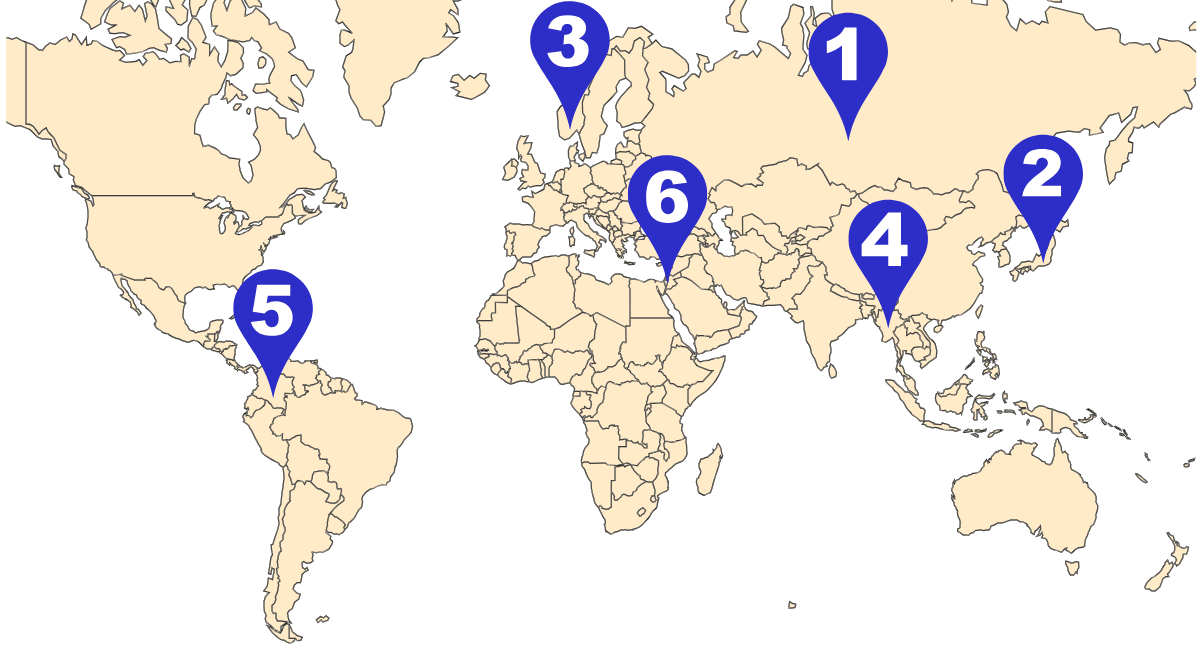
🇷🇺 RUSSIA — Dart frog poison. Comment: The headline is not that Putin killed him, but how: the labs say they found on Navalny an ultra-rare toxin only produced by dart frogs, in the wild, in tiny amounts, and only when eating a specific diet. |
 |
🇯🇵 JAPAN — Have him. Comment: Maybe not ordinarily the stuff of headlines, but this comes just after Japan’s hawkish PM scored a historic electoral win, plus it has echoes of a 2010 incident that triggered China’s first rare earth export controls (and the West’s ongoing scramble to de-risk). But unlike that 2010 case, this one didn’t involve disputed islands, and China paid the captain’s bond, so it’s de-escalated relatively quickly. |
 |
🇳🇴 NORWAY — Don’t try this at home. Comment: Combined with stunning reports the US secretly bought a similar device as part of its own probe, there’s a growing sense those suffering from Havana Syndrome are getting closer to some kind of vindication. Though no word yet on when US spymaster Tulsi Gabbard might release a long-running US probe. |
 |
🇲🇲 MYANMAR — Time to leave. Comment: You might wonder why tiny Timor is investigating distant Myanmar: as a matter of principle, the Timorese have long voiced solidarity with Myanmar’s minorities given Dili’s own experiences seeking independence from Indonesia; and as a matter of law, Timor now claims universal jurisdiction over certain grievous crimes. |
 |
🇨🇴 COLOMBIA — Outside opinions. Comment: Surely that’s an academic distinction at this point — the ELN has been pushing to expand its control over lucrative drug trafficking routes, leaving dozens of Colombian security personnel dead in the process. |
 |
🇮🇱 ISRAEL — Nope. Comment: The theory is these markets reflect crowd intelligence, but it’s getting hard to differentiate intelligence from insider info at this point. We wonder if these were the guys we flagged last month (placing a massive bet on Israel hitting Iran again). |
Extra Intrigue
🤣 Your roundup of the world’s lighter Olympic news…
-
Italy’s Olympic Villages keep running out of condoms and tiramisu.
-
Organisers are giving “maximum attention” to why their medals keep breaking.
-
Italian police have arrested a Slovakian fugitive on the loose for 16 years after he tried to attend an Olympic Slovakia vs Finland ice hockey match.
-
An Italian state broadcaster’s commentator made so many mistakes during the opening ceremony, the outlet’s journalists have announced a strike.
-
And a lovesick Norwegian athlete has used his post-medal interview to beg his ex for forgiveness over his past infidelities (it didn’t work).
Show of the day
Courtesy of Amazon Prime
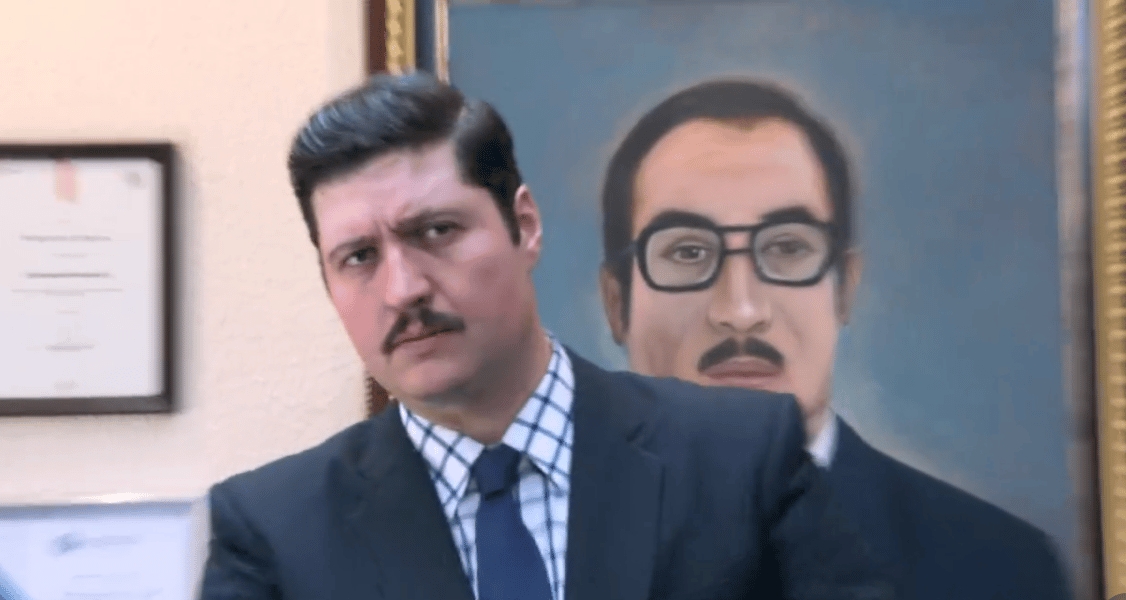
If you’ve already watched all 14 episodes of Britain’s The Office, and all 201 episodes of the US remake, and every single episode of the dozen+ other remakes (South Africa, France, Israel, Sweden, Saudi Arabia, Brazil, India, and beyond), but you still want more Office, then oh do we have good news: there’s a ~17th remake about to drop in Mexico!
Fittingly called La Oficina, it lands on March 13 and takes place in the regional office of a fictional soap-maker called Jabones Olimpo, out in central Mexico’s Aguascalientes (akin to Britain’s Slough or America’s Scranton). The trailer looks fun, so maybe this is your chance to learn another language while laughing at the universality of bad bosses.
Today’s poll
Do you agree with the IOC's decision to disqualify a Ukrainian athlete over his helmet featuring Ukrainian athletes killed in the war? |
Last Thursday’s poll: How do you choose an AI model?
🌎 Location (9%)
👾 Power (27%)
💼 Ownership (21%)
👀 Privacy (32%)
✍️ Other (write us!) (11%)
Your two cents:
-
👀 H.L: “With tech companies compelled by governments to hand over personal data and hungry marketers trying to spy on your every move, privacy is king.”
-
👾 V.F: “I'd long ago resigned myself to the fact that Google owns all my data, adding Anthropic and OpenAI to the list isn't too much of a stretch… and they are heads and shoulders above the competition.”
-
✍️ S.S: “I’m going to wait until some of them implode and then pick from a narrowed field.”