




🌍 It’s Chinese New Year
Plus: Diplo-cats, unite

|
Today’s briefing: |
|
Good morning Intriguer. Happy Year of the Horse to those who celebrate Lunar New Year! Even if you don’t, you might want to embrace the holiday for all the goodies it offers: red packets, succulent banquets, and endless emotional damage from the aunties who use the opportunity to grill you on why your life is a hot mess. (I’m allowed to say that now, because I’ve recently been told that I give “big auntie energy.”)
In all seriousness though, Lunar New Year is one of the rare occasions that brings most of Asia together. Whether it’s celebrated as the Spring Festival in China, Tết in Vietnam, or Seollal in South Korea, the holiday is a chance to hit pause and celebrate family, ancestors, and the coming spring.
But it wouldn’t be an Intrigue story without a geopolitical angle, so let’s dive into that for our top story today.

PS – Ahead of a revamp, it’s your last week to score sweet perks (including access to our exclusive WhatsApp group) by sharing Intrigue with friends using your unique link below!
Number of the day
75%
That’s how much the price of certain memory chips increased between December 2025 and January 2026, amid sky-high demand. Tech leaders are dubbing the current supply-demand mismatch for memory (RAM), “RAMmageddon”.
Gallivanting into the horse year
The Simpsons has a classic joke where Chief Wiggum scoffs at Chinatown’s claims that those February fireworks are for the new year. The joke isn’t about Chinese New Year, but rather the West’s blissful obliviousness to a festival marked by almost two billion people.
So to ensure you can laugh even more smugly at that joke next time it hits your feed, let’s dive into some intriguing details, starting with…
-
What's in a name?
The calendar’s technical term is lunisolar — months follow the moon’s phases, while the overall year is adjusted to match the sun’s cycle. Today (Tuesday) kicks off the new year.
But once you wander beyond that technical language, you risk treading on a political landmine: it’s typically described as Chinese New Year across China, referring to traditions and festivities more specific to Chinese culture.
Elsewhere across the region, folks often opt for a more neutral Lunar New Year, with their own festival dates, festivities, and names (🇲🇳 Tsagaan Sar, 🇻🇳 Tết, 🇰🇷 Seollal).
And in today’s charged world, you can imagine how that quickly becomes a ✌️Thing✌️.
Eg, a Beijing state outlet just ran a story dunking on a Taiwanese association for using Lunar New Year in its English-language promotions, accusing it of "forgetting one's ancestors". It plays into the broader spat of China claiming Taiwan as a renegade province, versus the reality of Taiwan’s own modern identity.
But of course, it took Taiwanese netizens like 5 seconds to point out China's own foreign ministry and ambassador to the US have also used "Lunar New Year".
Still, it’s worth keeping in mind the risks depending where you are: eg, China-based Intriguer and marketing guru Olivia Plotnick has shared some of the ways consumers are tracking brands seen as obscuring versus honouring the holiday’s Chinese origins.
-
Hit the history books
If you get yourself cancelled anyway, take comfort you’re joining a long and storied tradition: Sun Yat-sen, that rare figure revered by both the mainland and Taiwan for his role ousting the Qing dynasty and proclaiming the Republic of China in 1912, immediately adopted the Western (Gregorian) calendar in an attempt to modernise his new nation.
But folks kept celebrating Chinese New Year anyway until Chiang's nationalists tried banning it as a feudal relic in 1929. Popular pushback forced him to hit repeal in 1934 until Mao’s communists tried a similar banning stunt as part of his brutal ‘cultural revolution’, pumping up his Revolutionary Spring Festival as an acceptable alternative.
So whether from a revolutionary, nationalist, or communist perspective, three famed 20th century leaders variously viewed this ancient tradition as a threat to their own power.
China’s communists eventually started tolerating Chinese New Year through the 1970s, embraced it from the 80s, designated the full ‘Golden Week’ a holiday from the 90s, then milked it for economic and political gain from the 2010s — these days, President Xi uses the occasion for big domestic tours and unity messaging. And that brings us to…
-
The markets
While share markets close, Chinese New Year is a major economic driver across…
-
Travel: Folks head home to see family in the world’s largest annual human migration, with ~9.5 billion inter-regional trips over a month or so, spending ~$100B in domestic tourism just during the specific 8-day holiday.
-
Retail: Households tend to splurge around the festive season, accounting for up to a fifth of China’s entire annual fast-moving consumer good (FMCG) sales. And…
-
Entertainment: 190 million movie-goers spend ~$1.3B at the box office, or roughly a sixth of the entire annual US box office in just eight days.
Unsurprisingly, every local embassy’s economic section therefore tracks those figures for any potential insight into the health of the world’s second-largest economy, a little like how we might see pre-Christmas spending (or even Amazon Day) as a straw in the wind.
Oh, and with all this talk of the new year, we should mention which year we’ve now entered: the Chinese zodiac has 12 animals and five elements resulting in 60 unique combinations that rotate annually through six decades, and we’ve just entered the Year of the Fire Horse. It’s meant to produce strong-willed and confident kids destined for success, so keep an eye out for any bump in China’s birth rate.
The last time China had a Year of the Fire Horse (1966), those babies included Wang Chuanfu (founder of EV giant BYD), Zhai Zhigang (China’s first space-walking astronaut), and Bai Ling (legendary actress). So let’s check back in, say, 30 years and see what this next batch of fire horses gets up to?
Intrigue’s Take
The main thread we want to pull here is the historical point above, and the way every modern generation of leaders has seen China’s new year celebration as something to either suppress or harness. And either way, they’ve all implicitly recognised its power.
So as we hurtle into an era of de-globalization and revived nationalism, our gut is these kinds of traditions (whether in China or beyond) will only become more powerful: like anchors for cultural identity and unity amid a storm of political and technological change.
From a government perspective, you can already see the way China’s ruling communists have evolved from purging the traditional new year to now framing themselves as the festival’s guardians. And ditto, our gut is we’ll see more of that, as the party’s traditional source of legitimacy (growth) falters, and Xi leans more into identity to fill the gaps.
Anyway, now you know why wishing someone a happy Chinese versus Lunar New Year might inadvertently be the diplomatic stance you weren’t quite prepared to make. Maybe it’s best to just, you know, learn how to say Happy New Year in all ~30 relevant countries in their ~500 languages. The Year of the Horse seems auspiciously good for such flexes.
Today’s briefing is presented by…
Nominations. Trade Wars. Shutdowns. Why Investors Are Demanding This Risk Premium in 2026.
Markets are no longer reacting primarily to earnings and rates.
Global investor surveys report geopolitical conflict and policy swings now rank above recessions as the biggest threats to portfolios.
That means higher risk premiums across equities, bonds, and FX. In plain English: you may be taking more risk for less upside.
So what have sophisticated investors done differently for decades?
They diversify with assets that are priced globally and historically appreciate independently of traditional markets.
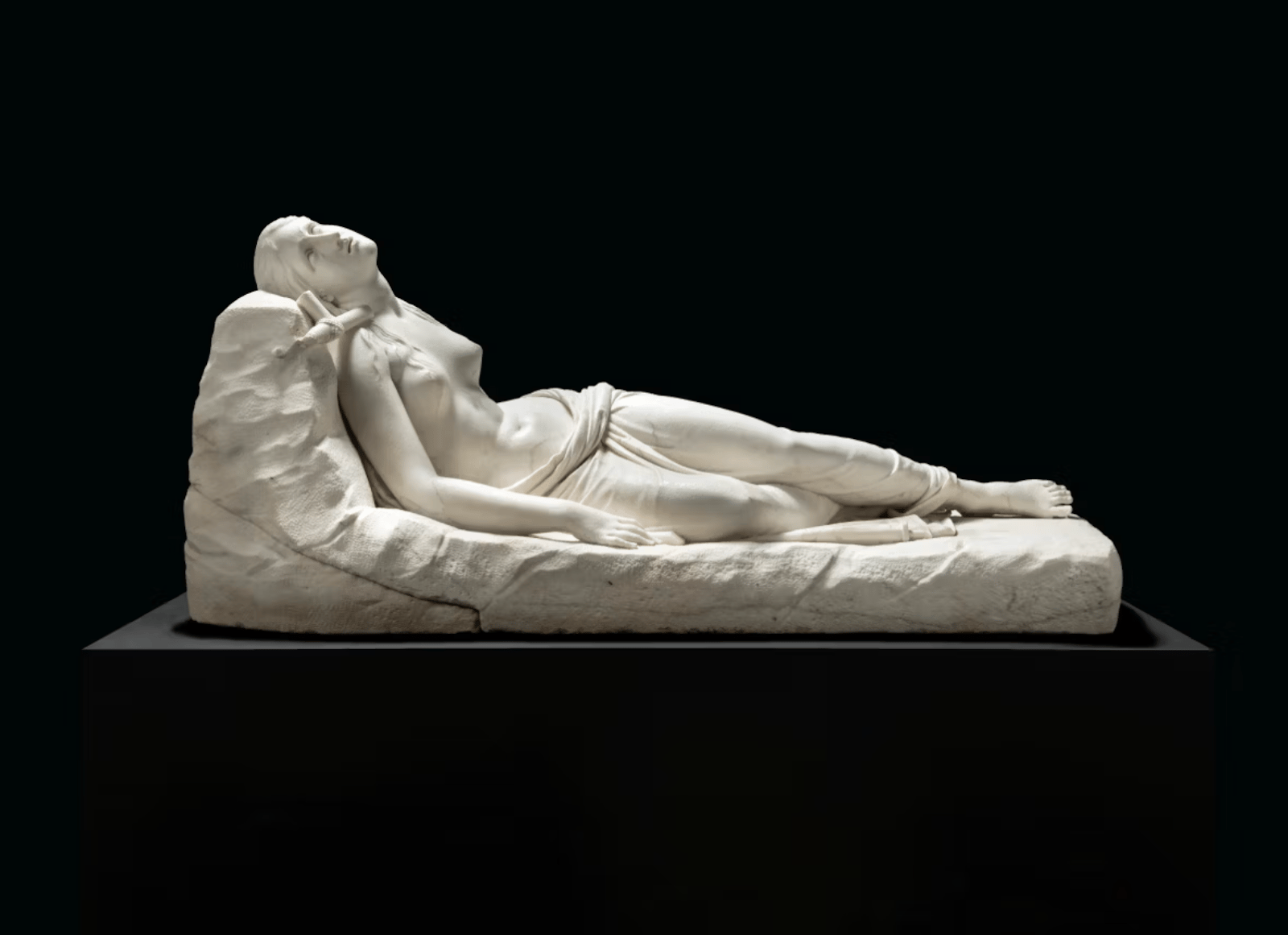
One typically exclusive to the ultra wealthy? Postwar and contemporary art.
It’s shown low correlation to stocks, global demand, and resilience during political shocks.*
And now it’s easy to fractionally invest in multimillion dollar art featuring Banksy, Basquiat and more, thanks to Masterworks.
Investors have seen net annualized returns like 14.6%, 17.6%, and 17.8% across 26 exits.
See how to add political-risk insulation to your portfolio at Masterworks:
*Investing involves risk. Past performance not indicative of future returns. See important disclosures at masterworks.com/cd.
Meanwhile, elsewhere…
 |
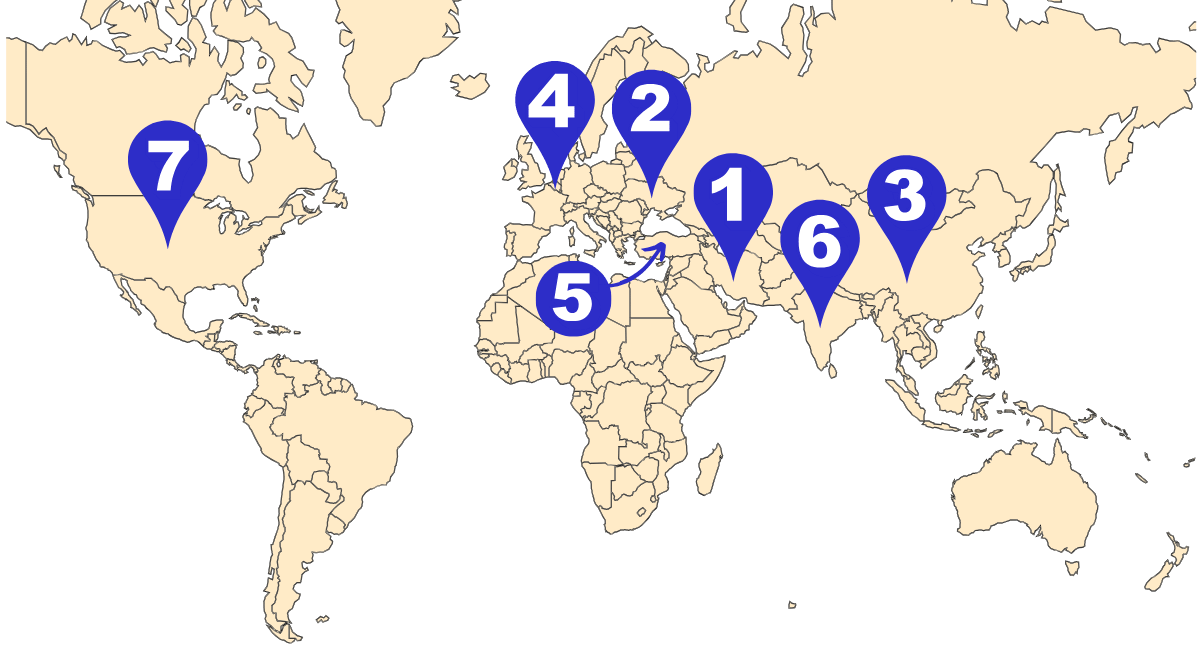
🇮🇷 IRAN – Talks and warships. Comment: Take your pick: the build-up is a way to build leverage in the talks, or the talks are a way to buy time for the build-up, or both. Trump 2.0 relishes uncertainty, though DC (Rubio) is also highlighting the uncertainty of dealing with theocrats. |
 |
🇺🇦 UKRAINE – Counter-attack. |
 |
🇨🇳 CHINA – Duty free. Comment: Africa has 54 countries, and the only one excluded is Eswatini, which is also the only nation maintaining ties with… you guessed it, Taiwan. Anyway, why the duty-free deal? Africa still mostly exports raw materials, so this not only helps China counter US influence but also locks in supply amid fierce competition. |
 |
🇪🇺 EUROPEAN UNION – No AI for you… Comment: You only have to go back a few years to recall a world in which EU dependence on US tech wouldn’t have been seen as a vulnerability, but that’s what happens when trust collapses — locals like France’s Mistral will be the beneficiaries. |
 |
🇹🇷 TURKEY – Health issues. Comment: MBZ was just publicly hosting the Emir of Qatar a couple of days ago, though there’ve always been health rumours. Why so much sensitivity? In a tightly-controlled family-centric political system, leadership stability is key for markets, allies, and rivals alike. MBZ’s line of succession is clear (his eldest son Khaled), but family health is still a state secret to avoid signalling weakness for any rivals, whether at home or abroad. |
 |
🇮🇳 INDIA – AI summit. Comment: It’s all part of India’s quest to repatriate more tech value-add, while Western leaders (like Macron) continue to explore India as a US-China hedge. |
 |
🇺🇸 UNITED STATES – Nuclear gives you wings! |
Extra Intrigue
Here’s what people around the world have been googling…
-
Folks in 🇳🇪 Niger searched for ‘Orano’ after a junta leader warned to expect a French military intervention to recapture seized assets originally belonging to France’s state-owned uranium miner Orano. Paris has denied the accusations.
-
🇦🇺 Australians turned to Google to ask ‘is Twitter down’ after a widespread outage hit the social media platform (now X), with no official explanation.
-
🇮🇪 Irish netizens googled ‘pancake recipe’ in preparation for Shrove Tuesday (today), a traditionally indulgent send-off before the solemn Lent period.
Companion of the day
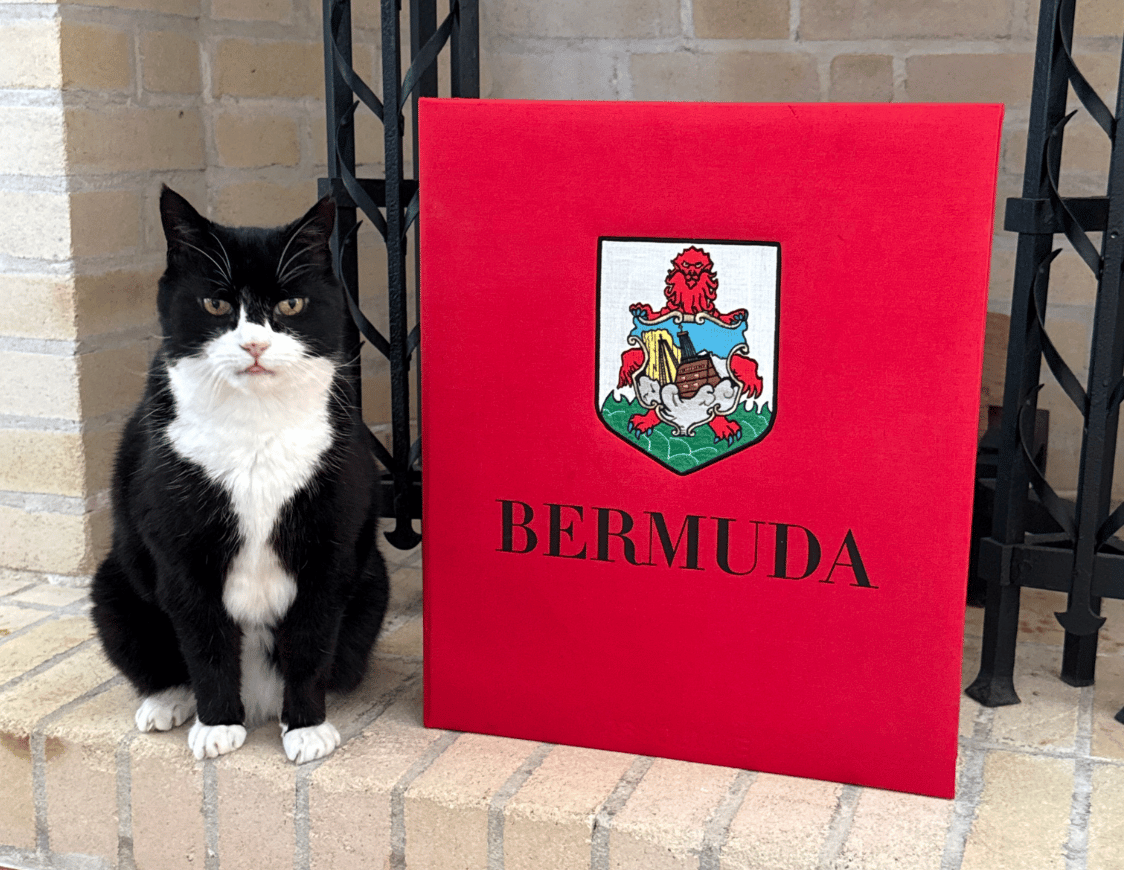
Palmerston, High Diplocat. Credits: @DiploMog via Twitter/X.
We bring two important bits of cat news from the mahogany-scented halls of diplomacy:
First, we’re saddened to confirm Palmerston, Britain’s famed Foreign Office diplo-cat, has passed away in Bermuda at an estimated 12-years-old. Adopted as a stray, he famously prowled the foreign ministry’s halls as Chief Mouser until his final posting to Bermuda as “feline relations consultant” to the governor.
Second, Palmerston’s long-time rival over in the 10 Downing Street prime ministerial residence, Larry, celebrated his 15th anniversary as Chief Mouser on Sunday. Only two prime ministers have ever lasted longer there: William Pitt the Younger, and Sir Robert Walpole. Here’s to another 15 years of catching pigeons, lounging on printers, and delaying US presidential motorcades by dozing underneath their armoured limo.
Today’s poll
Which do you think is happening in the US-Iran talks? |
Yesterday’s poll: Do you agree with the IOC's decision to disqualify a Ukrainian athlete over his helmet featuring Ukrainian athletes killed in the war?
🧑⚖️ Yes, rules are rules (30%)
🚫 No, it's outrageous (68%)
✍️ Other (write in!) (2%)
Your two cents:
-
🚫 S.B: “No politics in the Olympics? Then where is Russia? It is hypocritical to not let the fallen athletes be remembered.”
-
🧑⚖️ I.H: “It’s easy to imagine a political statement on a helmet that isn’t as popular or acceptable. The rules cut both ways.”
-
✍️ W.S.T: “He got more publicity by being refused than if the helmet were never an issue. So mission accomplished.”