


🌍 Trump vs Iran: who’s lying?
Plus: This world leader is obsessed with…

|
Today’s briefing: |
Sponsored by:  |
Good morning Intriguer. I took a trip down memory lane recently and scrolled through some vintage Intrigue from 2021. Back then, we were a weekly newsletter, and featured two big stories sprinkled with some palate cleansers in each edition. I was heartened to find that much of the Intrigue essence remained the same: our irreverent tone, commitment to making geopolitics entertaining, and reckon (with the benefit of hindsight) that we’d made some sharp calls on how world events would unfold.
Anyway, I got to thinking about one of the more popular editions we produced, which focused on the role of narratives and storytelling in the media discourse and content consumption. After all, we were each swimming in our own narratives (and algorithms), and not always able to pull ourselves out of these waters. World leaders certainly understand this to great effect, and use narratives to shape how they want us to perceive world events.
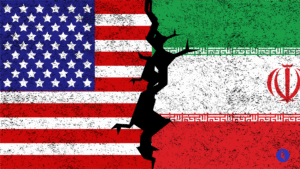
We see that in our top story for today, focused on the different narratives which the US and Iran are each sharing about the latest attempt at de-escalation and conversation as we head into day 26 of the Iran war.

Number of the day
33%
That’s the export boost the EU hopes its new Australia trade deal will deliver over the next decade, removing virtually all tariffs on both the EU (think cars, chemicals, cheese) and Australia (think critical minerals, wine, and seafood). But the ‘virtually’ is doing some heavy lifting here, as Australian farmers are unhappy with the EU’s limits on beef, lamb and sugar, while EU farmers are unhappy their Aussie competitors got any access at all.
Negotiating to negotiate.

Shortly after our last briefing hit your inbox, the US president made an all-caps announcement that, thanks to “very good and productive conversations” with Iran, he was now postponing his threatened strikes against Iranian energy infrastructure for five days.
But barely two hours later, Iran’s regime flatly rejected Trump’s claim, insisting he was just backing down to avoid more energy chaos — the mullahs even attached a pic of a rather crestfallen Trump for illustrative purposes.
So… who’s lying? Let’s examine the evidence, starting with…
-
Why the Iranians might be lying
There are four main factors to consider:
First, the US president paired his claim with specific details, including a) that his envoys Steve Witkoff and Jared Kushner are now involved, and b) the talks are with a “respected senior Iranian figure” he can’t name because “I don’t want him to be killed” (Israeli outlets say it’s Iran’s strongman parliamentary speaker, Ghalibaf).
Trump has also now claimed the Iranians have agreed to an unspecified 15 points — things like no nukes, no enrichment, and joint US-Iran control of Hormuz going forward — all in return for a complete end to hostilities.
Second, there are consistent and escalating rumours of high-level talks happening in Islamabad or Ankara as soon as this week, with VP Vance potentially leading the US side.
Third, there’s precedent: for years, the Iranians publicly denied the actual US talks on what eventually became the JCPOA nuclear deal. Admitting any contact too early would risk making the regime look weak to rivals both at home and abroad.
And fourth, Turkey, Egypt, and Pakistan have all variously now been meeting with — and maybe relaying messages between — both Iran and the US for at least a couple of days, while Israel’s Netanyahu has suddenly changed his tune to hint there’s now an opportunity to convert battlefield gains into a deal.
So there’s enough smoke right there to raise genuine doubts around Iran’s denials.
Okay, but…
-
Why Trump might be lying
Again, four big factors to consider:
First, the Iranians have issued immediate and total denials from every power centre, including not just that state outlet above but also the foreign ministry, Ghalibaf himself, and IRGC-linked channels on Telegram. They all explicitly deny indirect talks, too.
Second, there’s been no independent Iranian corroboration of any Trump claims — something we did eventually see during those old secret JCPOA deal talks.
Third, the Iranians are spelling out one of Trump’s obvious motives: to stabilise markets. And sure enough, oil prices bungee-jumped from $114 to as low as $96 within minutes of his announcement. But other motives to fib could include buying time until more US marines arrive later this week for (say) a move on Kharg Island. There’s precedent for that motive, too (like last year’s US fake-out before hitting Iran’s nuclear sites).
Meanwhile, with the regime still holding on, it’s hard to see the mullahs having any real motive (per Trump’s claim) to give up so much of what’s really their sole remaining leverage. It’s even harder to see them trusting the US or Israel any time soon.
Then…
Fourth, there’s also precedent for this White House (ahem) exaggerating progress to calm jitters, whether you want to look at the market-friendly claims of a mysterious Greenland deal, or the president’s repeated 2019 claims of a “substantial deal” with China, which only came several months later (if you want to believe one really came at all).
Intrigue’s Take
So okay… who’s lying?
Our sense is maybe a) low-level and/or indirect contacts do exist, but b) they’re still early. So it’s in Trump’s interests to big them up, and it’s in Iran’s interest to deny them entirely.
The other potential curve-ball? It’s possible whoever is chatting with DC has no regime mandate, if such a mandate is even possible amid all the Israeli assassinations. The new supreme leader still hasn’t appeared on camera, fuelling rumours he’s not exactly in supreme shape, so maybe Ghalibaf is as close as you get: he’s got IRGC cred (as a former air force commander) while also emerging as the regime’s most high-profile face. But that’s not the same as an ability to actually deliver on anything he might promise.
Plus while the facts and spin keep emerging, keep in mind the broader fact that this war has now gone way beyond just hits to market sentiment, to now hit actual supply — whether it’s the world’s largest natural gas field (~Iran), the world’s largest LNG export hub (Qatar), or one of the world’s largest crude export terminals (Saudi Arabia), dozens of real, hard energy assets are now sitting damaged.
And as the final pre-war tankers reach their destinations in the coming days, headlines might just get worse (see ‘Pakistan’ below for a few examples). So as much as we respect the power of markets, there’s a real possibility markets are again under-pricing what’s ahead. We say ‘again’ because whether it’s the Yom Kippur War, the Covid pandemic, or Putin’s invasion, markets have often needed weeks if not months to really process history in the making.
Sound even smarter:
-
Saudi Arabia is drawing closer to joining US attacks on Iran, according to a report in The Wall Street Journal.
-
Traditional mediator Oman now seems to be on the out with the US, sounding notably sympathetic to its Iranian neighbours.
-
There’ve been reports tankers have started paying up to $2M to the regime to exit Hormuz — a manageable fee given current energy prices.
Today’s newsletter is sponsored by Grey Dynamics

Every major intelligence recruitment follows the same five-phase structure. Build rapport. Establish context. Align your offer with what the other person actually wants. Address their concerns before they raise them. Close with clarity.
This is the Pitch Framework. It is the same methodology CIA officers use to develop human sources, now taught to professionals in policy, finance, and corporate strategy.
Grey Dynamics’ HUMINT Fundamentals course is taught by Ray White, a retired CIA senior operations officer with 25+ years running the Agency’s largest training programme. You will learn why preparation is the pitch, why motivations drive everything, and why the best proposals never feel like proposals at all. Download The Pitch Framework and see for yourself.
Meanwhile, elsewhere…

 |
🇷🇺 RUSSIA – Rough week? |
 |
🇬🇧 UNITED KINGDOM – Ambulances ablaze. |
 |
🇮🇱 ISRAEL – Territory warning. |
 |
🇸🇬 SINGAPORE – Bond, Singaporean bond. Comment: Against that backdrop, it’s been interesting to see gold (the classic safe-haven) enter bear territory, ~22% off its peaks. It’s a mix of a) the stronger US dollar (making gold more expensive for non-US buyers), b) a hawkish Fed outlook (making non-yielding gold less appealing), and c) profit-taking after spiking 65% last year. |
 |
🇲🇽 MEXICO – Foreign experts. |
 |
🇸🇮 SLOVENIA – By the skin of his teeth. |
 |
🇵🇰 PAKISTAN – Energy woes spread. |
Extra Intrigue
Here’s what people around the world are googling:
-
Folks in the 🇺🇸 US looked up ‘Port Arthur’ after a large fire broke out at the Valero oil refinery in Texas, one of the country’s biggest.
-
🇮🇹 Italians asked ‘who won the referendum’ after voters turned down a proposed overhaul of the judiciary supported by PM Giorgia Meloni.
-
And 🇰🇪 Kenyans googled ‘Raphael Tuju‘ after authorities arrested Kenya’s former foreign minister, a day after he went missing — police allege he staged his own disappearance to drum up sympathy amid a long-running civil court case.
Obsession of the day

Need a new book rec? Credits: Turkmenistan government.
Turkmenistan is generally known for its vast deserts, warm hospitality, and huge burning gas crater nicknamed the ‘door to hell’. But if you’re a geopolitics nerd like us, you might also know Turkmenistan for its leader’s utter obsession with the Alabai dog breed.
How obsessed? Turkmen leader Gurbanguly Berdymukhamedov has…
-
Written a 272-page-long book about the breed’s history and spiritual connection
-
Unveiled a 6m-tall gold statue of an Alabai dog
-
Dedicated a national holiday to the Central Asian sheepdog, and
-
Posed for multiple official portraits next to Alabai puppies.
It’s all so adorable, you could almost forget he runs a repressive autocratic regime. With dogs tho haha! Cute!
Today’s poll
Who do you think is lying about these talks? |
Yesterday’s poll: Which previous conflict do you think holds the most useful lessons for today's war?
🇻🇳 Vietnam War (56%)
🚢 Tanker War (6%)
1️⃣ First Gulf War (12%)
2️⃣ Second Gulf War (23%)
✍️ Other (write in!) (4%)
Your two cents:
-
🇻🇳 N: “Fighting a country that doesn’t care about its people is not a smart move.”
-
✍️ N.F: “Korea – an ongoing stalemate that the US is still paying for decades later. If troops are deployed, this could easily go the same way.”
-
✍️ P.C: “The war(s) in Afghanistan: post 9/11 and the Soviet war before that. Both demonstrated that an asymmetric war is harder to ‘win’ than you might think…”
-
✍️ U: “Governments are always best prepared for the previous war…”