



Spend too much time monitoring the situation, and you soon forget about normal life.
So we thought it’d be both fun and insightful to explore three things now trending behind China’s Great Firewall, starting with…
- The sassy personality test
Mmmkay, but why are you writing about personality tests? That’s exactly what we thought when we spotted an article in the Communist Party’s own Global Times tabloid about something called the ‘Silly Big Personality Test’ now going viral among China’s Gen-Z.
Stay on top of your world from inside your inbox.
Subscribe for free today and receive way much more insights.
Trusted by 161,000+ subscribers
No spam. No noise. Unsubscribe any time.
First, the what: it’s a quirky, sarcastic take on the ubiquitous Myers-Briggs Type Indicator coined by a mother-daughter duo back in the 1940s: these days, casually stirring creamer while labelling Barry from accounts a ‘toxic INTJ’ is peak corporate living.
But China’s viral version doesn’t take itself seriously, asking users unhinged questions (your reaction if someone says they have diarrhoea?) that produce amusingly absurd personality types like ‘Poor’, ‘Sexy’, ‘Drunk’, and the quintessential ‘Shit’.
Second, the why: the semi-anonymous creator says she used AI to build a light-hearted roast to convince her buddy to tone down the booze, but it blew up bigly.
And that’s the why we find intriguing: in a country with ~16.9% youth unemployment, where so much hinges on one brutal Gaokao college entrance exam, it’s easy to see how dunking on the very idea of all-knowing tests might resonate with a frustrated Gen Z.
And why would The Global Times report this? Propagandists often jump on trends to seem relevant, but this piece frames it all positively as a fun way to cope with pressure and feel belonging — it’s a subtle nod to real stresses but without criticising the system, positioning the Party as wise guardians: don’t let tests or trends define you, kids.
- The amateur football league
Mmmkay, but why are you writing about Friday night football?
First, the what: 13 cities from eastern China’s Jiangsu province are now competing in the second-ever Su Super League. And what it lacks in soccer professionals, it makes up for in raw spirit: the opening ceremony featured a pop-star, dancing robots, and 40 go-karts?!
It’s all generating incredible buzz, attracting more spectators than China’s entire national league, and even giant corporate sponsors like Coca-Cola and Adidas.
Second, the why: last year’s two billion views were the result of city rivalries (salted duck vs honey peach!), authentic vibes (delivery guy vs fishmonger!), and endless memeable moments — and the virality’s only grown this year, like when a giant inflatable dinosaur mascot ended up resembling a soy braised duck, or when a famous actor appeared in full armour, because why not.
But… why? We see a timely reminder of the strong local identities that exist beyond the Party’s unity rhetoric, and the universal human craving for authenticity and community.
And while the phenomenon appears to have caught the Party by surprise, state outlets are obviously now hype-manning given the way this all aligns with President Xi’s priorities around domestic consumption and cultural confidence. There’s also a bit of finger-wagging at other provinces — why can’t you be more like Jiangsu!
- Hugo’s day has come
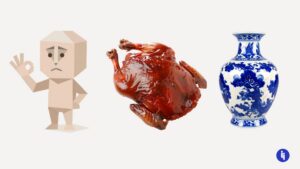
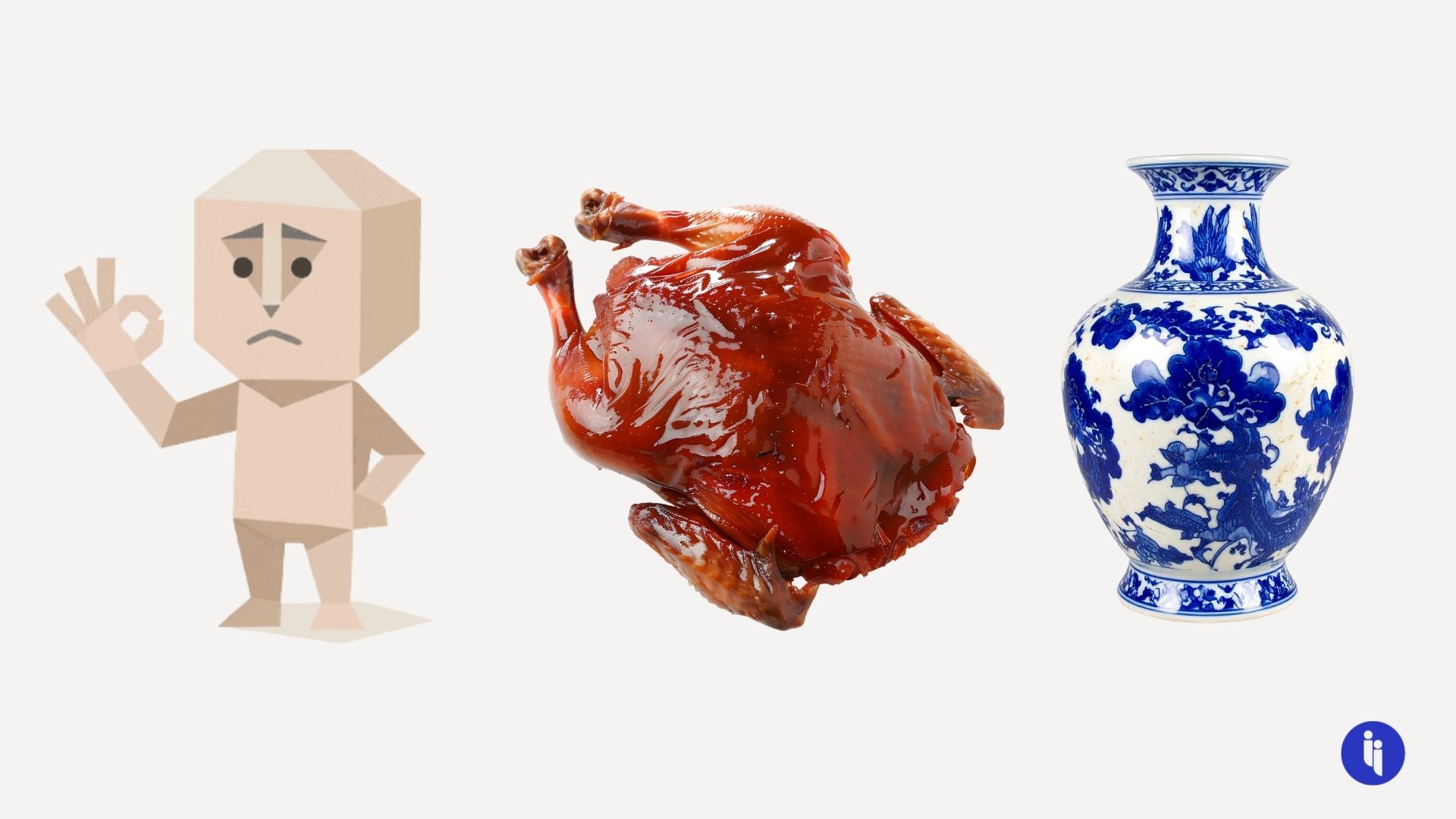
The Indiana Jones model of archaeology was still the norm relatively recently. Cool statue? Yoink. Thousand-year-old vase? Double yoink.
Mmmkay, but why are you writing about old vases?
First, the what: France just unanimously passed a bill to simplify the return of looted artefacts, and the debate featured lawmaker Jérémie Patrier-Leitus quoting Victor Hugo’s 1861 condemnation of the sacking of Beijing’s Old Summer Palace: “One day will come when France, once freed and cleansed, will return this plunder to looted China.”
And sure enough, that footage and the Hugo quote has now gone viral, with China’s netizens often using the hashtag 雨果写的文字成真了 (“Hugo’s words came true”).
Second, the why: it all ties neatly into China’s ‘century of humiliation’ (1839-1949) when foreign powers subdued and sectioned the Middle Kingdom. That era is now a key slice of the Party’s narrative as restoring China’s rightful place on the podium, so it’s no surprise this news has gone viral amid feelings of nationalism, redemption, and curiosity.
Intrigue’s Take
We’re mindful not to make sweeping generalisations of generations let alone entire complex societies like China’s, but… allow us a moment to zoom out and reflect?
First, all three viral trends expose the limits of top-down control: cut all the ribbons and launch all the roadmaps you want, but what actually thrives might end up being some sassy personality test, an amateur city derby, or a lawmaker’s speech in Paris.
Second, it’s a reminder that while young folks might be exhausted from modern life (spawning an entire rùn culture of quiet quitting), there’s a reminder here that if you give young folks something real and local to care about, they’ll show up in droves.
And third, maybe the Party is more agile than we assume — in each example you can see Beijing’s mouthpieces riding and steering that viral energy towards approved messages, whether it’s wellbeing, consumption, or national pride.
So summing it all up, maybe these three viral trends actually represent a pretty neat emotion cycle: self-deprecation → tribal belonging → national vindication.