




🌍 3 things to watch in Iran
Plus: Get your hands on this banned book.
In partnership with


|
Today’s briefing: |
|
Good morning Intriguer. One of my favourite non-fiction reads from 2025 was the book ‘Chokepoints’ by former US diplomat and foreign policy expert, Edward Fishman. It explores how the US weaponises its dominance of the global economy to control critical economic nodes and exert power. Basically – rather than physical chokepoints, the book focuses on economic blockades.
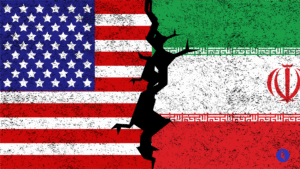
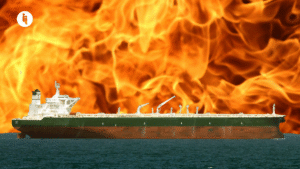
But this week's Iran conflict has highlighted how much impact physical blockades can still have on the global economy, with key shipping routes like the Strait of Hormuz now effectively shut. The flow-on impacts from this are huge, not just because of the volume of global trade that passes through the narrow body of water, but also because of how many parties are dependent on this shipping lane.
Let’s dive into all that and more in today’s top story.

Number of the day
12%
That’s how much South Korea’s main stock index plunged Wednesday, its worst single-day drop in history. As the Iran war continues, the crash reflects a) Korea’s heavy reliance on imported energy, and b) its over-leveraged retail investors getting margin called.
Third Gulf War

Again, with everything shifting so rapidly, here’s your quick recap since our last briefing:
-
Iran’s retaliatory strikes have continued, scoring non-lethal drone hits on the US consulate in Dubai, the US embassy in Riyadh, and potentially the CIA station in Riyadh, plus a ballistic strike on Qatar’s Al Udeid air base, and even two ports in Oman! We say ‘even’ because Oman (as host of Iran-US talks) had previously avoided the fray as the main Arab state not dunking on Iran.
-
The US has closed more embassies (Kuwait, Lebanon, Saudi Arabia), while reporting it’s now hit a total of ~2,000 targets.
-
Israel has struck targets linked to the Basij (Iran’s internal paramilitary) and the Assembly of Experts (the clerical body choosing the next supreme leader), hoping to disrupt succession and gut the regime’s symbols of power. It’s also (with the US) damaged Tehran’s 15th-century Golestan Palace, prompting an Iranian complaint to UNESCO.
-
And elsewhere, the UAE’s leader (MBZ) has made a cameo at Dubai Mall in an attempt to project an air of normalcy now that local Iranian drone strikes seem to have slowed. Meanwhile, Syria is reinforcing its border with Lebanon after Israel moved to seize more Lebanese turf, claiming a buffer against Hezbollah attacks.
So with that quick update, here are the three things you need to track ahead:
-
The Strait of Hormuz
If 2024 was the year of the Red Sea, and 2025 was the year of the Panama Canal, 2026 is shaping up as the year of Hormuz:
-
It’s the tiny (33km/21mi-wide) entrance to the Persian Gulf, wedged between Iran and Oman, and serving as a massive chokepoint for ~20% of the world’s oil to get from Saudi Arabia, Iraq, the UAE, Kuwait and Iran out to world markets.
So the regime’s survival strategy has always been to blockade the Strait and hold the world ransom. In turn, the US strategy (such as it is) has always been to nail Iran’s navy.
And while the US has now destroyed Iran’s naval HQ and much of its heavier fleet, hundreds of smaller fast-craft are still (per IRGC doctrine) dispersed along the coast in coves, sheds, small ports, mobile trailers, etc. So the reality is Iran still poses an asymmetric threat against any tankers trying to make a dash.
And that’s where we are: absent a ceasefire or capitulation, it’ll take weeks to locate and destroy enough of those fast-boats, if that’s even possible without ground forces.
In the meantime…
-
Iraq has already cut its oil output because it’s run out of storage space, and
-
Major maritime insurers have re-priced or halted war-risk coverage in the area.
The result is a fifth of the world’s oil now frozen. Trump has greenlit naval escorts and ordered the US Development Finance Corporation to offer insurance, but let’s add that to the list of things that might’ve been good to line up before pulling the trigger.
-
The Houthis
The Iran-backed Houthis had their moment blocking the Red Sea through 2024, though they fired up again last July (sinking two container ships) and September (sinking another).
Why the recent pause? Believe it or not, it’s mostly a political decision linked to the Gaza ceasefire, rather than (say) Western navies frying all the Houthi drones and missiles.
So the Houthis can smash that ‘un-pause’ button at any moment — for now they’re just condemning US/Israeli aggression and calling for pro-ayatollah demonstrations, but there are rumours the group’s leadership is split on how to proceed, between either…
-
a) hold fire but lose cred among the base, or
-
b) pull the trigger again but face more foreign blowback.
If they announce option b), that’s another ~19% of east-west global shipments on hold.
-
Iran’s internal dynamic
This is the most critical vector, but also the toughest to track.
Trump and Bibi have both openly called for the Iranian people to overthrow the regime, though history suggests that’s tough while the regime controls the armoury and treasury. And contrary to hopes of some split within the regime, there are widespread reports the ayatollah’s (corrupt) son is now Iran’s new supreme leader.
Meanwhile, there’s also a line doing the rounds that there’s never been modern regime change via an air-only war, though Milošević and Gaddafi might like a word on the way an air campaign can still enable (if not drive) regime change.
And yet the thing is, Milošević faced political opposition while Gaddafi faced armed opposition. And right now, Iran’s mullahs face neither.
That’s where Iran’s Kurds come in, amid rumours of talks with the US and Israel:
-
Israeli strikes have already flattened several key security posts in Iran’s west
-
Kurdish leaders say the CIA is working on getting them arms and intel, and
-
US outlets say it’s all now pending a decision by President Trump.
But some of these Kurdish groups are already armed, leaving us to wonder if these leaks are just to provoke the regime to trigger a civil war. Either way, it all potentially tosses a match onto a whole new dumpster fire — not just sectarian but regional, irking and destabilising others with a big Kurdish presence (Iraq, Turkey, Syria, etc).
Oh, and given the US only just abandoned Syria’s main armed Kurdish faction a couple of weeks ago, and DC seemingly only just started re-advertising for Kurdish-speakers last week, this feels like another plan that could’ve usefully been lined up in advance.
Intrigue’s Take
Vibes are elusive creatures, but there’s a distinct vibe shift underway from ‘crikey they hit the whole leadership team’ to ‘oh that escalated fast’. There’s also a vibe shift playing out among allies, whether it’s…
-
Conflicting claims around DC being dragged into an Israeli move here
-
Conflicting claims of who sourced the key ayatollah intel (Israel vs the CIA), or
-
An early backer like Canada’s Carney now clarifying that his support for those initial strikes wasn’t a blank cheque for the mess that now seems to be unfolding.
So while those vibes shift, this war comes down to a test of endurance:
-
The Iranian regime’s strategy is still to maximise the costs on its foes across casualties, the economy, basing, alliances — anything — until its foes back down. Its daily missile launches have collapsed ~85%, but cheaper drone attacks persist.
-
And likewise, Trump will keep pivoting until he declares victory, either because of a break in the regime, or due to a break in something he values (like oil prices, equity markets, opinion polls, or air defences).
On that last one, he’s arguing there’s no munitions shortage, but hauling defence CEOs for an emergency White House chat hardly instils confidence. So even if Iran’s regime crumbles, it might be at the cost of America’s own aura of invincibility.
Sound even smarter:
-
Yesterday’s reports of the US mulling the relocation of its Korea-based THAAD air defence turned out to stem from a mistranslation of an analyst’s headline. The fact it still blew up hints at the jitters among US allies.
Today’s briefing is presented by…
Become An AI Expert In Just 5 Minutes

If you’re a decision maker at your company, you need to be on the bleeding edge of, well, everything. But before you go signing up for seminars, conferences, lunch ‘n learns, and all that jazz, just know there’s a far better (and simpler) way: Subscribing to The Deep View.
This daily newsletter condenses everything you need to know about the latest and greatest AI developments into a 5-minute read. Squeeze it into your morning coffee break and before you know it, you’ll be an expert too.
Subscribe right here. It’s totally free, wildly informative, and trusted by 600,000+ readers at Google, Meta, Microsoft, and beyond.
Meanwhile, elsewhere…

 |
🇨🇳 CHINA — Two Sessions, one man. Comment: These events (the Chinese People’s Political Consultative Conference and the 3,000-strong National People’s Congress) are more choreographed than Bring It On 5, but still offer glimpses into China’s opaque ruling party. We’ll keep you posted. |
 |
🇪🇨 ECUADOR — New operation. |
 |
🇮🇳 INDIA — Must read. |
 |
🇪🇸 SPAIN — From friend to fast foe. Comment: One of the many lessons from this conflict, particularly where partners are sidelined, is that an alliance is not the same as acquiescence. |
 |
🇳🇿 NEW ZEALAND — Talking heads. Comment: West Wing nerds will recall there was a whole episode on this, culminating in the line that you don’t need a law to protect the language of Shakespeare. |
 |
🇹🇹 TRINIDAD AND TOBAGO — 911. Comment: The country’s major LNG, methanol, and ammonia facilities are mostly in low-crime industrial zones, so international disruptions are unlikely. |
 |
🇨🇲 CAMEROON — Trouble abroad. Comment: It’s not just a reminder of this whole conflict (~6,000 casualties and 900,000 displaced since 2016), but also the value of cross-border collaboration: the investigation started after a tip from Norwegian (and possibly US) authorities. |
Extra Intrigue
The Intrigue jobs board is back 💼
-
Director, BD @ US-India Strategic Partnership Forum in DC
-
Political Affairs Officer @ UN Office for Disarmament Affairs in Geneva
-
Advisory Fellow @ iGravity in Bogotá, Colombia
-
Partnership Delegate @ Danish Red Cross in Kyiv
Dinosaur of the day

Credits: Joopiter.
Jealous that Jenny from accounts got that outdoor pizza oven, or Barry from HR snagged that fancy fire pit?
It’s time you one-upped them both by purchasing the full 7ft tall triceratops above. Unearthed in Wyoming in 1993, it’s now available for viewing by private appointment in Singapore until the end of this month, before it goes to auction via Joopiter.
And yes, Joopiter is the online auction house founded by Grammy-winning musician and producer, Pharrell Williams. They’re expecting a sale of $5M or more.
Today’s poll
What geopolitical knock-on effect from this Iran conflict worries you the most? |
Yesterday’s poll: If you were a US ally in the region, how would you respond right now?
🙅 This is Trump's war, he's on his own (41%)
🚀 The war is now hitting us, so best to help the US end it (56%)
✍️ Other (write in!) (3%)
Your two cents:
-
🚀 W.L: “Plans have been formulating for some time now – if Trump needed help he should have filled strategic allies in on an attack in advance.”
-
🙅 E.C: “I'd choose ‘help’ if I had any idea what the US goals were or what ‘end it’ might mean…”
-
✍️ S.G: “Carefully calibrated ‘assistance’ or ‘support’ may be the wisest course of action unless deliberate Iranian attack on my soil occurs. The Iranians are well-positioned extra-territorially to exact revenge when least expected on civilian/domestic targets in-country.”
-
🚀 O.C: “US allies should focus on convincing Trump to find an off-ramp before the US (and themselves) get stuck in an unwinnable ground war.”