





Just when you thought the Red Sea probably had enough drama, two surprise cast members make a shock cameo, triggering a whole new side-plot.
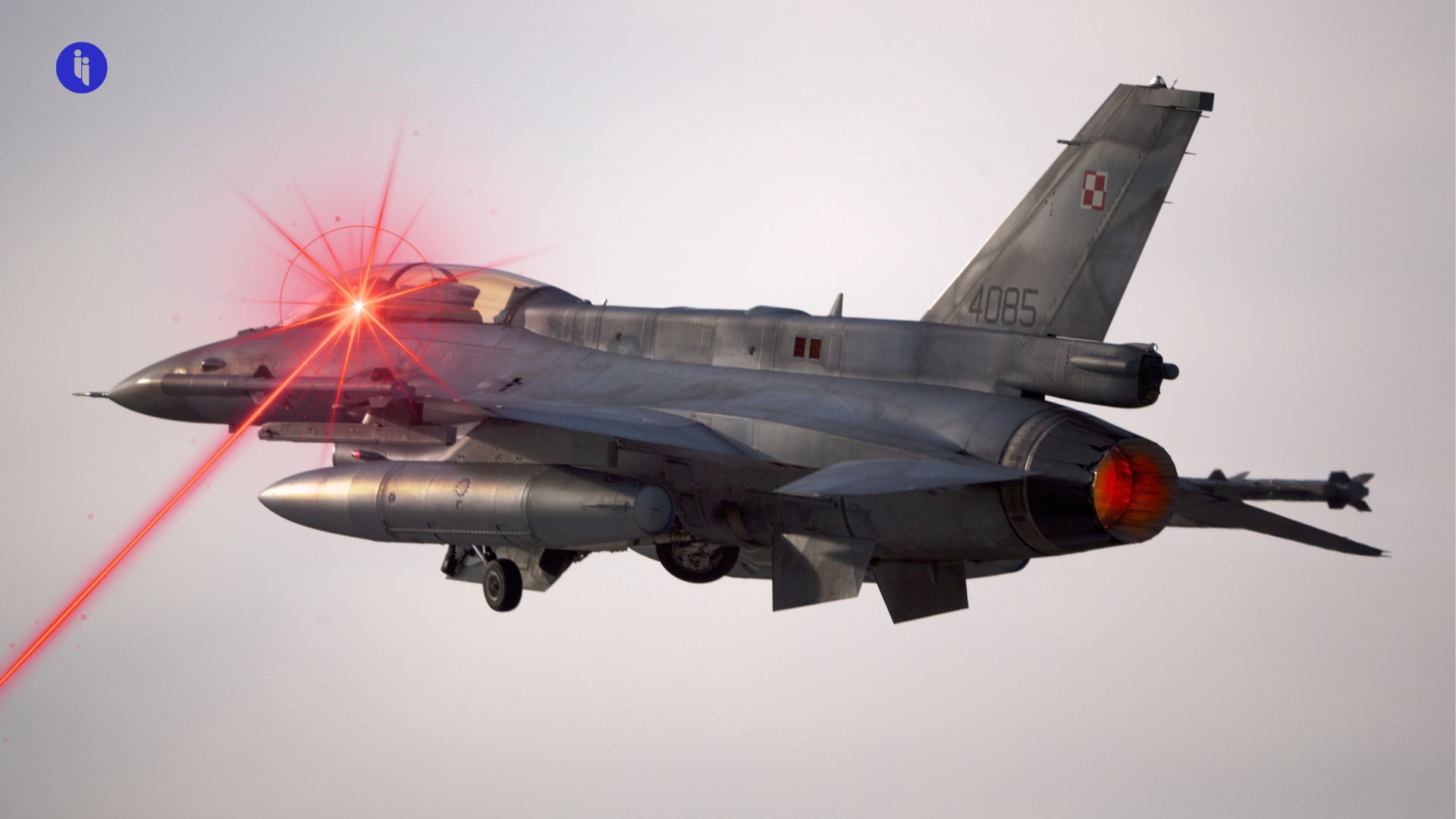
That’s because Berlin just accused China of aiming a laser at a German-operated surveillance plane in the EU’s Operation Aspides.
- What’s Aspides? That’s the EU’s smaller, more defensive naval mission helping escort cargo ships through the Red Sea amid continued Houthi attacks
- Oooh a laser, big deal? It’s a provocative move that can temporarily blind or disorient pilots, risking a crash, miscalculation, or worse
- So why now? While it reportedly happened earlier this month, and the twin-prop later landed safely in Djibouti, Berlin went public on Tuesday after first giving China’s ambassador in Berlin a dressing-down over the “entirely unacceptable” act
So that’s the situation, but it raises a few other interesting questions.
Stay on top of your world from inside your inbox.
Subscribe for free today and receive way much more insights.
Trusted by 161,000+ subscribers
No spam. No noise. Unsubscribe any time.
First, what are these two distant navies even doing in the Red Sea?
Like Germany, China has a base in Djibouti and has been deploying to the broader Middle East for years. It was initially about Somali pirates rather than Houthi rebels, but the basic justification was the same: global commerce can’t be held hostage by a few well-armed randoms.
Of course, the notion of a rapidly militarising China establishing its first offshore military base rattled some, while its 90-acre site (with an underground footprint the size of Buckingham Palace) is known to harbour some big intelligence-gathering capabilities.
But China isn’t exactly alone: in fact, Djibouti now hosts bases from eight nations, including the US, France, Japan, Italy, Spain and the Saudis. Which leads us to…
Second, why’s everyone want a base in Djibouti? Well, it sits right on the Bab el-Mandeb Strait, which is the most narrow chokepoint (29km / 18 mi across) for tankers and cargo ships trying to exit the Red Sea out into global markets. And…
Third, why’s Djibouti want to host everyone’s bases? The tiny nation of 1.2 million people sees these bases as a critical source of rental payments, infrastructure investment, jobs, and security in a volatile region.
So then fourth, what’s the underlying significance of this whole Germany-China laser story? It really reflects a pattern about hybrid warfare broadly, and China specifically.
While China has consistently denied or countered several similar laser accusations over the years (from the US, the Philippines, and Australia), the list keeps getting longer.
And more broadly, whether the world sees incendiary devices in cargo, weaponised migration, cyberattacks on infrastructure, jamming GPS, sabotaging cables, spontaneously exploding tankers, or water-cannoning sailors, hybrid tactics are becoming the new norm — it’s about sewing panic without pushback in order to impose costs and test responses.
Intrigue’s Take
The same things that make hybrid warfare appealing (incremental, deniable) also make it tricky: just by speaking up about it, you can look petty if not soft or conspiratorial.
So… how to respond? Germany’s answer is one model: keep the immediate focus on safety, raise the incident through formal channels (Merz likely flagged it with Wang Yi), then go public when you hit the wall.
And that’s kinda how the punishment matches the crime: capitals can shrug off any individual moment, though collectively they become an irritant if not yet a deterrent.
And that, in turn, is a reminder of where our world is at: as the old order breaks down, more powers will try throwing their weight around like this. And so part of the answer might be to preserve whatever unity and order you can to push back.
But that’s also where our world’s emerging double-speak enters the chat: in one breath, Merz calls China out for this laser incident, then apparently reveals he’s looking forward to his first official trip to China (a top trade partner) later this year. And ditto, the US and Europe keep nodding at their security ties, while a painful trade war festers away.
It all reminds us of how a legendary Singaporean diplomat (Bilahari) once described our new world: increasingly ‘omni-directional’. Do and say what you need, when you need.