




Some love stories are so powerful, you remember when they end. Like when Jennifer Lopez and Ben Affleck broke up in 2004, or when Jennifer Lopez and Ben Affleck broke up in 2025, or when the United Arab Emirates announced they’re breaking up with the Organization of the Petroleum Exporting Countries, aka OPEC.
That last headline just broke, with the UAE pulling the ripcord on a petrostate cartel that’s shaped global oil prices since the 1960s — prices too low? Tighten the spigot. Prices too high? Let it rain. Backing Israel during the Yom Kippur War? No oil for you!
So… more than half a century later, why did the UAE just ditch OPEC?
Stay on top of your world from inside your inbox.
Subscribe for free today and receive way much more insights.
Trusted by 161,000+ subscribers
No spam. No noise. Unsubscribe any time.
The official statement cites the UAE’s “long-term strategic and economic vision”, which is diplomatic speak for “it’s not you, it’s me”, but the Emiratis realistically had four reasons.
First, rivalry — OPEC technically runs on consensus, but consensus almost always bends towards the Saudis who can ramp output up or down the hardest, single-handedly enforcing or breaking the group’s solidarity.
That gives leverage to the Saudis, who also happen to be the UAE’s main regional rival — and as Sweet Brown once said, ain’t nobody got time for that. This leads us to…
Second, flexibility — the UAE has long bristled at Saudi-led OPEC’s 3.5 million bpd ceiling on Emirati oil output, particularly given the Emiratis just poured billions into ramping their capacity up closer to ~4.5mbpd. The UAE was sneakily exceeding that limit, but the gap just became unsustainable — habibi are you in OPEC, or are you out?
Third, geography — whereas other OPEC members like Kuwait, Iraq, and Iran are now effectively trapped by duelling Hormuz blockades, the Emiratis (like the Saudis) have a pipeline to partially bypass Hormuz. It’s not massive (~1.8mbpd) but probably gave the Emiratis enough confidence to prioritise national output over OPEC solidarity.
And fourth, reciprocity — the news came just days after US Treasury Secretary Bessent publicly backed the Emirati request for a $20B currency swap. So while there’s no leaked “swap-for-OPExit” memo (yet?), the sequence is too tight to ignore: the US grants the UAE a wartime financial buffer in return for the Emiratis helping the US further weaken OPEC.
Ok, but why now?
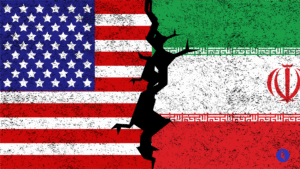
The Iran war was really the last straw, straining not just the UAE’s entire hub-and-energy model, but also its ties with Gulf Cooperation Council (GCC) neighbours: Iran aimed ~83% of its GCC retaliatory strikes at the Emiratis, and yet a top Emirati advisor (Gargash) blasted the broader region’s response as “the weakest historically”.
So there’s now a sense of if you won’t stand with us, why should we stand with you?
Anyway, if that’s why the Emiratis just bailed on OPEC (effective from this Friday), what does that mean for everyone else?
Energy markets will enjoy more Emirati supply and lower prices longer term, but there are still immediate logistical/Hormuz constraints, and the UAE is assuring everyone it’ll avoid any sudden shocks and instead bring extra crude online gradually.
OPEC itself will hurt, though it’s already been haemorrhaging members for years, with its weakening grip on oil markets both a cause and effect around each departure: think Indonesia in 2016, Qatar in 2019, Ecuador in 2020, and Angola in 2024. And we wouldn’t be surprised if Venezuela — now taking orders from DC — is next.
Saudi Arabia in particular is now in a bind after the departure of OPEC’s fourth-biggest producer — the Saudis can either keep absorbing most output cuts in hopes they can still drive prices higher, or try to spread cuts out across OPEC members but risk another revolt. Their huge recent budget deficits don’t leave a lot of manoeuvrability.
And as for the US? Anything that weakens OPEC’s oil leverage is a win for the US, further strengthening its own hand as the world’s single-biggest energy producer.
Intrigue’s Take
OPEC’s slow death might now speed up, as each departure weakens the club’s leverage, in turn making the next departure not only easier, but more logical. So we might see a more volatile break-out as high-cost producers rush to pump what they can, while they can.
One key driver behind all this has been America’s rise as an energy superpower — the shale boom has tripled US output since 2008, delivering history’s fastest scale-up to become history’s first ~15mbpd producer.
But the other driver is the energy transition, which is still happening for raw economic reasons even if that reality doesn’t make as many political headlines these days — for the first time in history, clean energy growth exceeded the world’s new electricity demand last year. Solar did most of the heavy lifting, growing 18 times more than natural gas, which was the only fossil fuel to see any increase at all (in the context of power generation).
That’s a massive shift from 2024, when demand was still growing faster than supply — we’ve gone from renewables struggling up a down-escalator, to now running faster than the stairs. And while it’ll take years to play out, it all risks rendering any single OPEC exit from this point a little like trying to squeeze the last drops from a shrinking straw.
Sound even smarter:
- The expanded OPEC+ group also includes Russia, Azerbaijan, and Kazakhstan, accounting for around half the world’s oil supply in 2025.
- In 2025, the US produced 15mbpd, while Russia and Saudi Arabia each pumped ~9.5.