



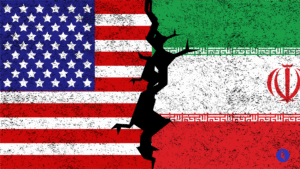

Iran thought it was fighting the US and Israel. The US and Israel thought they were fighting Iran. But then others started getting added to the group chat without consent.
Welcome to Thursday, Intriguers, because there are some new situations to monitor, starting with…
- 🇱🇰 Sri Lanka
You’ll have seen a US submarine sank the Iranian naval frigate IRIS Dena off the coast of Sri Lanka yesterday (Wednesday), the first such US hit by torpedo since World War II (the North Koreans did it to a South Korean corvette as recently as 2010).
Stay on top of your world from inside your inbox.
Subscribe for free today and receive way much more insights.
Trusted by 161,000+ subscribers
No spam. No noise. Unsubscribe any time.
It all happened ~74km (40nm) off Sri Lanka’s south coast — so outside Colombo’s territorial waters, but still within its EEZ and broader search-and-rescue zone. By the time Sri Lankan rescuers arrived, they found 87 bodies in the water and 32 survivors in life rafts: a reminder not only of the cost of war, but also the reach of the US navy.
As for what this Iranian warship was doing off Sri Lanka? It was likely steaming back after India’s naval exercises in the Bay of Bengal last month. And speaking of which…
- 🇮🇳 India
The other question is what India thinks, given not only the relative proximity of this hit, but also its polyamorous ties with all involved. Eg, Modi has now become…
- India’s first PM to address Israel’s Knesset
- A rare foreign leader to address a joint US Congress twice, and
- He announced a big 10-year deal to run Iran’s strategic Chabahar Port in 2024.
That kind of approach can maximise your influence, or mute it. And in this current war, India’s opposition parties are dunking on Modi for being too muted, arguing his silence in response to US-Israel aggression betrays India’s core values of both a) sovereignty and b) non-alignment. And with a reported ~25 days of crude reserves left, silence might become untenable. Meanwhile…
- 🇹🇷 Turkey
Turkey’s defense ministry has announced US NATO forces downed an Iranian ballistic missile headed to Turkish airspace over the eastern Mediterranean on Wednesday.
And that’s a big deal given Turkey is in NATO — an attack on one is an attack on all. Iran’s presumed wariness of drawing all of NATO into the conflict is one reason why Turkey has remained unscathed so far — the two neighbours are still on speaking terms.
Turkey has a joint US base at Incirlik, around 100km (60mi) from where Iran’s missile got intercepted. But Turkey has banned the US from using local bases to hit Iran (and btw, has managed to avoid the searing rhetoric Trump has levelled against Madrid and London).
So what’s going on?
Turkish officials are now telling outlets the intended target was likely one of the British bases in Cyprus (not a NATO member), but the missile veered off course. So maybe another near-miss escalation?
Anyway, with a fifth of the world’s oil now frozen, it’s getting harder to watch from the sidelines: China’s Xi is sending a special envoy to mediate (or at least give the appearance of agency), while France’s Macron has sent his Charles de Gaulle carrier to the eastern Mediterranean, and Italy (with Ukraine and others) is looking to help Gulf partners defend their skies.
And as more flock to the region, you get more surface area for something to go wrong.
Intrigue’s Take
So where does this end? Let’s take another look at three ticking clocks:
First, there’s munitions. The US is reporting that not only have Iran’s daily missile launches collapsed by 86% as its launchers fry, but Iran’s drone attacks are also down 73%. They’re $20k a pop, and can be made, hidden, and launched easily, while still costing $4M each for Western air defences to stop. That’s a classic asymmetrical way to bleed your enemy out, but a 73% drop suggests maybe Iran’s attrition strategy is really losing steam.
Second, there’s US public support, which looks less hopeful for the White House: whether you want to cite Ipsos, WaPo, or CNN, all three quality polls suggest most Americans now oppose this war.
Third, there’s energy prices, which are clearly spiking, though the details matter. For example, European natural gas prices are now up ~50% since this war broke out, though that’s still barely ~15% of Europe’s Russia-induced 2022 peaks. It’s in Asia where buyers are fretting more: they lack Europe’s pipeline backups, and ~83% of the LNG and crude ordinarily exiting Hormuz goes to Asian markets.
So while China, Japan, and South Korea have built up months of strategic oil reserves, others (like Indonesia and Vietnam) might be down to ~20-30 days. Then if you look at LNG (which is commercially rather strategically stored), even China, Japan, and South Korea are likely now down to days/weeks. Hence prices are doing what you’d expect, with spot LNG now doubling in a week.
So while the US is better placed to ride this out, it’s soon going to have a conga line of angry governments (including allies). And ‘better’ doesn’t mean immune: Gulf disruptions have now slashed global air cargo capacity by a fifth, and that’s driven Asia-to-USA airfreight prices up 60%. So those poll numbers might get worse before they get better.
Sound even smarter:
- Presumed Iranian drones just hit an international airport in neighbouring Azerbaijan, which has close ties to Israel. The target (in a separate exclave rather than the capital of Baku) suggests careful Iranian calibration to manage blowback.
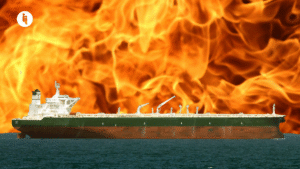
- An oil tanker off the coast of Kuwait is now taking on water after an unknown explosion. The captain reportedly saw a small craft leaving the area after the hit.
- There are still conflicting reports around armed Kurdish groups mobilising along the Iran-Iraq border, amid the possibility of a CIA-backed uprising. And moments ago, Iran seems to have hit a Kurdish armed group’s HQ in Iraq.