

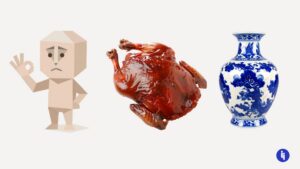

There are three guaranteed ways to get yelled at online: i) examining whether Die Hard belongs in the Christmas movie section, ii) examining whether pineapple belongs on pizza, and iii) examining whether Taiwan belongs to China.
The answer to both i) and ii) is clearly yes, but join us for iii) as we don some industrial-strength earmuffs and take a quick look at Beijing’s legal arguments over Taiwan.
But first, why? Two reasons:
Stay on top of your world from inside your inbox.
Subscribe for free today and receive way much more insights.
Trusted by 161,000+ subscribers
No spam. No noise. Unsubscribe any time.
- first, Taiwan is now often (with the South China Sea) cited as the flashpoint that could end history’s longest stint without great-power war since Caesar; and
- second, while a top court already reviewed the South China Sea claims (turns out you can’t draw nine dashes on a map then declare it all yours), most Taiwan coverage only meekly notes China sees the democracy as a renegade province.
So given the stakes (WWIII?) it makes sense to ask… is Taiwan a renegade province?
Beyond the former Qing dynasty’s two centuries of evolving control before ceding Taiwan to an aggressive Imperial Japan in 1895, Beijing’s modern legal claims often start with…
- UN resolution 2758 (1971)
This was when a majority of the international community voted to recognise Beijing (not Taiwan) as “the only legitimate representative of China to the United Nations“. The text, however, says nada about Taiwan belonging to China. Then there’s…
- Your own ‘One China’ policy
Most of the world now has some kind of ‘One China’ policy, and (including for the US) it’s broadly similar to that UN vote above: ie, recognising Beijing as the sole representative of China, rather than endorsing Beijing’s claim that Taiwan belongs to China.
This gets into Suits territory, but most capitals explicitly stop at just ‘noting’ or ‘acknowledging’ China’s territorial claims, rather than affirming or endorsing them.
And let’s not forget…
- The Cairo (1943) and Potsdam (1945) declarations
Issued by FDR/Truman, Churchill, and Chiang (China’s pre-communist ruler), these wartime statements said Japan should surrender Taiwan to Chiang’s own Republic of China (which still runs Taiwan today). The three allies said nothing about handing Taiwan to today’s People’s Republic of China, which didn’t yet exist, though some argue the intent automatically transfers to whoever’s running the mainland.
It’s also worth noting that these kinds of political statements (the Cairo one was a press release) can’t legally transfer turf — that needs a formal treaty, which came later when Japan formally gave up Taiwan via the 1952 San Francisco Peace Treaty, in a text that’s silent on who should actually take over (Chiang was already in control there for years).
And finally, sitting right under our noses, let’s look at…
- Taiwan’s own claims
Taiwan technically still calls itself the Republic of China, and its founding 1947 constitution still technically (if implausibly) claims China’s entire mainland (ditto China’s constitution re Taiwan) — it’s one of many unresolved wounds from China’s civil war.
But whereas Taiwan’s democratic transition saw it abandon any pretence to ruling China, the mainland has instead doubled down on its Taiwan claims as its power has grown.
So why doesn’t Taiwan just change its name and ditch its claims over the mainland? Beijing has made clear it’d see this as a declaration of independence, justifying an invasion.
Fun times. Anyway, you can add a million caveats to the above, but hopefully while hitting pause on your annual Christmas viewing of Die Hard to take a bite out of your ham n’ pineapple pizza, you can see that China’s legal case isn’t necessarily a slam dunk.
Intrigue’s Take
Diplomacy often thrives in this kind of intentional vagueness or constructive ambiguity, and things don’t get much more vague or ambiguous than when it comes to Taiwan.
Indeed, while leaders and diplomats will have clinked celebratory flutes over their studied silence in 1952 and 1971, or their careful wording to tip-toe around One China, it’s all precisely what’s brought us to today’s dilemma: a thriving democracy emerging out of the ambiguity, only to find itself sitting in the shadow of a giant who sees no ambiguity at all.