

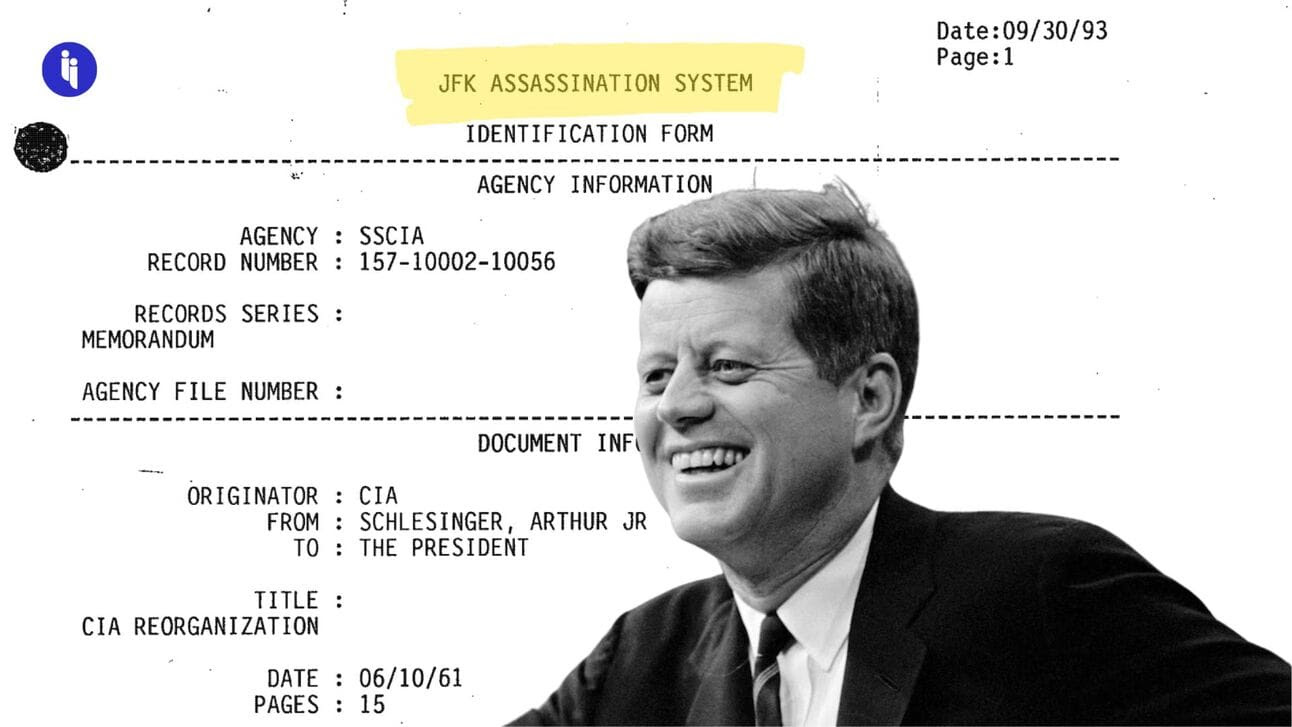
While legions of experts, amateurs, and AI chatbots still duly comb through the ~60,000 pages of newly published JFK files, there’s nothing yet to upend the conclusions of the 1964 Warren Commission report which found that Lee Harvey Oswald, an oddball former marine with communist convictions, assassinated the president and acted alone.
Still, this new trove is making headlines around the world in some intriguing ways because of some of the international angles involved. Here are four examples:
- Australia
It turns out Australian and US intelligence agencies agonised in the 1960s over whether to declassify file ‘CD-971’ on crank calls to the US embassy about threats to JFK before and after his death. Believe us, embassies get crazy calls every day. So why the secrecy? Australia’s risk-averse spymaster at the time warned that, if CD-971 were released:
Stay on top of your world from inside your inbox.
Subscribe for free today and receive way much more insights.
Trusted by 161,000+ subscribers
No spam. No noise. Unsubscribe any time.
- a) “Questions could be raised” about Australia’s investigation into the calls (he seems to fear embarrassment over his agency wasting time investigating cranks, plus getting caught up in the whirlwind of global public interest), and
- b) Neither the local presence of CIA officers nor the existence of their Aussie counterparts (ASIS) had ever been acknowledged, but CD-971 could’ve revealed both.
In the end, the CIA director agreed not to publish the docs. But maybe if they just released them back in the 60s, we’d not still be talking about these crank calls six decades later?
- Mexico
Just months before JFK’s assassination, Oswald visited both the Soviet and Cuban missions in Mexico City seeking a visa for travel to the USSR (where he’d already defected and married a Russian national). Ultimately he came away empty-handed because he didn’t have the right paperwork. Sound familiar?
Anyway, it’s not Oswald’s visa woes that caught our eye, but how the US knew, including:
- a) Using tapped phones and double agents inside the embassies, all helped by
- b) Close ties between Mexico’s then-president and the CIA’s local station chief.
So naturally, the US was wary of revealing all this, lest a) foes learn US methods (like a special chemical to mark tapped phones), or b) Mexico’s government be publicly embarrassed into cracking down on local US intelligence activity.
- Cuba
There’s long been speculation Cuba might’ve been involved, and US intelligence spent years exploring that possibility, but these new files seemingly offer no new evidence.
They do, however, refer to various US plans to topple Fidel Castro, including through:
- CIA recruits disguised as students
- Inducing crop failure, “particularly rice”, and
- Even offering the Mafia a cool $100k to kill the Cuban strongman.
The files suggest many of these plans never went anywhere, both due to the White House’s doubts around the CIA’s competence after the Bay of Pigs debacle, plus related resistance from the president’s younger brother and attorney-general, RFK.
- India
The files also include entire lists of offshore CIA stations (gleefully retweeted by Russian state media), plus internal debate from as recently as 1995 on the risks of their exposure.
So media outlets around the world are now duly reporting on any apparent local CIA presence, often confirming what’s already public knowledge — India, for example, has a long history of cooperation with the CIA, including to monitor neighbouring Soviets and China, plus even helping the CIA facilitate the Dalai Lama’s escape from Tibet.
The problem, however, is that formally acknowledging this CIA presence often puts host governments in an awkward position, bringing public pressure to stop what local agencies often long quietly value: open channels with the CIA.
INTRIGUE’S TAKE
None of this so far changes any meaningful conclusion around who shot JFK. Rather, it offers further proof for a few things Intriguers will recall we’ve explored previously:
- Intelligence agencies and foreign ministries often over-classify stuff. This unnecessary secrecy creates a void that’s filled by cranks and exploited by foes to erode public trust, a key precondition for effective intelligence.
- And yes, it’s valid to keep things secret to protect sources and methods. But some of the secrecy on display here is more about protecting agencies from embarrassment, creating a void that’s likewise easily exploited by foes.
- The solution, however, is not necessarily declassifying and dumping everything online. Thousands of folks are today waking up to see their names, social security numbers, and former secret lives being blasted out into the public: “You mean grandma Mavis was a spy?!”
Meanwhile, will any of this satisfy or silence the conspiracy theorists? Unlikely. From our perspective, conspiracy theories are often about folks taking the easy option, which is to believe in some crack group out there controlling world events, rather than confront the more disconcerting reality that yes, a single lost soul can alter history.
Also worth noting:
- Most of the documents released this week had already been made public, but their redactions (protecting names and details) have now been removed.