



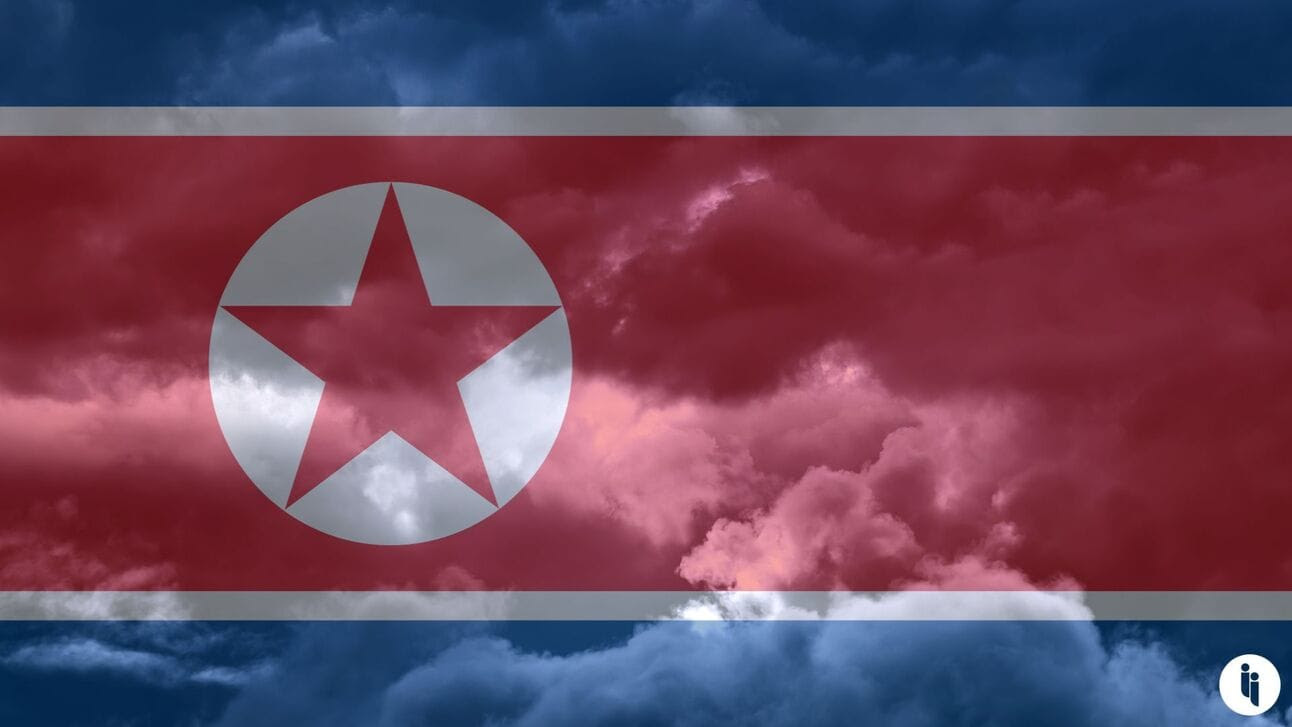
Earlier this week, Russian President Vladimir Putin gifted a full-sized luxury limousine to his North Korean bff and neighbour, Kim Jong Un. Kim’s sister described it as a sign of the “special personal relations” between the two leaders.
While we’d be delighted to dedicate an entire article to the intriguing gifts exchanged among world leaders (check out this old post of ours on the matter), that’s not why we’re bringing up Kim’s new ride.
As mentioned in yesterday’s briefing, North Korea-watchers have noted some odd changes in behaviour by the nuclear-armed hermit state, and it’s causing jitters in neighbouring South Korea, Japan, the US, and beyond.
Stay on top of your world from inside your inbox.
Subscribe for free today and receive way much more insights.
Trusted by 161,000+ subscribers
No spam. No noise. Unsubscribe any time.
Here are a few recent examples of Kim’s eyebrow-raising moves:
- In November, he launched his first spy satellite, triggering a tit-for-tat that culminated in him abandoning a key border pact with the South
- In December, he test-launched his most advanced long-range missile, in breach of UN sanctions
- In early January, his generals fired artillery near the South Korean islands of Yeonpyeong, Baengnyeong and Daecheong
- Days later, he abandoned the official narrative of peaceful Korean reunification enshrined by his grandfather, and tore down the reunification monument erected by his father
- He backed that up by testing a new underwater nuclear drone, in response to joint South Korea-Japan-US military drills
- And this was all accompanied by a steady drumbeat of more belligerent state media coverage
Zooming out a little further, it also comes against the backdrop of the North’s deepening military ties with Russia, a resumption of trade with China, and an apparent evaporation in sanctions enforcement from both Beijing and Moscow.
What’s going on? Smart folks are currently reaching very different conclusions:
- It could all just be bluster with no fundamental change in posture according to Jung Pak, the US State Department’s senior official in charge of North Korea affairs
- Or maybe Kim has “made a strategic decision to go to war”, according to two respected North Korea scholars (Carlin and Hecker)
- Alternatively, according to Germany’s former ambassador to North Korea, Kim could just be ramping up tensions during this US and South Korean election year (the South’s parliamentary elections are in April), something it’s done before to build leverage and extract sanctions relief
- Or perhaps Kim wants to destabilise, distract, or dilute Western power to help partners like Russia elsewhere, without tipping into war himself
- Or maybe he’s just firing up tensions as a way to distract his own people and justify his increased military spending, which comes at the cost of widespread hunger and malnutrition among his 26 million people
Whatever Kim’s objective, he’s got the world’s attention again. And maybe that was his objective all along.
INTRIGUE’S TAKE
All the above theories are plausible to us, but it’s worth recalling three things.
First, a decision to go to war would ordinarily be accompanied by other signs, like a further military build-up along the border, or stockpiling arms (rather than sending them to Russia). We haven’t seen evidence of those two signs yet.
Second, it’s important to remember that the two neighbours have come to blows in recent times (eg. in 2010), and Kim has issued threats of “holy war” before. So there’s a degree of repetition here.
And third, the North is odd – heck, it even claims Kim’s father invented the hamburger. But odd doesn’t mean irrational. From Kim’s perspective, he’s wedged between an unfriendly US-backed neighbour (South Korea), a prickly if indifferent associate (China), and one who’s suddenly sympathetic (Russia).
So from Kim’s perspective, it makes sense to cosy up to Russia and engage in some seasonal provocation. It makes less sense to start a full-scale war that would risk his – and his regime’s – survival. Less sense, but not unthinkable.
Also worth noting:
- Kim Jong Un visited Russian President Vladimir Putin last year, and pledged “full and unconditional support” to Moscow in “its fight to protect its sovereignty and security”.
- South Korea’s president (Yoon) said last month, “should North Korea provoke us, we will punish them multiple times as hard”.
- The North and South are still technically in a state of war, having never signed a peace treaty after the Korean War.