


🌍 The geopolitics of the Oscars
Plus: Mexico’s unexpected new heartthrob

|
Today’s briefing: |
|
Good morning Intriguer. Today’s briefing on the geopolitics of the Oscars reminds me of an episode of Seth Rogen’s satirical series The Studio. He plays the newly-appointed boss of a major Hollywood studio, and one ep shows him arriving at a big gala with his date (a paediatric oncologist), each on duelling ‘high-stakes’ phone calls:
-
She’s urgently coordinating a team of specialists to save a child’s life, while…
-
He’s urgently directing his studio team to really “juice up” a film scene’s fart.
It’s a classically self-aware take on Hollywood’s lack of self-awareness, and yet Seth’s studio boss character has a good line pushing back on any downstream claim that entertainment is therefore meaningless: “you save lives, but we make life worth living.”
Sometimes the screen helps us escape the world; other times it helps us process it. Last night’s Oscars arguably did both, so let’s take a quick look, no?

Number of the day
795
That’s the codename for Russia’s ✌️secret✌️ new assassination squad, now exposed after one of its leaders (Denis Alimov) apparently handled a covert source using Google Translate. He’s currently in Colombian custody pending extradition to the US.
And the winner is…

With the world as it is, it can be refreshing to switch from the news over to the 98th annual Oscars and… oh, nope. Sorry. There’s geopolitics there too, starting with…
-
Your red carpet arrival
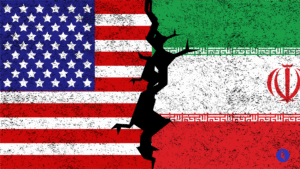
If you’re thinking Hollywood’s Dolby Theatre looked more fortified than normal, you’re right: it featured a one-mile perimeter, drone surveillance, and various three-letter agencies amid an FBI leak about unverified and unspecified Iranian threats.
And it all came after earlier leaks of a presumed NSA intercept of an encrypted message in Farsi, starting with “tavajjoh” (attention) before a male voice rattled off a string of numbers. There was speculation it was some kind of classic numbers station — a shortwave radio to secretly activate sleeper cells abroad.
It’s pure inference, but really hints at a wartime public on edge.
Anyway, you’re just in time for…
-
The host’s opening monologue
Conan O’Brien returned for a second consecutive year, flagging in advance the tightrope of hosting a frivolous awards show amid all the global disruption. But there’s precedent:
-
Billy Crystal nailed it in 1990 by weaving historic events into a classic joke about Hollywood’s self-absorption: "Six months ago, who would have possibly thought that the Berlin Wall would come down, that Nelson Mandela would be freed… and most incredibly, Meryl Streep would not be nominated for an Academy Award."
And Conan himself said he took inspiration from the last talk-show host to run an Oscars night while an Iran-related crisis was doubling oil prices:
-
It was 1980 when Johnny Carson gave a nod to ABC’s Nightline, which famously opened each broadcast with the latest Iran hostage day count — Carson instead dunked on the Oscars going over time again: ‘Well, it is day 44 of this Oscars.’
This time around, Conan snuck in a tight joke about all the security ("concerns about attacks from both the opera and ballet communities"), but otherwise emphasised the unifying role of the arts amid these “frightening times”, highlighting the “31 countries across six continents” helping “to tell stories that remind us of our shared humanity."
And a quick shout-out to his opening AI joke, too: “I am Conan O’Brien and I am honoured to be the last human host of the Academy Awards. Next year it’s going to be a Waymo in a tux.”
Anyway, with the opening monologue out of the way, the Oscars is really all about…
-
The nominees
Interestingly, two of the nominated films not only focused on Iran, but on the plight of its people: France’s entry (It Was Just an Accident) is a revenge drama about the regime’s persecution, while one of the documentary nominees (Cutting Through Rocks) follows an Iranian woman’s long fight for basic rights.
But the best documentary winner? That’d be Mr. Nobody Against Putin, tracking a Russian teacher’s quiet resistance to Putin’s wartime propaganda. The filmmakers eventually helped him flee, and one used his acceptance speech to offer a warning on how you lose your country: “though countless small, little acts of complicity.”
Oh, and given our penchant for intrigue, a quick shout-out to Brazil’s The Secret Agent, an espionage thriller following a professor fleeing persecution. It’s set during Brazil’s 1970s US-backed dictatorship, but audiences see it as a commentary on recent history (eg Bolsonaro’s coup conviction), and the dangers of forgetting our authoritarian pasts.
And… that’s a wrap.
Intrigue’s Take
Welcome to the after party, where in addition to exclusively debuting George Clooney’s new mezcal-scented cologne or whatever, we wanted to offer three parting observations.
First, even leaving aside any celebs pumping their pet issue, this Oscars was never going to escape our world: whether it’s the security outside, the dissident voices inside, or the host tapdancing between escapism and engagement, the night was another reminder that any line between ‘out there’ and ‘in here’ will only get thinner.
Second, this event’s gravitational pull was clearly towards the Middle East, as the setting for three of the five foreign nominees (the third was Tunisia’s Voice of Hind Rajab in Gaza). After years of the US weighing back into the region (while notionally clamouring for a pivot to counter China), that kind of on-screen processing is common — war is always fought twice: once on the battlefield, then again via our stories. And that takes us to…
Third, the Oscars might also serve to remind us of the geopolitical power of stories. The Iranian regime’s story was always (beyond theology) anchored in resistance and revolution: two of the nominees just highlighted how far that revolution story has now faded after decades of misery, gerontocracy, and corruption. But does this war now risk reviving the regime’s own narrative of resistance instead?
And ditto, many across the free world grew up with a soft power story of American exceptionalism: our modern world’s guarantor of order, freedom, and progress. But if Iran’s regime manages to hold on, and the rest of the world is left eating stagflation, will that US story be left looking more transactional and overstretched instead?
Sound even smarter:
-
The night’s big winner was One Battle After Another (adapting Thomas Pynchon’s Vineland), taking home best picture, best director (PT Anderson), best supporting actor (Sean Penn), best adapted screenplay, best editing, and the first-ever award for best casting. Sinners also did well via best actor (Michael B Jordan) and soundtrack (Sweden’s Ludwig Göransson), while Norway won its first foreign film Oscar for Joachim Trier’s family drama, Sentimental Value.
Today’s newsletter is sponsored by T-Mobile

Keep Your Phone. Slash your bill to $25 with Metro by T-Mobile.
Looking for a way to cut down your phone bill without the hassle of buying a new device? Check out the new $25 BYOD plan, which lets you keep the phone you already love and save money. This plan offers the same great value every month with absolutely no contracts, no credit checks, and no unexpected surprises.
Best of all, this price is guaranteed for 5 years, meaning you don’t have to worry about your bill increasing. All while running on America’s Best Network (according to OOkla speedtest).
In addition to wireless service, the $25 BYOD plan includes access to features like Scam Shield, which helps block unwanted calls, and T-Mobile Tuesdays, which offers weekly deals and promotions. These extras don’t replace the value of the plan itself, but they are a nice bonus that helps stretch your dollar further.
Meanwhile, elsewhere…

 |
🇺🇸 UNITED STATES — Please help (or else). Comment: With China’s Hormuz supply intact, Xi has no incentive to help fix a problem draining his rival. Plus keep an eye on whether any US allies take a transactional approach by (say) demanding tariff relief first. And that’s before we get to the practicalities, which would realistically entail pacifying vast stretches of Iran’s 1,200km (745mi) Gulf coast. Meanwhile, India is hinting at a multipolar path ahead, crediting direct Tehran talks for the safe passage of two India-flagged tankers. |
 |
🇷🇺 RUSSIA — Moscow hit. Comment: The Kremlin argues these internet cuts are just to thwart drones, but combined with a) their early March start, b) Putin’s battlefield woes, c) continued regime purges, and d) the appearance of more gun-toting tactical units in the streets, it’s also fuelling *speculation* Putin is getting more paranoid. |
 |
🇰🇿 KAZAKHSTAN — Big man on campus. Comment: Consolidating his power at home, Tokayev will also be sensing the major leverage that comes with being a top energy supplier abroad (both uranium and oil). |
 |
🇨🇺 CUBA — Talks and folks in the street. Comment: With protestors torching a Communist Party office over the weekend amid continued blackouts, the idea of granting more economic freedom is giving off perestroika vibes, even if it’s just intended as a concession to appease DC. |
 |
🇬🇧 UNITED KINGDOM — Tightening the budget. Comment: It’s a reminder that, while DC’s historic dismantling of USAID dominated the headlines, it also provided political cover for other stretched capitals to follow suit. |
 |
🇬🇾 GUYANA — Out of print. Comment: We somehow picked the best and worst time to swap diplomacy for Intrigue: ‘best’ in the sense there’s never been more hunger to understand our world, and ‘worst’ in the sense the media business hasn’t seen such flux in modern history. Btw, ahem… hit reply if you’d like to advertise with Intrigue! (more info down below) |
 |
🇻🇳 VIETNAM — Political jockeying. Comment: The election is really about solidifying To Lam’s grip on Party power, after a turbulent couple of years of purges, leadership vacuums, and reforms. On that latter point, he’s spearheading a massive drive to merge ministries, cut 150,000 public-sector jobs, and slash rules in hopes it unleashes more investment and growth. |
 |
🇲🇬 MADAGASCAR — Promotion. Comment: It’s a naked legitimacy play for the general who seized power after last year’s Gen Z-led protests. The country’s internal turmoil has paused some mining investments, but isn’t yet impacting the critical shipping lanes next door, nor the country’s continued supply of 80% of the world’s vanilla. |
Extra Intrigue
🤣 Your weekly roundup of the world’s lighter news
-
Two teens have accidentally donated a bag of pot and cash to a Kiwi charity.
-
Mexico’s heartthrob security minister is now appearing on merch after he oversaw the end of notorious cartel boss, El Mencho.
-
A wild boar has snuck into an indoor market in central Berlin.
-
A Brit has been rushed to hospital after turning blue, only to discover it’s just the dye from his new bedsheets.
-
And a would-be thief has fled the scene after unsuccessfully trying to use Google Translate while robbing an Ecuadorian restaurant in New Jersey.
Show of the day

Credits: Netflix
Okay we have yet another spy thriller TV series for you, but this time from… Germany!
Unfamiliar follows two husband-wife former operatives of Germany’s Bundesnachrichtendienst (BND), aka the never-ending German word for Federal Intelligence Service. While their past catches up with them (Russian agents, contract killers, former employers), the show also depicts the BND as rigid, slow, and compromised.
It’s a timely portrayal, not only because the BND’s alleged slowness was famously on display when its chief literally got stuck in Kyiv the night Putin invaded (the BND didn’t see it coming), but also because Germany is now debating loosening the agency’s postwar limits so it can fight back against Putin’s hybrid tactics.
Some friendly contacts in Berlin’s establishment assure us that while the martial arts and duck & roll methods might be exaggerated, the show’s acronyms and jokes are spot on.
Today’s poll
We're having post-Oscars withdrawals…
Send in your best Intrigue-friendly recommendation for: |
Last Thursday’s poll: Beyond ending the war, what else do you think could quickly stabilise oil markets?
🛢️ More countries joining SPR releases (17%)
🚢 Armed escorts for ships crossing Hormuz (34%)
📉 Coordinated oil demand reduction (32%)
⛓️💥 Ease sanctions on pariahs like Russia (11%)
✍️ Other (write in!) (6%)
Your two cents:
-
📉 C.D: “Green energy for the long game…”
-
🛢️ S.L: “SPR releases are only short-term, so it’s a gamble on the war ending before the planned releases end.”
-
⛓️💥 E.K.H: “Sanctions relief is still a bad idea for other reasons, but it would probably work.”
-
✍️ T.H: “Eliminate the Iranian threat in the Strait of Hormuz by diplomatic or military means: they know this is their leverage.”