




🌍 The war goes global
Plus: We needed this cuteness

|
Today’s briefing: |
|
Good morning Intriguer. I love apocryphal quotes — those famous lines that can travel halfway around the world while any correct attribution is still putting on its shoes (per the famous Mark Twain line which, got you, was apocryphal). Eg, it turns out…
-
Humphrey Bogart never said “play it again, Sam” in Casablanca, and
-
Marie Antoinette never said “let them eat cake”.
I mention all this because there’s that famous line from China’s Zhou Enlai, who reportedly told Nixon in 1972 that it was “too early to tell” the impacts from the French Revolution… two centuries earlier. For decades, China-watchers then lapped it up as evidence of Beijing’s zen-like ability to take an ultralong view of history.
That was, of course, until 2011, when Nixon’s interpreter (Chas Freeman) revealed the truth during a DC panel: it turns out Zhou was talking about France’s student riots two years earlier, not the full revolution two centuries earlier.
Anyway, it’s still worth keeping that same phrase in mind (too early to tell) as we continue to brief you on this new Gulf war and its implications. Thanks for trusting Intrigue.

Btw, Chen Jian’s 2024 biography on Zhou Enlai (A Life) is excellent if you want to nerd out.
Number of the day
4.5-5%
That’s China’s newly-announced growth target for the year, its lowest since 1991. The economy continues to grapple with low demand, high youth unemployment, a property crisis, and trade tensions with the US.
New fighters unlocked.

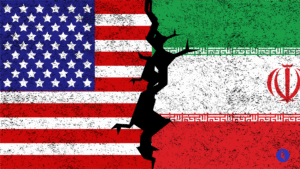
Iran thought it was fighting the US and Israel. The US and Israel thought they were fighting Iran. But then others started getting added to the group chat without consent.
Welcome to Thursday, Intriguers, because there are some new situations to monitor, starting with…
-
🇱🇰 Sri Lanka
You’ll have seen a US submarine sank the Iranian naval frigate IRIS Dena off the coast of Sri Lanka yesterday (Wednesday), the first such US hit by torpedo since World War II (the North Koreans did it to a South Korean corvette as recently as 2010).
It all happened ~74km (40nm) off Sri Lanka’s south coast — so outside Colombo’s territorial waters, but still within its EEZ and broader search-and-rescue zone. By the time Sri Lankan rescuers arrived, they found 87 bodies in the water and 32 survivors in life rafts: a reminder not only of the cost of war, but also the reach of the US navy.
As for what this Iranian warship was doing off Sri Lanka? It was likely steaming back after India’s naval exercises in the Bay of Bengal last month. And speaking of which…
-
🇮🇳 India
The other question is what India thinks, given not only the relative proximity of this hit, but also its polyamorous ties with all involved. Eg, Modi has now become…
-
India’s first PM to address Israel’s Knesset
-
A rare foreign leader to address a joint US Congress twice, and
-
He announced a big 10-year deal to run Iran’s strategic Chabahar Port in 2024.
That kind of approach can maximise your influence, or mute it. And in this current war, India’s opposition parties are dunking on Modi for being too muted, arguing his silence in response to US-Israel aggression betrays India’s core values of both a) sovereignty and b) non-alignment. And with a reported ~25 days of crude reserves left, silence might become untenable. Meanwhile…
-
🇹🇷 Turkey
Turkey’s defense ministry has announced US NATO forces downed an Iranian ballistic missile headed to Turkish airspace over the eastern Mediterranean on Wednesday.
And that’s a big deal given Turkey is in NATO — an attack on one is an attack on all. Iran’s presumed wariness of drawing all of NATO into the conflict is one reason why Turkey has remained unscathed so far — the two neighbours are still on speaking terms.
Turkey has a joint US base at Incirlik, around 100km (60mi) from where Iran’s missile got intercepted. But Turkey has banned the US from using local bases to hit Iran (and btw, has managed to avoid the searing rhetoric Trump has levelled against Madrid and London).
So what’s going on?
Turkish officials are now telling outlets the intended target was likely one of the British bases in Cyprus (not a NATO member), but the missile veered off course. So maybe another near-miss escalation?
Anyway, with a fifth of the world’s oil now frozen, it’s getting harder to watch from the sidelines: China’s Xi is sending a special envoy to mediate (or at least give the appearance of agency), while France’s Macron has sent his Charles de Gaulle carrier to the eastern Mediterranean, and Italy (with Ukraine and others) is looking to help Gulf partners defend their skies.
And as more flock to the region, you get more surface area for something to go wrong.
Intrigue’s Take
So where does this end? Let’s take another look at three ticking clocks:
First, there’s munitions. The US is reporting that not only have Iran’s daily missile launches collapsed by 86% as its launchers fry, but Iran’s drone attacks are also down 73%. They’re $20k a pop, and can be made, hidden, and launched easily, while still costing $4M each for Western air defences to stop. That’s a classic asymmetrical way to bleed your enemy out, but a 73% drop suggests maybe Iran’s attrition strategy is really losing steam.
Second, there’s US public support, which looks less hopeful for the White House: whether you want to cite Ipsos, WaPo, or CNN, all three quality polls suggest most Americans now oppose this war.
Third, there’s energy prices, which are clearly spiking, though the details matter. For example, European natural gas prices are now up ~50% since this war broke out, though that’s still barely ~15% of Europe’s Russia-induced 2022 peaks. It’s in Asia where buyers are fretting more: they lack Europe’s pipeline backups, and ~83% of the LNG and crude ordinarily exiting Hormuz goes to Asian markets.
So while China, Japan, and South Korea have built up months of strategic oil reserves, others (like Indonesia and Vietnam) might be down to ~20-30 days. Then if you look at LNG (which is commercially rather strategically stored), even China, Japan, and South Korea are likely now down to days/weeks. Hence prices are doing what you’d expect, with spot LNG now doubling in a week.
So while the US is better placed to ride this out, it’s soon going to have a conga line of angry governments (including allies). And ‘better’ doesn’t mean immune: Gulf disruptions have now slashed global air cargo capacity by a fifth, and that’s driven Asia-to-USA airfreight prices up 60%. So those poll numbers might get worse before they get better.
Sound even smarter:
-
Presumed Iranian drones just hit an international airport in neighbouring Azerbaijan, which has close ties to Israel. The target (in a separate exclave rather than the capital of Baku) suggests careful Iranian calibration to manage blowback.
-
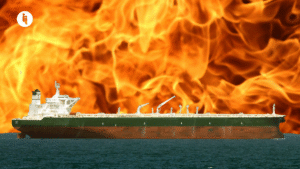
An oil tanker off the coast of Kuwait is now taking on water after an unknown explosion. The captain reportedly saw a small craft leaving the area after the hit.
-
There are still conflicting reports around armed Kurdish groups mobilising along the Iran-Iraq border, amid the possibility of a CIA-backed uprising. And moments ago, Iran seems to have hit a Kurdish armed group’s HQ in Iraq.
Meanwhile, elsewhere…

 |
🇺🇦 UKRAINE – This war’s still on. |
 |
🇨🇺 CUBA – Isolation deepens. |
 |
🇯🇵 JAPAN – Unification Church liquidated. Comment: The name sounds normal enough to the unfamiliar, but this group teaches that a Korea-born tax felon was the second coming of Christ. Ex-PM Abe’s assassin was angry at his political ties to the group, which the shooter blamed for his own family’s financial ruin. |
 |
🇫🇷 FRANCE – (Not) working together. Comment: It’s hard to think of a better example of Europe’s inability to cooperate. Guess what else happened the same year (2017) leaders announced this project? Palmer Luckey et al founded defence tech firm Anduril in California. Fast forward nine years and Anduril is now worth ~$89B, aka three times Dassault. |
 |
🇳🇵 NEPAL – Voting day. |
 |
🇨🇴 COLOMBIA – Now we’re equal. Comment: There’s a political dimension here (conservative Quito vs left-leaning Bogota) plus a security dimension (Ecuador blaming Colombia for a recent collapse in security), but it’s also a big deal in trade circles wondering if Trump’s shoot-from-the-hip approach to tariffs will spread. |
 |
🇸🇳 SENEGAL – UN chief nominee. Comment: It’s technically Latin America’s turn, which is why the other formal nominees (for now) include Argentina’s UN nuclear watchdog head Rafael Grossi, former Chilean president Michelle Bachelet, and former Costa Rican VP Rebeca Grynspan. |
Extra Intrigue
The Intrigue commodities corner is back
-
Gold: Prices took a dive on Tuesday amid a stronger wartime US dollar and diminishing chances of a Fed rate cut — the USD’s safehaven status holds on.
-
LNG: President Putin has suggested Russia could stop selling gas to Europe (~6% of Europe’s pipeline and ~14% of its LNG) — likely a bluff to restore Putin’s leverage amid the Gulf war, and ahead of Hungary’s critical election next month.
-
Fertiliser: Prices could rise significantly if the Strait of Hormuz, a key trade route for nitrogen, remains blocked.
Record of the day

Credits: Guinness Book of Records.
We could do with an injection of cute things right about now.
Enter the world’s smallest working arcade: just 24.85mm (<1 inch) tall but immeasurably cute, it’s the brainchild of Indian aerospace engineer Kiran Patil. And yes, it can run a knock-off version of the cult classic Space Invaders.
Today’s poll
Which incident do you think raises the temperature most? |
Yesterday’s poll: What geopolitical knock-on effect from this Iran conflict worries you the most?
💧 Regional destabilisation (55%)
🛢️ Shocks to energy markets (20%)
📈 Rising costs for the US and its allies (24%)
✍️ Other (write in!) (2%)
Your two cents:
-
💧 P.M: “There is no ‘wall’ around the Middle East — and, hello!, being located in the ‘middle’ of Europe, Africa, and Asia means that any war can and will spread.”
-
🛢️ J.R: “Shocks to energy markets will both increase costs for US / allies and foster destabilisation regionally due to the critical oil impact.”
-
✍️ M.A: “The nail in the coffin of a rules-based international order.”
-
✍️ A.R: “Reduced military supplies to Ukraine.”
-
✍️ R.T: “Unnecessary death of humans – our sisters and brothers.”