

🌍 Three stories you might’ve missed
Plus: Don’t diss this penguin

|
Today’s briefing: |
|
Good morning Intriguer. Way back in 1928, a painting by legendary Hungarian avant-garde artist Róbert Berény vanished after a Budapest exhibition — lost to history as more wars and turmoil soon gripped Europe.
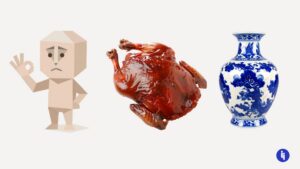
Then fast forward eight decades to Christmas in 2009, and Hungarian art historian Gergely Barki had just settled down to watch Stuart Little with his young daughter when… there on the TV screen, up on a wall behind Hugh Laurie himself, he saw the very same long-lost 1920s masterpiece, Sleeping Lady with Black Vase. Turns out a Hollywood set designer picked it up cheap from an antique shop in Pasadena, then stuck it in Stuart Little.
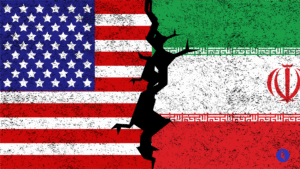
I guess all that to say that sometimes, the biggest stories are hiding in plain sight. Even behind Hugh Laurie. That’s on my mind today as we explore some of the week’s intriguing stories that might’ve been lost amid the Iran chaos.

PS – If you’d like to dive a little deeper into the Iran war, take a listen to our chat with Carnegie nuclear expert Ankit Panda! It’s dropping shortly.
Intrigue Insight: Iran war, day 14
Here’s a quick recap of what’s happened since our last briefing.
In the markets
-
The US has temporarily waived sanctions on Russian oil at sea (i.e. already loaded in tankers) for 30 days in an effort to curb prices. Another win for Putin.
-
The US is also mulling suspending an old law (the Jones Act) allowing only US ships to move goods between US ports, in another bid to ease prices. Free traders have long dreamt of ditching this law, but keep clashing with maritime interests.
-
And the S&P 500 just hit its lowest since November 2025, while European and Asian stocks have also slid — markets are slowly processing the unfolding mess.
On the battlefield
-
New supreme leader Mojtaba Khamenei has purportedly released his first statement, pledging “to avenge the blood of our martyrs” and to keep Hormuz closed (though his camera absence has fuelled speculation around his health).
-
The US has confirmed four dead after a US refuelling plane crashed in Iraq, with a local Iran-backed group claiming responsibility (the US denies this). Meanwhile, France has confirmed a casualty in yesterday’s Iranian attack in Iraqi Kurdistan.
-
And Iran has launched dozens of drones at Saudi Arabia, targeting bases, energy, and Riyadh’s diplomatic quarter, while Israel has landed more hits across Tehran.
Beyond
-
Memes are emerging as a core infowar tool, whether Iran’s ‘Inside Out’ sketch featuring a rabid President Trump, or the White House’s Wii Games montage highlighting its military hits — it’s a way to shape narratives, rally domestic support, and demoralise the enemy.
Getting up to speed.

This is the first time we’ve ever focused nine consecutive briefings on the same topic (Iran) and, while that war keeps shaping history, the rest of the world ain’t slowing down.
So let’s catch you up on three other stories worth your attention this week:
-
Two Sessions
China’s annual political-legislative Two Sessions (lianghui in Mandarin 💅) just wrapped. While it’s not Beijing’s most important political gathering (that’s more the Politburo), it’s…
-
the largest (3,000 members of the National People's Congress + 2,000 members of the Chinese People’s Political Consultative Conference)
-
the most visible (key reports and speeches are broadcast widely), and so maybe
-
the most symbolic: while largely a rubber-stamping exercise, it aims to signal the Party’s “whole-process people’s democracy” and broader unity under Xi.
Fun fact: it’s also incredibly, shockingly boring (we attended in our previous diplomat life).
The main takeaways this year? China revealed…
-
Its slowest and most flexible growth target in decades (4.5-5%): that reflects caution abroad, few options at home, and a shift from sugar hits to structural fixes
-
A big emphasis on ‘New Quality Productive Forces‘ (backed by $190B): ie, China’s next five-year plan (2026-30) leans even more into AI and AI-adjacent sectors, including via industrial modernisation (good news for copper and lithium)
-
More attempts to boost household consumption as a source of growth, though it’s still all via targeted, indirect, and controlled measures (think subsidies/rebates) to boost spending without eroding state dominance. But that also means…
-
China again just recorded its largest fiscal deficit, repeating last year’s 4% of GDP: ie, the Party’s debt tolerance remains high but stable as it plays next steps.
The main loser this year? Apart from the 19 delegates who inexplicably disappeared from the guestlist (purged?), it’s China’s beleaguered property sector. With (for example) Vanke reporting another $11B loss, plus ~80 million vacant homes still on the market, the Two Sessions made only vague references to stabilising the sector, with no bailout in sight.
-
Cars
What happens in the world’s second-largest economy rarely stays there — and the global auto industry is a prime example. Beijing’s historic bet on EVs now means…
-
Its auto exports keep soaring, with a 67% value surge (yoy) just in Jan-Feb, and
-
Its home demand for foreign brands keeps collapsing (halving from 62% in 2020)!
Legacy automakers are getting crushed as a result: Volkswagen Group just expanded its earlier job cuts to 50,000 by 2030 after reporting a 54% drop in pre-tax profits, blaming not just China but Trump’s tariff whiplash. Apparently even our loaded Intriguers are feeling the burn too — Porsche just saw a 98% collapse in net profit!
Meanwhile across a few oceans in Japan, Honda is now warning it’s on track for its first annual loss since going public in the 1950s! The culprit? Beyond the above, it’s also warning US EV demand is now less than half what it expected (similar trend in Europe), with legacy players eating massive losses from EV project cancellations and write-downs.
Of course, part of the issue might be legacy brands failing to offer the same quality-cost combo as China’s slate (which is effectively banned in the US), plus $100+ oil prices might force more households to rethink their gas-guzzlers, but still — brutal time for carmakers.
-
Leaders.
Chile’s conservative new president (José Antonio Kast) took office this week, and China is already featuring in his inbox. Why? His left-leaning predecessor quietly approved China’s vast proposed 20,000km undersea fibre optic cable to the Chilean port of Valparaíso, in the last presidency’s dying days before Kast.
Where’s the drama?
The US argues this cable would risk hemispheric security because it’d ultimately be controlled by China’s ruling communists via a 30-year concession: think espionage, network compromise, and China’s intel law (which insists firms must help its spooks).
The US took it all so seriously, it even curbed visas for three Chilean officials until Santiago quietly rescinded its approval within days! It’s now all in limbo, and puts Kast in a tough spot:
-
China is (by far) Chile’s top trade partner, but
-
The US is (by far) Chile’s top security partner, and a key investor.
Welcome to the 2026 dilemma for much of the world, mister president.
Intrigue’s Take
So there you have it, dear Intriguer. While Iran dominates the headlines, China is still doubling down on tech self-reliance, Western industries are still flailing in response, and Chile and others are still getting caught in the crossfire. Wars might tilt the Earth, but that Earth still spins.
Yet one of the most critical questions to explore is still what this Iran war means for US-China competition. And one of the most interesting debates is actually playing out within China itself (to the extent open debate is allowed).
China has a declinist camp with names like Hu Xijin (former Global Times editor), who all see this Iran war as further proof of US decline. One of Hu’s comments on Weibo went particularly viral this week, arguing “after the Cold War, the US claimed it could win two wars at the same time. Now it is mobilizing global resources just to win a half-war”.
But while that kind of view flourishes in China’s nationalist circles, it’s interesting to see pushback from China’s pragmatic camp, with names like Shi Yinhong (professor) and Zheng Yongnian (think tanker) out there urging caution amid proof the US can still project overwhelming force when it wants.
Anyway, while that debate plays out, today’s briefing is maybe a reminder that Xi still seems to be doubling down on whatever he can control: tech, supply chains, and politics.
Sound even smarter:
-
If you’d like to dive a little deeper into the Iran war, take a listen to our chat with Carnegie nuclear expert Ankit Panda! It’s dropping shortly.
Meanwhile, elsewhere…

 |
🇷🇸 SERBIA — Yeah, we did that. Comment: The criticism levelled Serbia’s way mostly argues either a) it’s a worry for Serbia’s neighbours (who are mostly NATO members), and/or b) regardless where the missiles come from, any buildup is bad for the volatile Balkans region. |
 |
🇨🇦 CANADA — Arctic moves. |
 |
🇨🇳 CHINA — Unity or uniformity? Comment: Always focused on control, Xi likely sees language as a way to reduce the longer-term risks of separatism in Xinjiang, Tibet, and Inner Mongolia. |
 |
🇺🇸 UNITED STATES — You’re my best fwend. Comments: The most interesting result might be who’s tied for 3rd: after months of unexpected US threats to take Greenland, Americans still love Denmark, but the feeling is no longer mutual — 60% of Danes now see the US as an adversary! |
 |
🇮🇩 INDONESIA — Bigger the better. Comments: After the initial Solomon Islands scare, Australia has been on a hot streak solidifying its regional security partnerships to counter China, though Canberra’s vaunted Vanuatu deal still remains in limbo amid China opposition. |
 |
🇲🇦 MOROCCO — Arms at the ready. Comments: Morocco’s arms spree comes amid renewed tensions with neighbouring Algeria, including over how to resolve the status of Western Sahara. |
Extra Intrigue
Here are some lighter stories to enjoy over the weekend:
-
Read why the internet has been so captivated by the story of Punch the monkey.
-
Listen to comedy legend Conan O'Brien sitting down with Wanda Sykes in a recent episode of Conan O'Brien Needs a Friend.
-
Watch Rental Family, Brendan Fraser’s feel-good movie about family, connection, and belonging.
From our sponsors
Go from AI overwhelmed to AI savvy professional with Superhuman AI. AI will eliminate 300 million jobs in the next 5 years. Yours doesn't have to be one of them. Here's how to future-proof your career:
-
Join the Superhuman AI newsletter – read by 1M+ professionals working at Google, Meta, and OpenAI
-
Learn AI tools, tutorials and news in just 3 minutes a day
-
Become the go-to AI expert on your team
Animal of the day

Credits: Edinburgh Zoo.
Everyone, meet Major General Sir Nils Olav III, Baron of the Bouvet Islands. Yes, that’s his full title, yes, he’s a penguin, and yes, he genuinely has a military rank. Sir Olav is the official mascot of the King's Guard of Norway, and he lives at the Edinburgh Zoo.
Huh, that’s odd, we hear you say. Like why Scotland Yard is in London, or why ‘abbreviation’ is such a long word.
Well, it all dates back to 1961, when a member of the Norwegian king’s elite guard (in Scotland for the Royal Edinburgh Military Tattoo) paid a visit to the local zoo and checked out the king penguin colony (first gifted by a Norwegian family back in 1913, btw).
That soldier observed that these penguins were strutting around like his own drill team’s march, so Major Nils Egelien arranged to adopt one, which the zoo named after both him (Nils) and the then-king (Olav). The current penguin is now the third in that line.
Extra fun fact: Norway regularly sends Sir Olav fish and Christmas cards.
Friday quiz
Test your knowledge of this week’s news (Or not. No pressure either way).
1) North Korea resumed its China train service after how many years? |
2) Which country became the latest to announce a social media ban for under 16s? |
3) Which AI agent did China ban from government devices? |