






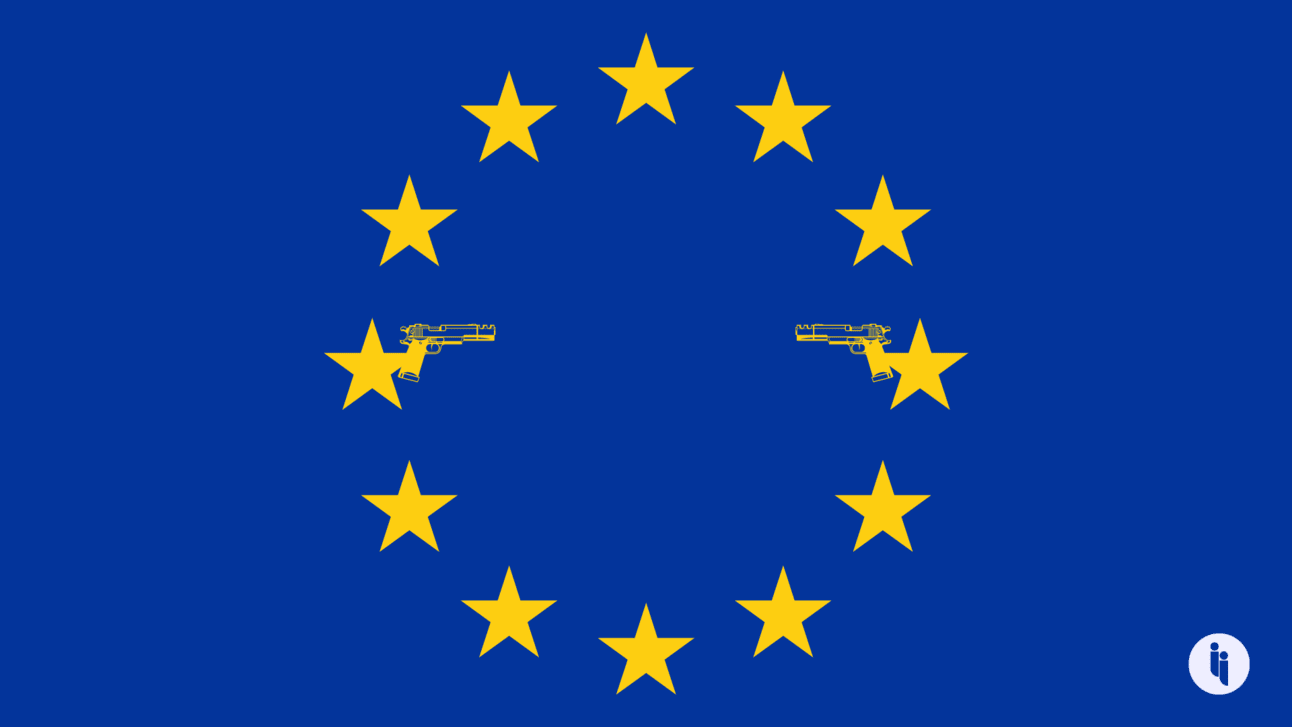
The EU has plans to squeeze Hungary’s economy if it blocks a new round of aid to Ukraine later this week, according to documents seen by the Financial Times.
In the event of “unconstructive behaviour” by Hungary, leaked EU documents suggest EU leaders should publicly vow to halt all EU funding to Hungary, as a way to erode its local currency (the forint) and dampen investor confidence. A senior EU official later said the note “does not outline any specific plan”.
Still, in the world of EU procedure, this is explosive stuff.
Stay on top of your world from inside your inbox.
Subscribe for free today and receive way much more insights.
Trusted by 161,000+ subscribers
No spam. No noise. Unsubscribe any time.
What exactly are the EU and Hungry fighting over?
Hungarian Prime Minister Viktor Orbán has long been wary of Ukraine, citing:
- The treatment of its Hungarian-speaking minority
- The threat that cheap Ukrainian imports pose to Hungarian farmers, plus
- Orbán has also maintained relatively cosy ties with Russian President Vladimir Putin, a key energy provider and fellow nationalist.
So Orbán has (again) pledged to block a €50B multi-year EU aid package this Thursday unless the EU agrees to an annual review of the scheme. This sounds like basic accountability, but in context, it gives Orbán an annual veto to keep extracting more concessions out of the EU.
It also prevents the EU from providing more consistent support for Ukraine to plan, recover, and rebuild over the longer term.
And this all puts Orbán in direct conflict with the EU, which sees backing Ukraine as an existential priority: just ask the three EU members on Russia’s mainland border (Finland, Estonia, and Latvia) about their own histories of Russian invasion.
Of course, Ukraine is just one part of this rift. Orbán has also bristled at EU criticisms of his democracy; dragged his feet over Sweden’s NATO bid (22 EU members are also in NATO); and railed at an out-of-touch Brussels agenda.
And this is all against a backdrop of distrust dating back as far as the 1920 Treaty of Trianon, which dismembered Hungary after its WWI defeat.
So what are the EU’s options?
- Negotiate some more: Orbán is a wily but practical politician, and the EU still has €20B in leverage (funds it’s frozen over rule of law concerns)
- Public pressure: This latest Financial Times story has the hallmarks of a controlled leak to let Orbán know the EU isn’t messing around anymore
- The nuclear option: The EU could trigger Article 7, suspending Hungary’s voting rights for a “clear risk of a serious breach” of the EU’s principles. Palace whispers suggest this is no longer unthinkable, though these whispers could also be part of option 2 above for now.
We’ll keep you posted on how Thursday’s vote plays out, but Orbán isn’t exactly the type to capitulate in the face of public pressure.
INTRIGUE’S TAKE
This rift feels historic in the way it risks eroding the EU’s driving principles of cohesion and consensus. But it also feels inevitable for a bloc of 27 members, each zig-zagging their own path forward from election to election.
The other thing that comes to mind here? The more the EU plays hard-ball, the more it risks emboldening Eurosceptics elsewhere, who’ll claim vindication from what they see as the EU steamrolling a country defending its interests.
Ultimately, Orbán has always been a Eurosceptic rather than a leaver; he knows Hungary is better off in than out. But that can change. And in the meantime, he also knows the EU is loath to lose another member, so he’ll keep driving a hard bargain while he can.
Also worth noting:
- Hungarian Minister for European Union Affairs János Bóka insists Hungary will “participate constructively in the negotiations, but will not give in to blackmail.”
- The EU has tested Article 7 before, but the final step requires a unanimous vote. Orbán could previously count on Poland to have his back in such a vote, but Poland now has a more pro-EU government.