






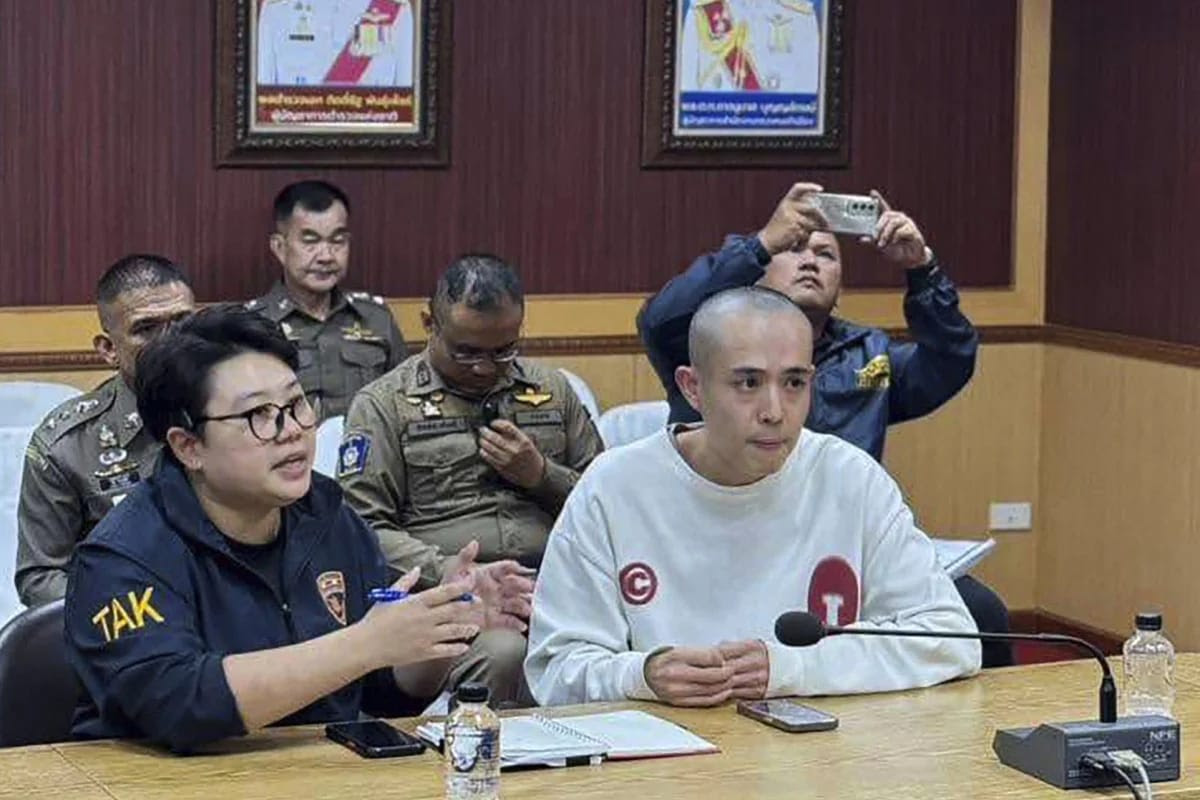
Imagine this: you’re slamming down that morning Pop-Tart® (frosted apple cinnamon, probably), when you get the call you’ve been waiting for — an opportunity to work on a dream project in Thailand. Your mind instantly runs wild with images of you absolutely chilling on a beach with a cocktail in hand (Sabai Sabai®, probably).
Anyway, you touch down in Bangkok, shoot a cool nod at the waiting chauffeur (you rehearsed it on the flight), and off you go. But then things get strange — the transfer takes weirdly long, the chauffeur stops answering your questions, and by the time you realise he’s crossing an international border, it’s too late — armed thugs get in, kidnap you, and force you to work at a scam centre in Myanmar.
We confess to speculating on his Pop-Tart preference (fake news!), but otherwise that’s exactly what happened to Wang Xing, a Chinese actor who, like thousands before him, got lured by human traffickers with the promise of a lucrative job. Wang got lucky — his girlfriend went full Liam Neeson to find him, and her viral post on Weibo ended up forcing authorities in Beijing and Bangkok to prioritise his rescue just last month.
Stay on top of your world from inside your inbox.
Subscribe for free today and receive way much more insights.
Trusted by 161,000+ subscribers
No spam. No noise. Unsubscribe any time.
But Wang’s story is still rippling around the region, which brings us to today’s wild news: Thailand has now announced it’ll cut electricity, internet, and oil to those areas in Myanmar suspected of hosting these scam centres, effective today (Wednesday).
So let’s backtrack a little — what’s with these scam centres in Myanmar?
There are now dozens of crime syndicates based across southeast Myanmar, running vast online scam operations that net them billions of dollars every year. Most of these groups fled China after Beijing cracked down on gambling and scam centres in 2020.
And their particular form of scamming is labour-intensive — nicknamed “pig butchering”, they chat online for months to ‘fatten up’ their potential victims before tricking them into forking over cash. But the mob bosses in charge can’t exactly post job openings on LinkedIn (“strong communication skills required”), so they traffic victims to fill the vacancies from all over Asia, holding them captive and resorting to torture if they don’t follow orders.
Anyway, according to one Thai official, there are now as many as 300,000 people working across 40 heavily-guarded scam compounds in Myawaddy alone, just over the border.
Why Myanmar?
We just passed the four-year anniversary of Myanmar’s coup, when its military hoped to restore its dominance but instead triggered a brutal civil war that’s shrunk its own control down to maybe a third of Myanmar — all warring parties now seem happy to collaborate with crims in exchange for the cash they need to finance their fighting.
Also, Myanmar (a member of ASEAN) still enjoys visa-free travel across Southeast Asia, which means less official scrutiny for mob bosses.
So why would Thailand care?
Aside from the obvious challenges of having a civil war raging on your doorstep, these specific scam centres are becoming a real issue for Thailand. That’s because tourism is Thailand’s single-largest industry, employing a fifth of the country’s entire workforce.
And guess which country is Thailand’s single-largest source of tourists? Yep, China. But with stories like Wang’s going viral, would-be tourists are getting spooked — 10,000 apparently cancelled flights last month alone.
So Thailand’s leader Paetongtarn Shinawatra has gone into overdrive announcing new tourist security and anti-scammer efforts, and even dropping a video of her speaking AI-generated fluent Mandarin, assuring Chinese tourists it’s very safe to visit.
And yep, this seems to be working: after an initial dip, tourist numbers are back up.
So then, why would anyone else care?
First, aside from the obvious moral outrage in kidnapping one victim to scam another, these criminals are now hitting victims everywhere, raking in $75B worldwide — the US is a top target at around $4B. That’s also putting a premium on kidnapping English-speaking people from (say) Malaysia to help run the scams.
But second, it’s becoming an image problem for China, too — its tough approach in 2020 displaced but didn’t defeat the mob mosses. And as they now cause havoc elsewhere, they can undermine China’s credibility as a security partner. Interestingly, however, China has also used organised crime as a justification to expand the presence of its police authorities around the world.
Which brings us to a self-evident yet crucial point that’s a neat place to finish: turmoil, whether from organised crime, war, or political instability, never stops at the border.
INTRIGUE’S TAKE
As our rattled world moves to pull up its drawbridges, this story is a reminder that it’s not always so easy to retreat — Myanmar’s civil war not your problem? Fair enough. Until the scammers there start leaving a trail of heartbreak and financial ruin from Miami to Milwaukee.
It’s also a reminder of how quickly organised crime can pivot. In this case, it first pivoted its location from China to Myanmar. But as the world digests Wang’s kidnapping, you can bet crims will pivot to AI-enabled methods that reduce their reliance on forced labour, too. In fact, that’s already happening. The Thai prime minister herself just got a call from an AI-generated Donald Trump, urging her to transfer some cash.
Also worth noting:
- There’s a hit Mandarin-language crime thriller called No More Bets about a Chinese couple trafficked to one of these cyber compounds. It ended up getting banned in Cambodia (where similar criminal operations exist), and was criticised by the governments of both Thailand and Myanmar, too.
- The US, UK and Canada issued sanctions on various ‘scam farm’ bosses in 2023.