

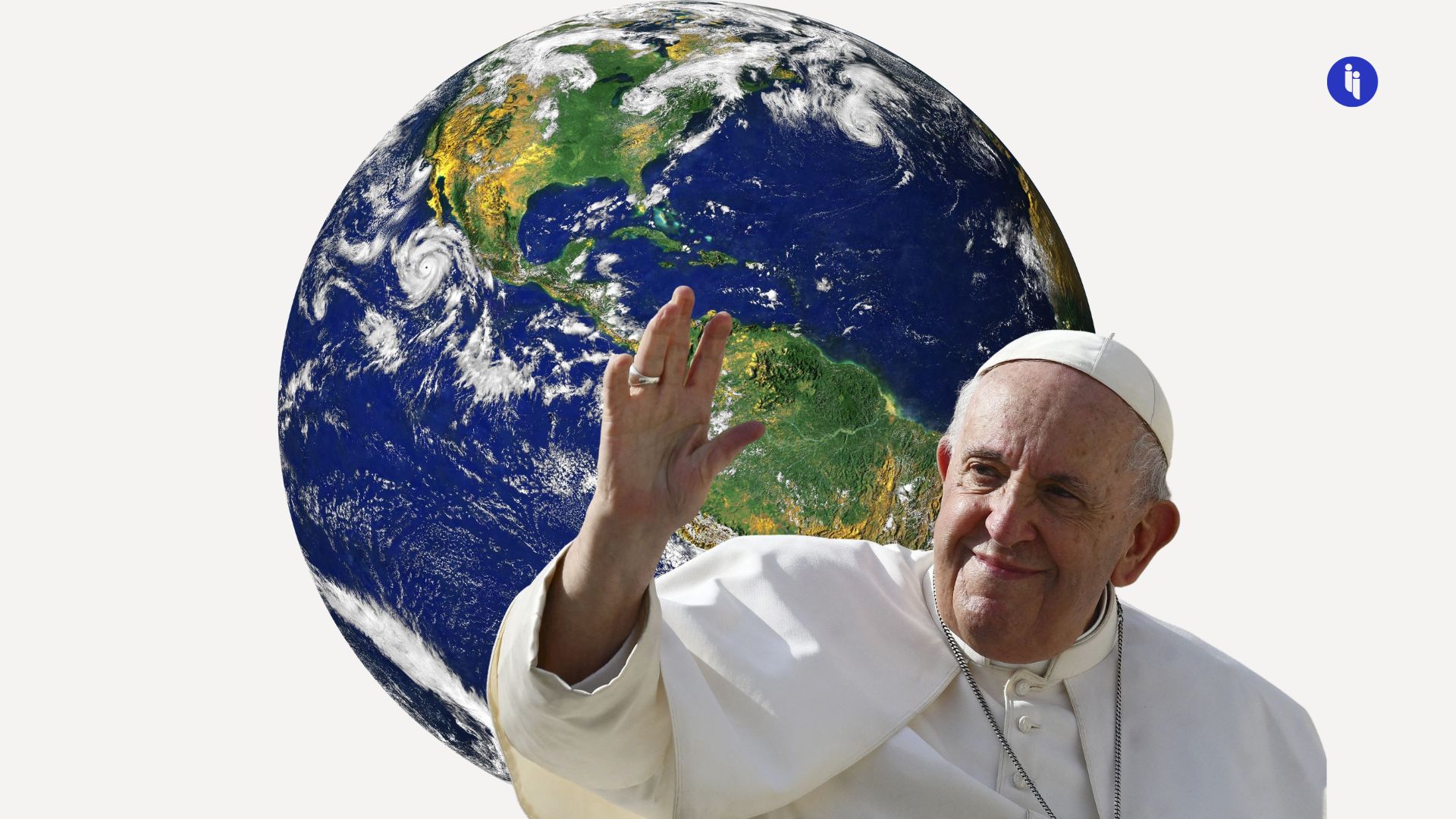
For centuries, popes hardly ventured beyond Rome, with the occasional epic exception like Pius VII, who only left town because Napoleon abducted him! But the jet era — and a 1929 treaty establishing Vatican statehood — changed all that.
Enter Pope Francis.
With a 2013 arrival full of pope-firsts (the first Jesuit, the first from the Americas, and the first born outside Europe in 1,200 years), he was always going to make his mark.
Stay on top of your world from inside your inbox.
Subscribe for free today and receive way much more insights.
Trusted by 161,000+ subscribers
No spam. No noise. Unsubscribe any time.
But which of his moves might leave the longest tail? Here are three candidates:
- The pope’s deal with China
One place a pope still hasn’t visited? China. Mao cut ties after he seized power in 1949. But Pope Francis extended a hand, and even voiced broad admiration for China.
And that all culminated in a 2018 deal, still not public, empowering China’s Communist Party (rather than the pope) to keep appointing bishops, while leaving the pope with a final veto. So why’s that controversial?
- The pope argued it would help unite China’s ~12 million Catholics, long split between Party-controlled churches and those ‘underground’, thus ensuring the faith’s survival in China while opening up dialogue he could use to shine a light on the Party’s human rights abuses. But… (always a but)
- His critics say he played into Xi’s hands, ceding a church right (appointing bishops) while turning a blind eye to the Party’s growing crackdown on believers. That’s partly why Hong Kong’s fiery ex-bishop dunked on the deal as naïve, and “giving the flock into the mouths of the wolves“.
- The pope’s take on Russia
You might recall the pope last year urged Ukraine to “have the courage of the white flag” and enter negotiations with Russia. The Vatican later clarified he was just using the language of the interviewer, but critics saw it in the broader context of…
- His line about NATO triggering the war by “barking at the gates” of Russia
- His reference to Russians and Ukrainians as brothers (a Putin line), and
- What his critics argue has been relative silence on Russian crimes in Ukraine.
There’s been endless analysis of whether this all reflects a) his consistent calls for peace (as in Gaza and elsewhere), b) the pope’s own experiences with the US in his native Latin America, c) an attempt to build on his historic 2015 meeting with his Russian counterpart (who’s blessed Putin’s invasion as a holy war), or even d) a shift to align the Vatican’s views more closely with the Global South, home to most of the world’s Catholics.
- The pope’s take on social issues
Given the pope borrowed his name from St Francis of Assisi, there’s no surprise he sought to echo that 12-13th century figure’s focus on issues like poverty. Yet maybe the surprises were in the how, whether through his spicy letter on Trump’s migration policy, or his publishing of a pope’s first-ever encyclical on the environment.
But he still broadly upheld traditional teachings across other issues, which is why one of his biographers memorably summed him up as “a radical, but not a liberal”.
Intrigue’s Take
Intriguers will know that any geopolitical take on the pope is legally obliged to mention Stalin’s 1953 quote, dismissing French pleas to stop persecuting Catholics due to opposition from the pope: “The pope! How many divisions has he got?”
It was a line that went straight to the heart of how Stalin saw power. But of course, it’s incomplete: while historians (and a revivalist Putin) now pick at the carcass of Stalin’s soviet system, the Vatican is still there. As for Francis? History might recall him as the first modern pope to inhabit a multipolar world, responding with a focus on cross-border issues, while approaching authoritarians like Xi and Putin with caution.
So what next? That’s up to the 135 cardinals, who’ll eventually elect a successor.
Whoever it is, they’ll enter an even more multipolar world — and our gut is that’ll make the pope more powerful, not less. History suggests a more multipolar world will see more instability, opening more space for mediation. But also, in a world with more fearful and withdrawn capitals, cross-border ideas will be more potent. And for citizens grappling with more digital decades ahead, that all might (counterintuitively?) place a premium on more traditional sources of influence and power.
Sound even smarter:
- The Vatican is one of 12 states recognising Taiwan, and the only one in Europe.
- Among the pope’s various other geopolitical ‘firsts’: he became the first pope to address the US Congress, the first to recognise a State of Palestine, and the first to visit Mongolia, Iraq, South Sudan, and the Arabian Peninsula.