






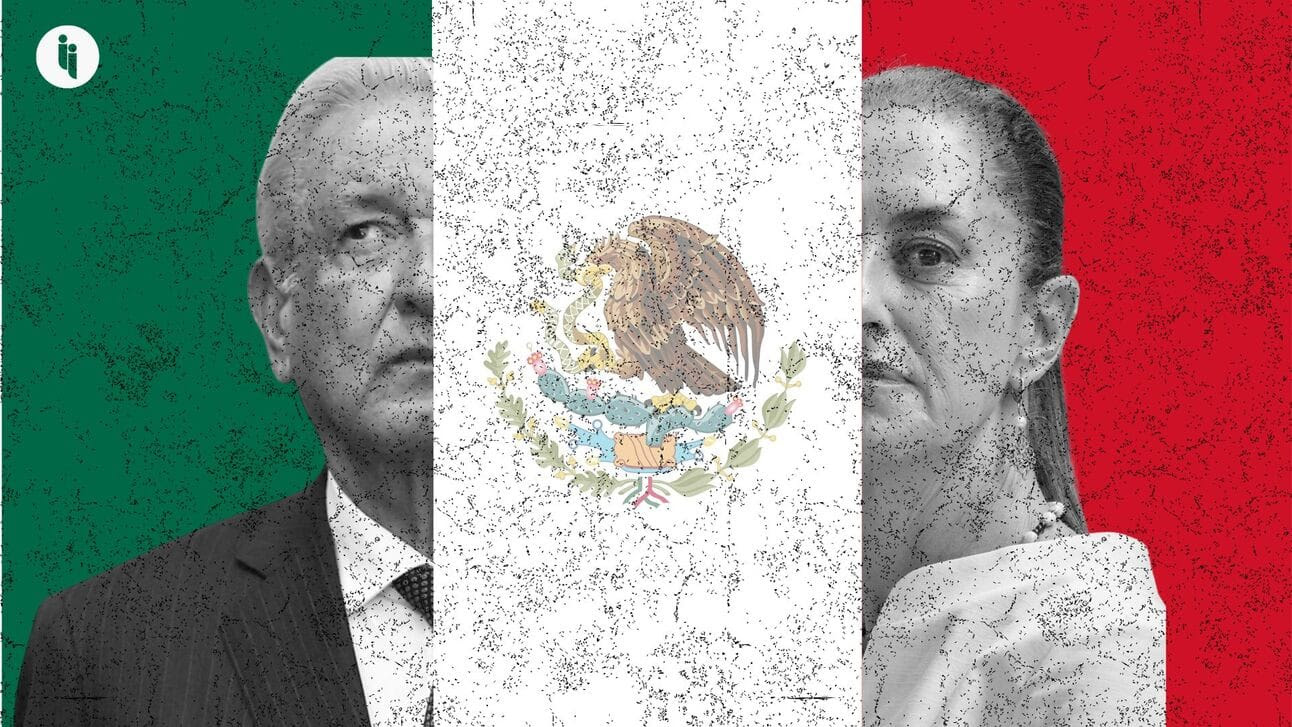
Mexico’s senate passed controversial judicial reforms yesterday (Wednesday) after angry demonstrators burst in during the session. The package ended up passing by just one vote, after an opposition senator switched sides dramatically (critics allege he did a deal to get criminal investigations into his family dropped).
Here’s what you need to know.
The reform package is making waves due to its content, timing, and implications, so let’s dive in:
First, on content, the biggest change is a provision that’ll have judges elected rather than appointed. This means 1,700 supreme court, federal, electoral, state, and appeal court judges will have to run electoral campaigns rather than work their way up.
Second, on the timing, this is all a parting gift from President Andrés Manuel López Obrador (‘AMLO’), who hands the reins to his protégé on October 1: president-elect Claudia Sheinbaum. In Mexico, new senators and deputies take office a month before the president, so that’s given AMLO a brief window (September) to push the reforms through with his party’s expanded majority.
Stay on top of your world from inside your inbox.
Subscribe for free today and receive way much more insights.
Trusted by 161,000+ subscribers
No spam. No noise. Unsubscribe any time.
Then third, on the implications: AMLO argues the changes are necessary to free the judiciary from elites and corruption, and make it more accountable to the people. He’s dismissed protestors, including much of Mexico’s judiciary, as simply wanting to cling to their privileges or serve the interests of the elite.
But he’s copping criticism from all quarters.
i. Legal eagles (such as the relevant UN special rapporteur) have flagged concerns that this will undermine the independence of Mexico’s courts: judges might have an incentive to make decisions that are popular rather than right.
And Mexico’s chief justice has warned the reforms could leave judges more vulnerable to organised crime and even violate the US-Mexico-Canada trade treaty, spooking US lawmakers in the process. Which takes us to…
ii. The US and Canada have voiced concerns around what this means for Mexico’s democracy: AMLO has consistently bristled at the way Mexico’s courts have blocked his moves, so his reforms look to many like an attempt to just remove those checks and balances altogether.
But in response to these criticisms, AMLO has simply announced a ‘pause’ on dealing with the US and Canadian embassies, while his supporters point out that many judges are also elected in the US (at the state level). Meanwhile…
iii. Mexico’s top businesses are warning these reforms “send a worrying signal about Mexico’s institutional fragility, putting at risk our trade relationships plus the flow of capital and economic growth.” 🔥🔥🔥
And that takes us back to one of the points we made up top: timing. These reforms are happening just as US and other businesses look for ways to ‘friend-shore’ production and de-risk their supply chains away from China. So the fear is Mexico could miss a generational opportunity as a result.
Anyway, for now, the president-elect is sticking to the party line and trying to assure investors it’ll all be fine. But the markets are already speaking:
- The peso has lost ~18% of its value against the dollar since the June elections, and
- Analysts told the WSJ foreign investors are now holding back ~$35B while they wait to see how this all plays out.
That’s a year’s worth of inbound investment. And Mexico’s inaugural judge elections won’t take place until 2025 and 2027.
INTRIGUE’S TAKE
Folks investing in Mexico (whether locals or foreigners) want to know that if something goes down, they can get a fair hearing from a professional and independent court, rather than (say) someone with a few years experience who got elected to the supreme court by promising to go full Robin Hood.
So when Mexico’s entire judiciary can flip on an election or two (apparently the only such country in the world), that adds a serious splash of uncertainty, which is really what spooks investors the most.
As for Mexico’s citizens, they obviously have concerns of their own, with many fearing this package will take their country back to the days of one-party rule that characterised so much of the 20th century.
Also worth noting:
- As of this morning (Thursday), 17 of Mexico’s 31 state legislatures have now backed the reform, meaning it’ll now be signed into law.
- In his final month, AMLO still enjoys high approval ratings (65%+).
- Mexico is America’s top trading partner, and vice versa.
- AMLO has significantly expanded the state’s role in Mexico’s economy, with the armed forces now running dozens of airports, trains, hotels, tourist parks, and even an airline.