






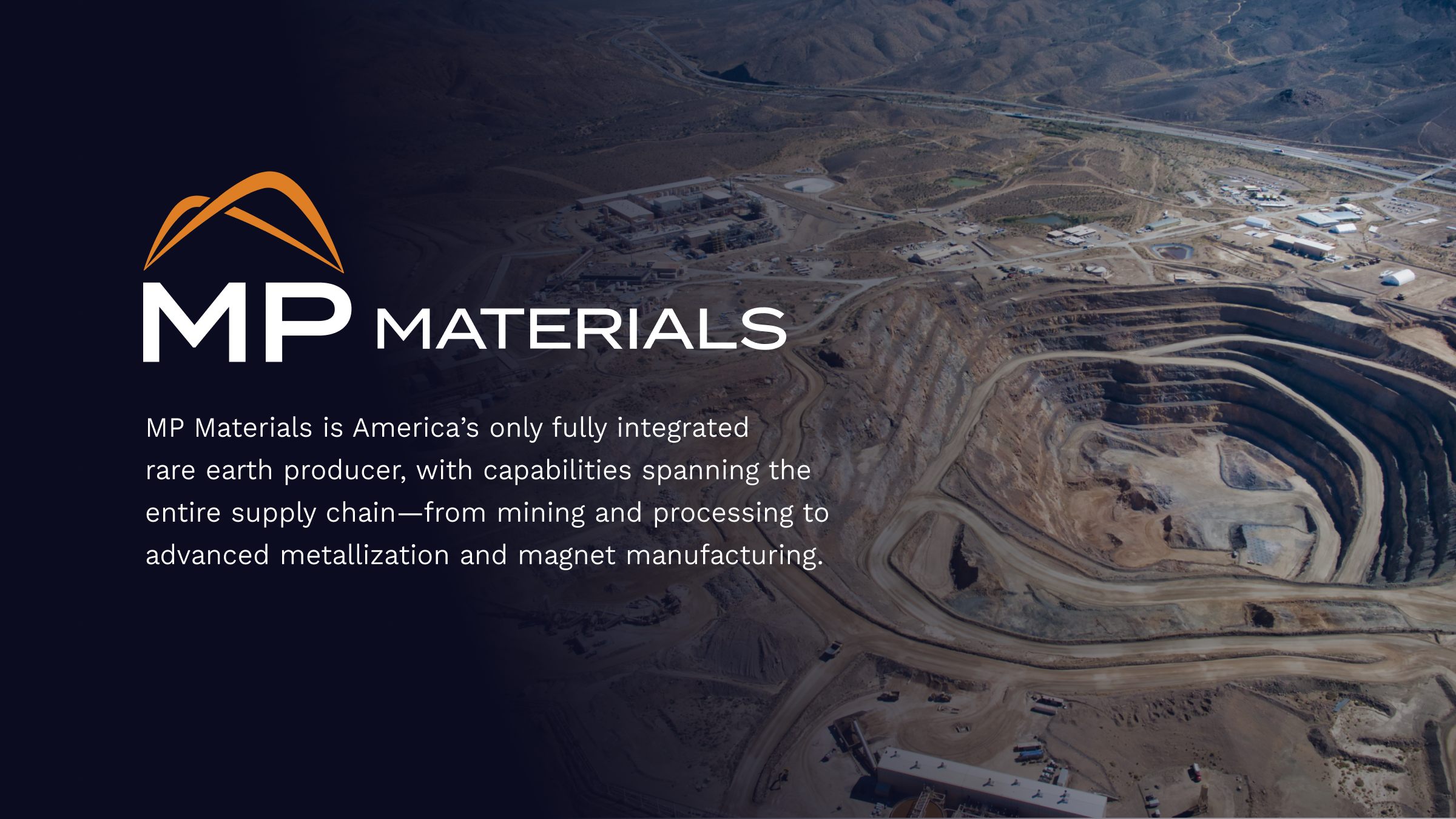
Almost a decade ago, James Litinsky took over a bankrupt mine in the Nevada desert for a cool $20.5M. Buying Mountain Pass (MP), the mine saddled with $1.7B debt, seemed a bold move given the last guy went out of business due to low rare earth prices. But Litinsky’s gamble might’ve now paid off because the Pentagon just pledged to buy…
- A $400M equity stake in his company (MP Materials), AND
- His mine’s output for 10 years… at double the current market price.
And as if Litinsky’s week wasn’t already a cracker, it somehow got better: Apple entered centre stage with a $500M cheque to buy the firm’s (future) rare earth magnets, so Tim Cook can keep making that beloved iPhone you’re reading us on.
So that’s an obscure $5B miner getting some serious love from the $900B Pentagon and $3 trillion Apple.
Stay on top of your world from inside your inbox.
Subscribe for free today and receive way much more insights.
Trusted by 161,000+ subscribers
No spam. No noise. Unsubscribe any time.
But where’s the Intrigue?
It’s in the rare earths, which a) aren’t actually rare though can be tricky to refine, and b) are a key input across tech, renewable energy, EVs, defence, medicine, and beyond.
But it’s really the c) that’s the kicker here: China controls ~90% of the world’s rare earths processing, or closer to 100% if you get into certain heavy rare earths.
And that dominance wasn’t accidental. Rather, it was the product of decades of subsidies, lax rules, and below-cost pricing, which some claim was a strategy to dissuade capitals from developing their own sources, leaving Beijing in the driver seat. Why do that?
The world first got a hint in 2010, when a long-running Japan-China maritime border dispute flared up, and Beijing flexed its ‘ceps by cutting Tokyo’s access to rare earths! Japan backed down, but the whole world sat up and paid attention.
By the time Beijing pulled a similar flex against the US in 2023, Western capitals were already scrambling to diversify their supplies.
And that’s where the ol’ debt-ridden Mountain Pass comes in. But first, two fun facts:
- Guess another of its top investors? Yep, a semi-state-owned firm in China.
- And guess where it sent its rare earths for processing? Yep, to China.
So, after years of investment, MP Materials announced in January it’s now America’s first producer of neodymium and praseodymium (NdPr). And that timing was brilliant: within weeks, President Trump was upending trade as we knew it, with China firing back even tighter rules around its rare earths. By last month, its rare earth exports had dropped 75%!
So what now?
The largest investor in MP Materials is now the Pentagon. And the firm’s top priority is now to build a new factory for rare earth magnets, hoping to 10x its output by 2028.
We say ‘hoping’ because this vertical integration — way beyond the firm’s traditional mining roots — is a massive lift both in terms of operations, but also tech: eg, its heavy rare earths separation tech is still a work in progress, so it’s apparently developed (with Apple) some very niche recycling tech to fill the gap.
Anyway, the race is on.
Intrigue’s Take
This is a big deal leading to so many big questions. Here are three:
- Why was a US rival’s state-owned firm ever allowed to become a top investor in America’s only source of rare earths? There’s an argument US investors were wary of the reputational risk around this kind of mining (it can get toxic). But while ESG has lost momentum, the Pentagon still felt the need to step in, which takes us to…
- Does this now make MP Materials a state-owned firm? Its CEO gave an interesting non-answer, noting, “we in the West with free market capitalism can take on mercantilism, but doing so in a way that is along with our value system.” Ie, if it’s pursuing Western values, and tackling a market failure, then who cares?
- And so… is the US getting more mercantilist? Everyone is. Capitals are pooling whatever strengths they have, and they’re fusing the old military-civilian divide to do so. This deal is one heck of an example, built on so much equity, a generous price floor, and big offtake promises. Why? Because failure isn’t an option.
Sound even smarter:
- The Mountain Pass mine seems to have most of the 17 rare earth minerals, though its heavy rare earths are apparently less abundant.
- The West’s only commercial producer of separated heavy rare earth oxides is now Australia’s Lynas, which is currently scaling up its facilities in Malaysia.
- MP Materials has seen its share price double since this deal broke last week.