





In amongst the weekend’s historic vote in Congress, a surprise album-drop by Taylor Swift, and another new episode of Bluey, you could be forgiven for not following the movements of China’s leader, Xi Jinping. In fact, we do forgive you.
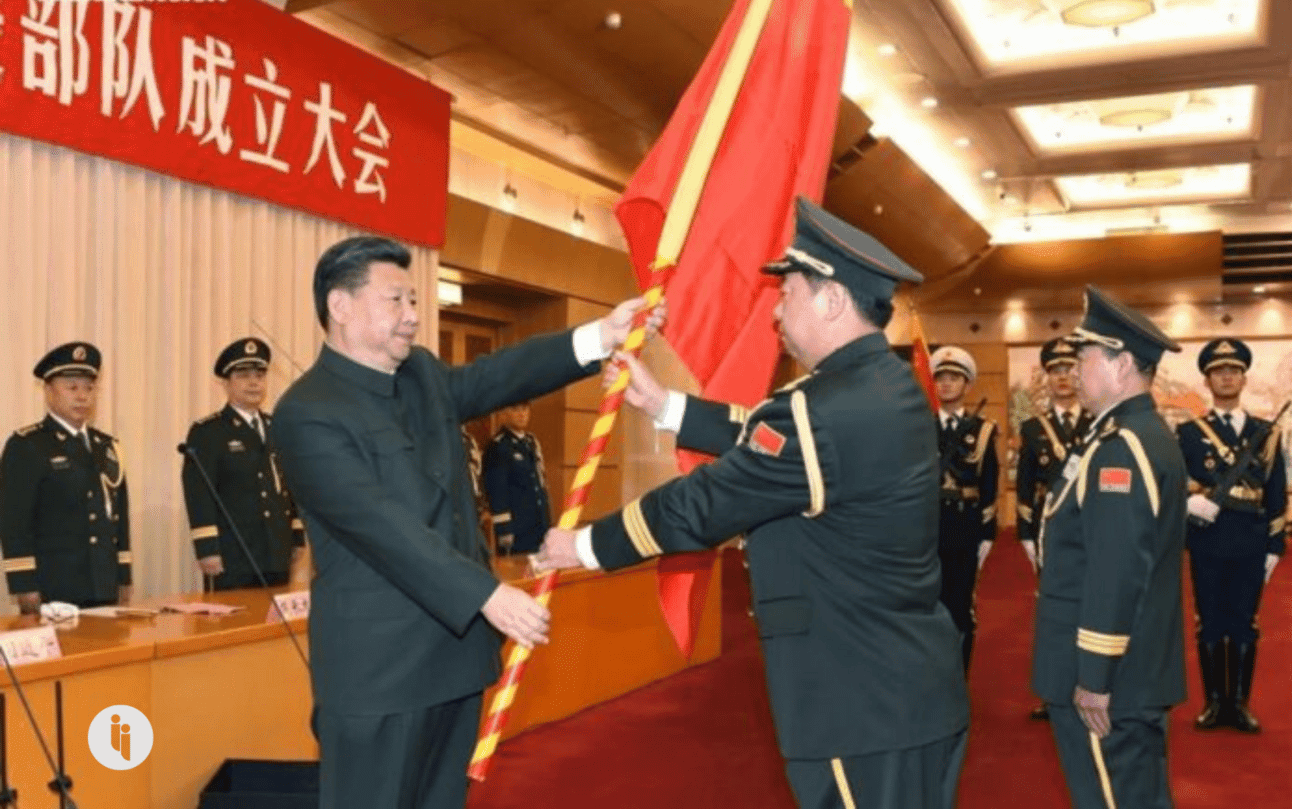
But on Friday night in Beijing, Xi arrived at a nondescript office and casually announced yet another military shake-up – the largest in almost a decade. What’s going on?
Shortly after Xi took power in 2012, he started emphasising his vision to restore China’s greatness (“the great rejuvenation of the Chinese nation“). And it was soon apparent that a key part of Xi’s plan involved reforming China’s military.
Stay on top of your world from inside your inbox.
Subscribe for free today and receive way much more insights.
Trusted by 161,000+ subscribers
No spam. No noise. Unsubscribe any time.
He went on to set two clear goals for the People’s Liberation Army (PLA):
- A military that “obeys the party’s commands“: while technically loyal to the Communist Party (rather than China’s constitution or state), the powerful PLA has itself long been a key political and economic player. So it’s been central to Xi’s efforts to consolidate his grip on power.
- A military that “can fight and win“: the PLA hasn’t really been tested since its brief but bloody invasion of Vietnam in 1979, which was a disaster. So Xi wants a high-tech, modern, and more integrated force befitting a China he’s now restoring to greatness.
With those objectives in mind, Xi pushed through his first big PLA reforms in 2015, creating the ‘Strategic Support Forces’ (SSF) as a fifth military branch, alongside the PLA’s ground forces, navy, air force, and rocket force.
The idea was twofold: adding a fifth branch reporting to Xi directly (via his Central Military Commission, or CMC) would help dilute the power of the PLA’s other established branches; and, it’d help the PLA lift its game for modern warfare across domains like intelligence, space, and cyber.
And that’s where Friday’s announcement comes in: Xi just abolished the SSF, only eight years after he created it. In its place, the SSF’s component parts are now four lower-level ‘arms’ of the PLA, each still reporting directly to Xi :
- The Information Support Force is tasked with providingintelligence and psychological warfare support
- The Aerospace Force will support China’s military objectives from space (though it denies militarising space)
- The Cyberspace Force focuses on fighting cyber wars, and
- The Joint Logistics Support Force echoes that classic Schwarzkopf quote (“amateurs talk tactics, professionals talk logistics”) while also diluting the army’s power by yoinking its long-held logistics function.
But why does all this matter?
As bureaucratic as it sounds (like Barry from HR re-drawing the office org-chart for the 50th time) – and as intriguing as it is to see China seemingly acknowledge its cyber and space forces for the first time – the value here is really the window this announcement offers into what’s still such an opaque system.
INTRIGUE’S TAKE
So, once we look through Friday’s small and frosted window, what do we see?
Xi himself might see some positives: he’ll hope this shake-up reminds his generals who’s boss: he was reportedly caught unawares by last year’s spy balloon saga, with echoes of his predecessor’s PLA humiliation in 2011.
Xi will also hope Friday’s shake-up signals his ability to course correct: each of the PLA’s new ‘arms’ focuses on an area where Russia has demonstrated notable defects in Ukraine: information, space, cyber, and logistics.
But from the outside, there are also some negatives on display. First, it shows Xi is still prioritising control over competence (eg, there’s nothing to suggest his inner circle is equipped to, say, shape cyber or psychological warfare).
Second, he’s still prioritising loyalty over leadership: he told Friday’s generals to “resolutely obey” the Party, and they duly said they’ll “diligently listen” to orders. But the thing about a modern military is its officers show leadership and initiative at the unit level, generating options while obeying orders.
And third, Xi’s idea was probably to flatten and optimise the PLA’s structure, but he’s arguably just shifted the bottleneck from the PLA to within Xi’s own inner circle: if a conflict breaks out, eight separate corners of the PLA will now be reporting directly for orders. And that sounds like a recipe for paralysis.
Also worth noting:
- The head of China’s former Strategic Support Forces (Ju Qiansheng) went missing last year amid reports of corruption. He’s now re-emerged, though it’s unclear where he’s been, or what he does now.
- The US announced the formation of its own space force in 2018.
- According to a study released just hours ago, China’s annual defence spending is $296B or 1.6% of GDP, growing at 6% per year. Annual US defence spending is around $916B or 3.3% of GDP, growing at 2.3% each year. Russia is at $109B or 5.9% of GDP, growing at 24% last year.